The Wonderings of Sheep in the Atrium
  • Home
  • Atrium Updates
  • Table of Contents
  • Prayer in the Home
  • Observations
  • Resources
  • Trainings

Freedom within Limits - "A Place of Work"

3/29/2023

 
The home page of this blog lists a quote from #3 of the Characteristics of the Catechesis of the Good Shepherd or the 32 Points of Reflection which states:
  • 3. The atrium is a community in which children and adults live together a religious experience which facilitates participation in the wider community of the family, the church, and other social spheres.
    • The atrium is a place of prayer, in which work and study spontaneously become meditation, contemplation, and prayer.
    • The atrium is a place in which the only Teacher is Christ; both children and adults place themselves in a listening stance before his Word and seek to penetrate the mystery of the liturgical celebration.
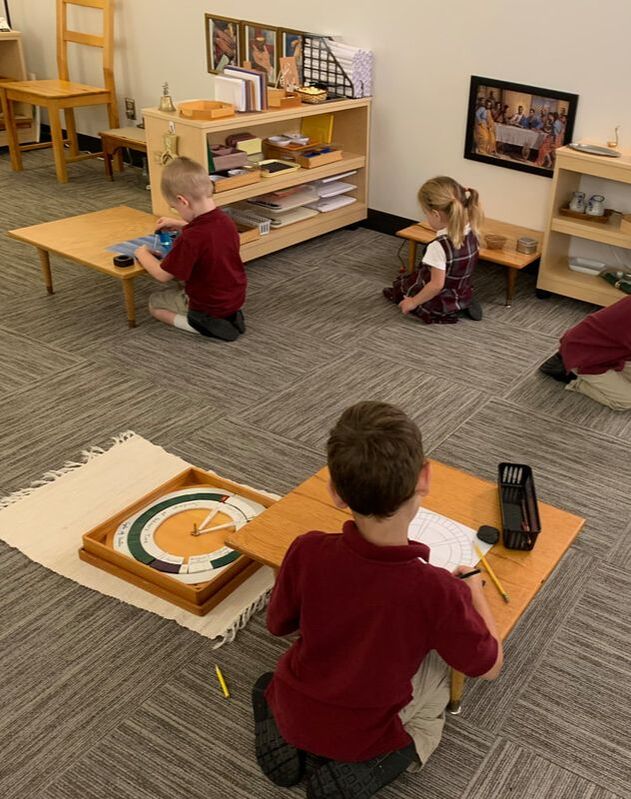
In formation courses for the Catechesis of the Good Shepherd we often speak about how we cannot ensure that a child is meditating, contemplating, and praying. That is the work of the one Teacher, Christ. However, we CAN create a space in which work and study are expected and over which much joy and delight is experienced. In other words, we can help create a space in which there is freedom to choose one's work, but where not working is not a choice. We facilitate the child's work by creating a space and facilitating that space in the following ways:
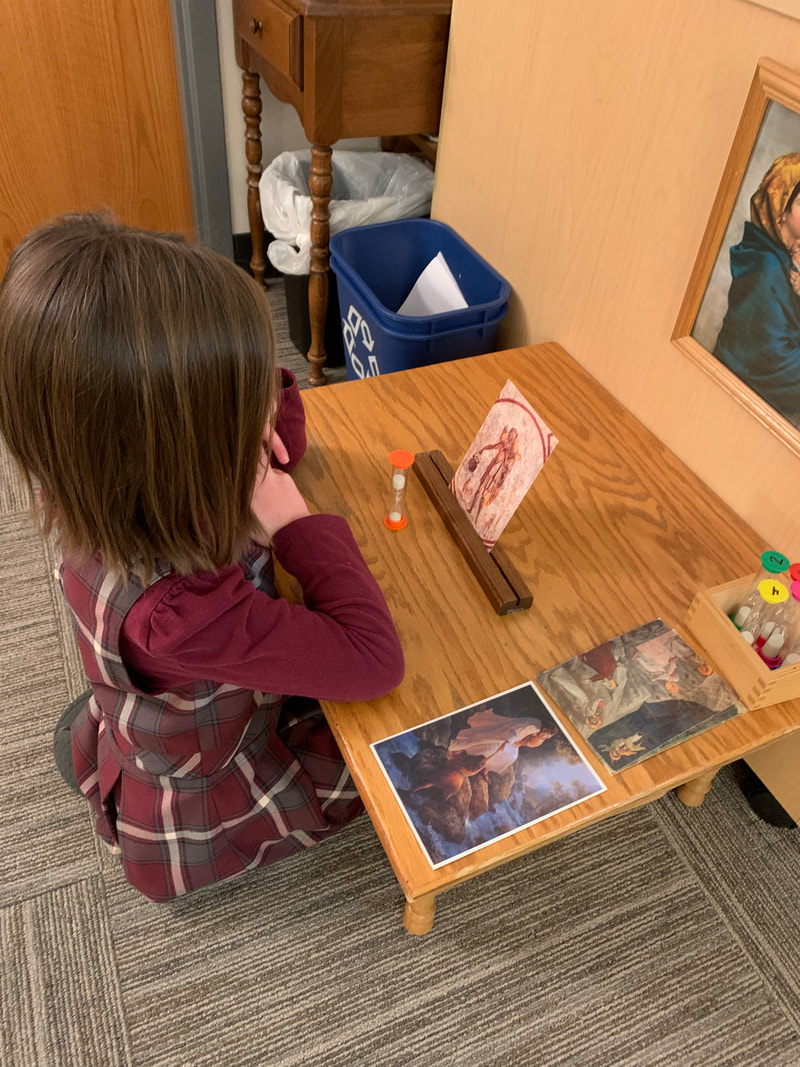
  • Ensure that the materials and the environment do not include obstacles for the children. If the tray for the work is too flimsy or too large children may not take it off of the shelf. If the liturgical calendar is not well made it can be very difficult to fit the pieces back into the frame and the children may find it too frustrating to work with. If paperwork is spread throughout the Atrium instead of being centered in one area the children, intending to choose to work with a material, will become distracted by the paper and choose to draw or color instead. 
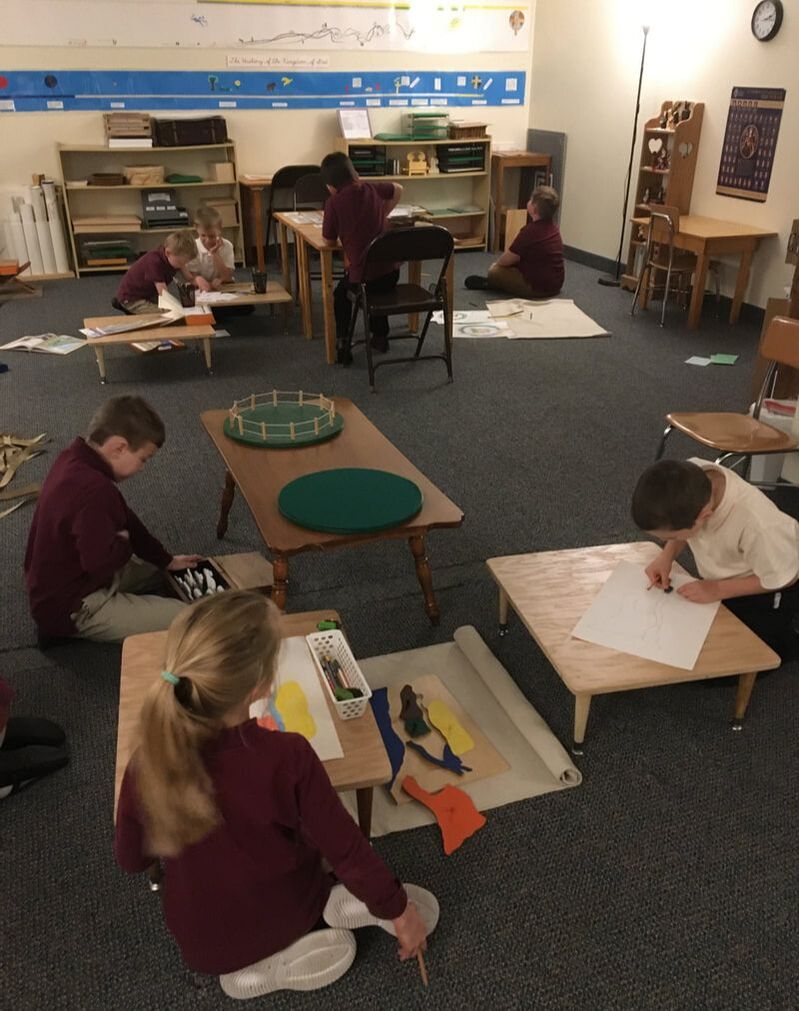
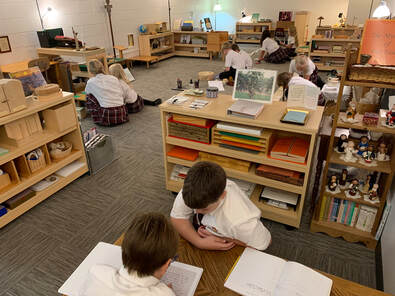
  • Create individual work spaces which provide "cubbies" for the children to work without distraction instead of having shelving around all of the walls and tables/chowkis lined up in the center of the room where the children work right next to each other.
  • Assist children in repeating work. Sometimes this includes saying to a child who is constantly requesting new work, "I would love to show you a new presentation but in order for me to know that you are ready for something new, I need to see that you have been working with things I have already shown you. I wonder what material you would like to return to and work with again."
  • Help children complete the work cycle with the work that they choose. This includes reminding the child to carefully roll out a work mat, restore the tray to the shelf, enjoy their work, and then restore every part of their work, making it ready for the next child who will choose to take it off of the shelf.
  • Keep in mind the Absorbent Mind which is most fully functioning in the 3yo. The work of the youngest children in the Atrium may well be to wander and observe. As long as this child is not distracting others, be at peace! The Absorbent Mind, identified by Dr. Montessori, is soaking in everything seen and heard at this age. Observing is very often the great work of the 3yo child. We can assist them in this by presenting a Grace and Courtesy lesson on "How to Observe Someone's Work" including asking to observe, walking away if told "No, thank you. Maybe next time," and, if told "Yes, you may," sitting or standing quietly near the child being observed without touching that child's work. This lesson on "How to Observe" may need to be given several times throughout the year!
Picture
Picture
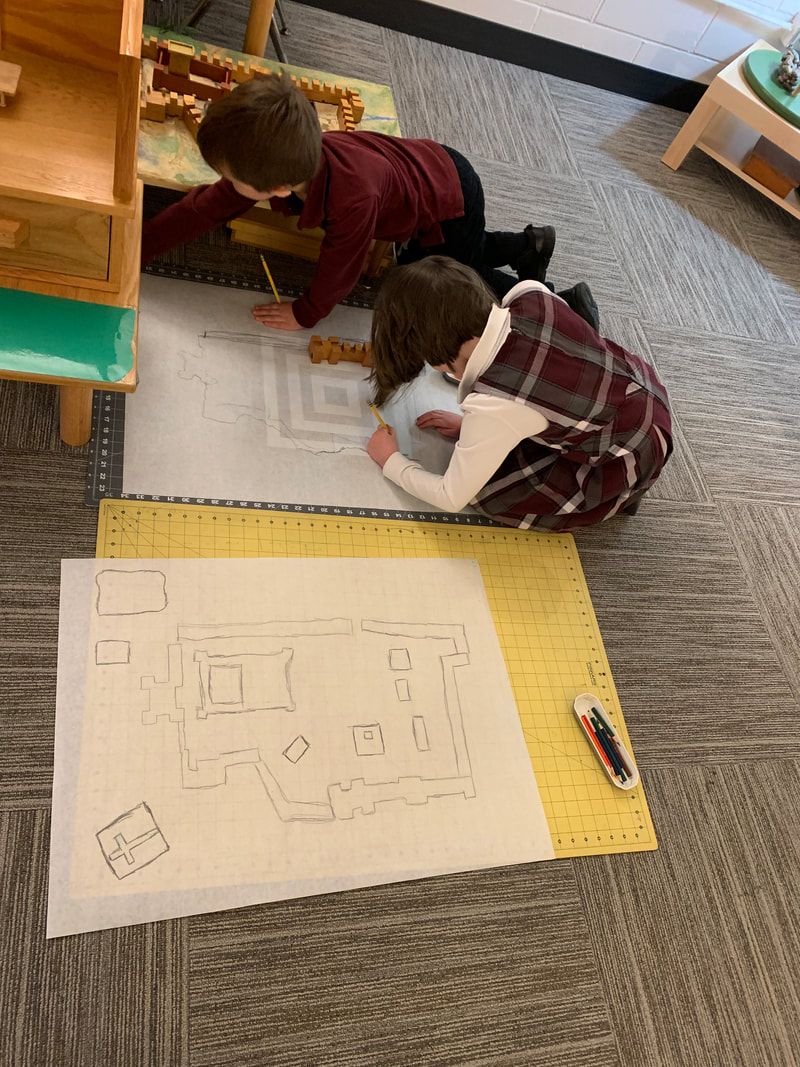
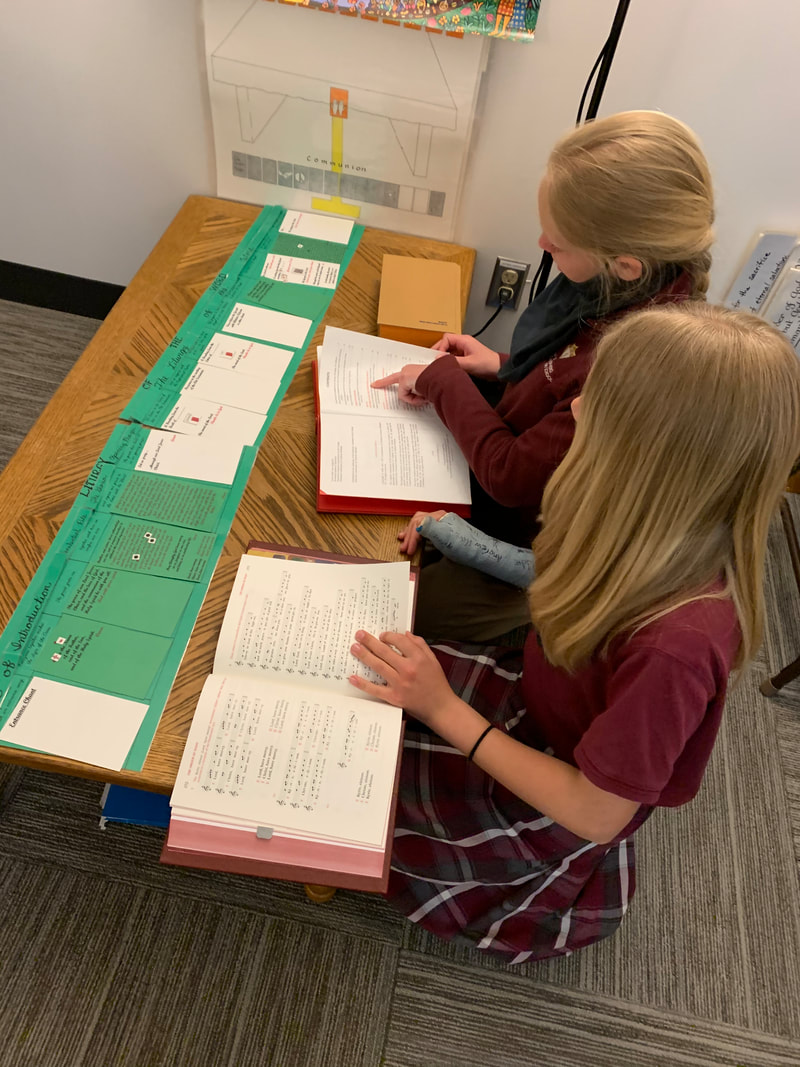
In my elementary Montessori training I wrote a paper entitled "Freedom, Responsibility, and Social Development" which included the following thoughts: "In the elementary child one characteristic that must be recognized is the great power of the intellect. At this age, between six and twelve, this intellectual potential is at its greatest. The adult must challenge the intellect to come to its own conclusions, to reason for itself and to come to understanding. Work is crucial for this development. The value of work, and the expectation to work must be recognized; the children cannot be allowed to waste this time. If the children are not asked to work they compromise their chances to maximize their potential. To expect less from the child than their abilities is to demean them. If the adult does not expect the child to work, he is a hindrance to the child’s development. Work needs to be constant, developmentally appropriate, constructive, and even ambitious."

What does this look like in action in the Atrium? Here are a few ideas to keep in mind:
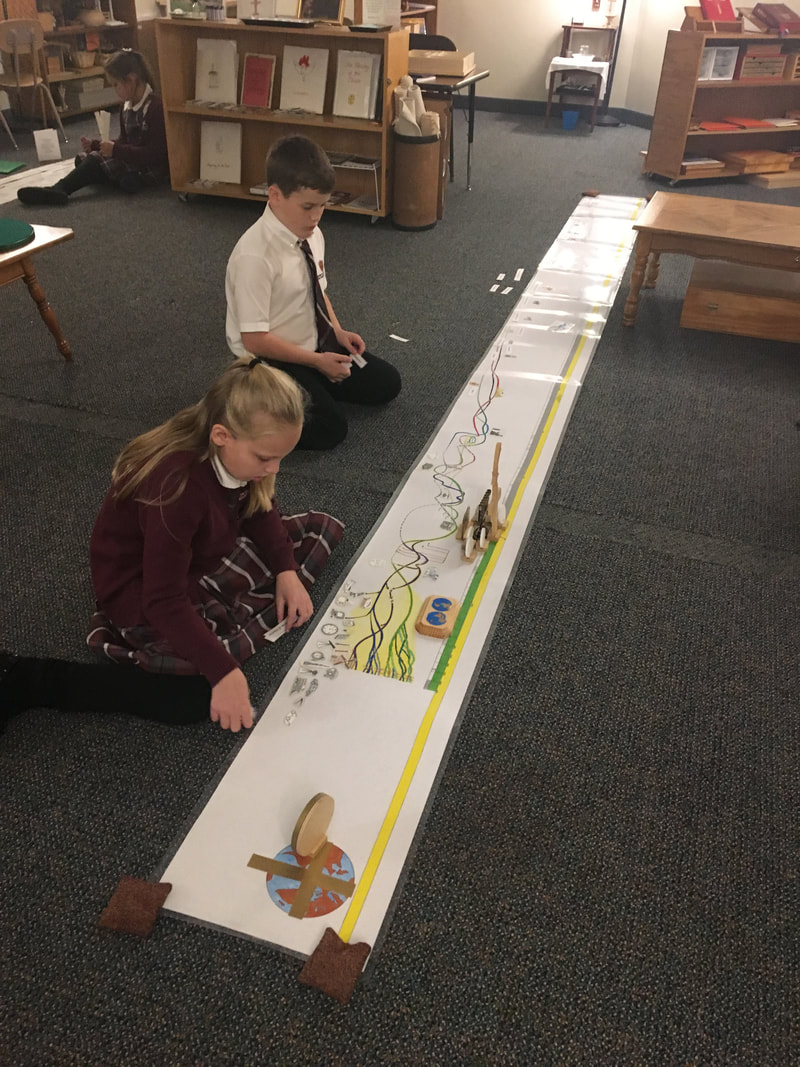
  • The hardest thing is to give children enough time; to give children the time they need to get in touch with the Inner Teacher through the work of their hands. If the children (especially elementary children) are not given enough time for work, they will not work. Why work with a timeline that will take 45 minutes to set out if I won't have time to then work on my own timeline that I am creating by copying the material?
  • Offer a variety of presentations and ideas for follow-up. When all children are doing the same thing the excitement of learning and the sharing of ideas becomes lessened and even stagnant. This is particularly difficult in school Atria where all of the children are of the same age. However, even there we can work to give a variety of presentations to small groups of children and also create a space in which a variety of follow-up ideas are appreciated and supported. Elementary children are not as interested in repetition as Level 1 children are, but they still need to go back to the same deep truths of our faith again and again. Thus, we want to offer them opportunities for "repetition with variety."
  • Assist the child in finding a work or even assign one if needed. While we do not want to always assign work, sometimes a child needs this assistance for a time. As the Absorbent Mind is no longer working at this age the child does not learn by wandering about the space. We want to help set a pattern of good work habits from the beginning, helping the children to engage their Reasoning Minds.
  • One aspect of the elementary child's reasoning mind is employing the intellect through reading and writing. Thus, whenever possible, work in the Atrium should include the expectation of reading and/or writing. Perhaps this means finding the Scripture booklet and having it on the mat with their work or writing "Creation," "Redemption," and "Parousia" as titles for their drawings of these moments. There are many, many more opportunities to read and write as the children grow, but these are examples of ways to help children who are not yet confident in these abilities to engage in the higher expectations of this environment.
  • Most of all, with the elementary child we need to look at ourselves and our own presentation style. It is the role of the elementary catechist to strike the imagination and the heart of the child by the way in which we proclaim and ponder the Good News with them. Our own engagement in the material will be a catalyst to their enthusiasm, wonder, and inspiration. While the catechist in the Level 1 Atrium is quiet, peaceful, and works to blend into the environment, the elementary catechist has the role, in presentations, of the "dynamic storyteller" as she works to engage and inspire the children.
Picture
Picture

Freedom within Limits - "The Collective Interest"

3/22/2023

 
“The liberty of the child ought to have as its limits the collective interest of the community in which he moves; its form is expressed in what we call manners and good behavior. It is our duty then to protect the child from doing anything which may offend or hurt others, and to check the behavior which is unbecoming or impolite.”  Maria Montessori, Discovery of the Child

Another practical rule of advice in helping prepare an Atrium which engenders true freedom is to look at the needs of the community as a whole. We spend our time in the Atrium together, listening and speaking with God, and the way that we each live in this space can either provide or deprive others of that opportunity as well. In the 3-6-year-old or Level 1 Atrium, the adult takes on a large role in helping guard the needs of the community until the older children (in a new Atrium) or returning children (in an established space) are able to assist both through their modeling of appropriate behavior and in their calling others on to live well in the Atrium. The rule of the "3 Ds" is often cited in conversations on this topic. Thus, we, as adults, step in immediately if behavior is "Dangerous, Destructive, or Disruptive." If what we are seeing does not fit under one of these three adjectives we need to observe for a time, watching to see if we can discover what the need or purpose is for the behavior. Steps in observing questionable behavior include:
  1. If you are concerned about a child's actions, sit near the child, saying nothing. Often the child, if he is doing something inappropriate, will stop that behavior when you are near because of the relationship of trust and respect which has been built between the two of you.
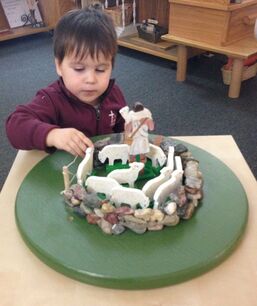
  2. If the child continues the behavior, ask the child if he can tell you about his work. Often a child's explanation has stopped my judgementalism in its tracks and has, additionally, provided me some beautiful opportunities for prayer. In one example, a 4yo was working with the Nativity and Adoration of the Shepherds. The sheep were all right up around the infant Jesus in the manger. When asked about this the child said, "They are licking Him because they love Him!" I have often pondered, since then, if I, too, come so close to the One who loves me so very much.
  3. If the child's explanation does not seem fitting to the Atrium space, you might offer to read the Scripture that accompanies the work or to remind the child of how the work is used. At times the child agrees and this provides a beautiful opportunity to recall the deep truth of the work and reset the child in his use of the material.
  4. However, at times the child does not want a reminder of his work. In this case it may be necessary to invite the child to restore his work and choose something else until it can be re-presented by the catechist. An example of this situation comes from a story told by an assistant regarding a 3yo using the Nativity and the Adoration of the Shepherds. The adult had approached the child who seemed to be playing with the work and, as in #2, had asked the child about her work. The child said, "It's a birthday party for Thomas!" The adult reminded the child that this work is about Jesus' birthday. The child said again, "No, it's a birthday party for Thomas." After the adult's offer to read the Scripture passage to the child was refused, the adult asked the child to restore her work and choose another material, which, given a few minutes of space, the child did.
Picture
Picture
In the 6-9-year-old or Level 2 atrium, the needs of the community remain a limit to the freedom of the individual. The children in this space, in addition to those in the 9-12-year-old or Level 3 Atrium, are invited to assist in laying out the guidelines which will support the atrium as a place of prayer for everyone who uses this space. The children of these ages have a great desire to learn how to live well as part of the flock, how to remain on the True Vine bearing beautiful fruit. They are social, moral beings who are aware of the consequences which arise when decisions are made which are hurtful to others. With these children we can lift up how God has placed rules within the universe which keep all things working together to bring Him glory. We too are invited to be part of this unity, working with Him to care for each other and to honor Him through our love for them. In coming up with guidelines for the Atrium at the beginning of the year the children, especially those who have experienced the Atrium's potential in the past, will provide beautiful thoughts on what would be necessary for a peaceful, prayerful space. Many of their ideas revolve around respect for God, for others, and for the materials. When the children assist in setting these guidelines they are much more likely to take an active role in both following them and helping others to follow them as well!

Freedom within Limits - "Staying on the Path"

3/15/2023

 
The role of the catechist in the CGS Atrium is to prepare the space and facilitate the way in which it is used by both children and adults. In addition the catechist proclaims the truths of Scripture and Liturgy to the children, pondering these mysteries side-by-side with them. While the past few weeks of posts have been related to how we prepare and facilitate the Atrium space in regard to how it may or may not be enjoyed, there is another balancing act of which the catechist must become conscious, and it relates to the proclamation and pondering of truth. We can speak of the role of the catechist as being the one responsible for keeping the child on the path (and even pulling them up out of the ditch when needed!) but not being responsible for getting them to the end of the journey as this belongs to God alone. But how do we, as catechists, know where the boundaries of the path might be? Sofia Cavalletti, one of the founders of the work of CGS, tells us what guided her in her own work with the children, "In regard to content, we have a wealth of sources at our disposal: the Bible, the liturgy, and the Magisterium of the Church. If we hold faithfully to these, we will have a secure foundation" (The Good Shepherd and the Child: A Joyful Journey, p.31). Let's look more closely at how these sources can help us in our task of guiding the children.
Picture
Here is an example which relies on the guard-rail provided by Scripture: We proclaim the Parable of the Good Shepherd to the children, introducing it by saying that many people who knew Jesus and listened to Him thought He was very special. They even asked Him, “Who are you, Jesus?” One day He said, “I am the Good Shepherd.” We then offer to read from God’s Word about when He shared this truth, inviting the child to listen for what makes Him so very good.

​Note that in this parable Jesus clearly says, “I am the Good Shepherd.” This is not something we wonder about. It is something we proclaim because He did. If we ask, after reading the Scripture, who the Good Shepherd is, and the child does not answer, we can (and should!) provide this answer - Jesus - because this is a truth of the Scripture revealed explicitly by Jesus Himself. We can read directly from God's Word to the child to answer this question. Similarly, if we ask the child what makes the Good Shepherd so good and he says that the Shepherd is actually bad, we again return to the Scripture passage which clearly lists "good" as an attribute of this Shepherd. Once more, the Scripture passage itself gives us the boundaries for our pondering. On the other hand, if we ask the children who the sheep might be, we do not give an answer even if they have no response. The answer to this question is not clearly defined in the text of this parable and to give this information would be to speed that child, before he is ready, to the end of the path, a journey which is for God and the child alone. 
​

Picture
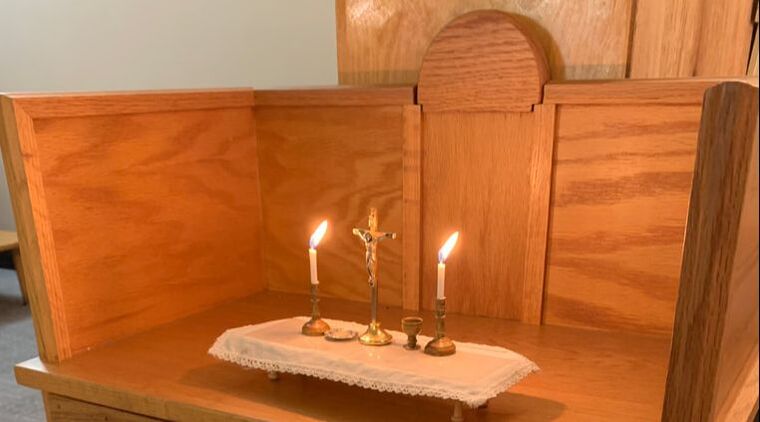
A second example of this boundary between proclaiming and pondering can be found in the presentation on the Cenacle or the Last Supper.​ In this reading from Scripture we hear Jesus say, "This is my body," and "This is my blood." What a great mystery!! While we might ponder what the apostles understood by these words, we, ourselves, do not need to ponder them. Instead, because of the assistance of additional Scripture passages, guidance from the liturgy, and definitive statements from the Magisterium, we can confidently proclaim that these words of Jesus tell us deep truth. Thus we can say to the children, "If you are here in your body and your blood you're really here and you are alive. Jesus wanted to remain with his friends and so He gave them a new way of being with them, through His Body and His Blood. In these words Jesus is saying to all of us, 'This is Me; I am with you. I am giving you My risen life.' What a great gift!" While we might not be pondering His meaning, we can certainly take time to sit in awe of the great and mysterious gift we have been given through the Eucharist.

Here are a few of the sources which give us the foundation for proclaiming this truth to the children:
  • Scripture. "Whoever eats my flesh and drinks my blood has eternal life, and I will raise him on the last day. For my flesh is true food, and my blood is true drink" (John 6:54).
  • The Liturgy: Through gesture we see this truth proclaimed each time the priest, after the words of consecration, "genuflects in adoration," as prescribed in the Roman Missal. While the Eucharist may still look like bread and wine, the priest would only genuflect before God Himself. In one example of a verbal prayer which proclaims this same truth we hear, in the Prayer after Communion on the Solemnity of the Most Holy Body and Blood of Christ or Corpus Christi: "Grant, O Lord, we pray that we may delight for all eternity in that share in your divine life, which is foreshadowed in the present age by our reception of your precious Body and Blood."
  • The Magisterium. CCC #1413 states, "Under the consecrated species of bread and wine Christ himself, living and glorious, is present in a true, real, and substantial manner; his Body and his Blood, with his soul and his divinity.". 

Guided by Scripture, the Liturgy, and the Magisterium we can have confidence in guiding the children and helping to keep them on the path of truth. We have so many beautiful resources at our disposal that help us to provide a space in which the children may freely ponder and wonder, safe on the path, trusting us to remind them of the guide-rails and even, when needed, allowing us to pull them back up out of the ditch onto the pathway of truth!

Freedom within Limits - "Belonging"

3/8/2023

 
Picture
Father Mongillo, a Dominican who taught at the Angelicum in Rome as Sophia was beginning to work with the children in the atrium, gave a talk to catechists which is referenced in the L2 CGS training of adults. Here Mongillo is quoted as having said, “The primary and fundamental attitude of the person educated in the moral life is the awareness of belonging: to belong to God, to belong to God’s world, to belong to humanity.”

"To Belong" begins with being in relationship with another. This primacy of relationship is a foundational premise of CGS; the child – every child – is, simply by existing, already in relationship with God, with the world God has created as gift, and with all those with whom God has surrounded us in our homes, our countries, and our world. As CGS catechists we seek to provide a space, the Atrium, in which the child can enter into a more conscious relationship with the One who has chosen to create him out of His great love, becoming a more active participant in this relationship. Thomas Aquinas, relying on the thought of Aristotle, observed, “There is nothing in the intellect that was not first in the senses.” Thus, to become a more conscious participant in our relationship with God, whom we cannot see and experience sensorially, it seems best to begin by entering into a more conscious relationship with those whom we DO see and interact with through our senses. For the youngest children, being known and loved by their parents in the home, by their relatives, friends, and faith community, and, for the purpose of this discussion, by their catechist in the Atrium, helps to provide the sense of belonging that Mongillo is speaking about. When we “belong,” and delight in this belonging, we desire to respond to this gift by contributing to this relationship, by helping to give what is best for all who share this community in this space.

In the Atrium, when a child is struggling to settle, to focus, to remain, we can ask ourselves as catechists how we have helped this child to become aware of being known and loved in this space, of belonging in this place where God speaks in a most particular way. If you find yourself saying “no,” or “please restore that work; I have not shown it to you yet,” or “this is not the way you were shown to work with this material,” repeatedly to an individual, seek out opportunities to spend positive time with this same child in order to begin or begin anew a sense of belonging to this space and to one another within it. Seek to learn this child’s favorite activities and family dynamic, ask what has brought him joy this past week and what he is looking forward to enjoying in the coming week. When a child has a deep sense of belonging, the guidelines for this space, the “rules” of what may and may not be done, do not remain as obstacles but, rather, become gifts. Let us work to be patient with these children and with ourselves as we ask the Holy Spirit to help give us His love and patience for each child who has not yet come to know that this is a space and a community in which he truly belongs.

Freedom within Limits - "Can" and "May"

3/1/2023

 
After writing the previous post on freedom within limits, I realized that there is so much more to say on this subject, and so I appreciate you bearing with me as I speak more about this beautiful and challenging gift which we desire to offer the children in the atrium.

Margaret Stephenson was a student of both Maria and her son, Mario Montessori. Stephenson led AMI trainings for both Primary and Elementary Montessori educators and helped them to implement their training in the academic Montessori environment. In an article entitled “Freedom and Responsibility” Stephenson writes, “The child cannot learn to be responsible unless he has freedom to exercise it – he cannot be truly free unless he can learn to be responsible.” Later in the article she continues, “Human beings have free will, which means they can choose what they shall or shall not do. Unless they are educated as to what they may or may not do, they will have freedom, but may not be responsible.” The distinction between “shall" or "can" and “may” is foundational and it seems likely that this distinction was much clearer in the time of Maria Montessori than it is now. Recently, I was reading a collection of lectures given by Joseph Cardinal Ratzinger in the 1980s on creation. In one of his talks, he writes something very similar to this quote by Stephenson. “…Where man no longer accepts any limit on what he may do, but sees the limit on what he can do as the only limit at all – and anything that can be done may be done – then we extinguish the essence of what makes him truly human” (The Divine Project, p. 72). What a gift we give when we offer our Atrium children a space in which they discover what they can do but also where they grow in their understanding of what they may do. This is true human formation and it lays a foundation for our life of relationship with God and one another. For the 3-6-year-old child in the L1 atrium, this foundation begins to be laid on the very first day of our time in the atrium. We begin by introducing the Atrium as a space of listening and speaking with God, and then we provide guidelines for how we live in the space. We have quiet voices and walking feet; we are careful with our bodies, with the materials, and with one another so that we will all be able to listen for God in this space. One of the best ways to strengthen this initial foundation with the children is to present the Exercises of Practical Life materials with great care and attention, providing the children with simple, concrete examples of growing in what they can do (puzzles, pouring, sweeping) as well as how they may do such things (building the pieces outside of the frame without making a sound, pouring just to the line without spilling a drop, sweeping up a spill when a spill has occurred).

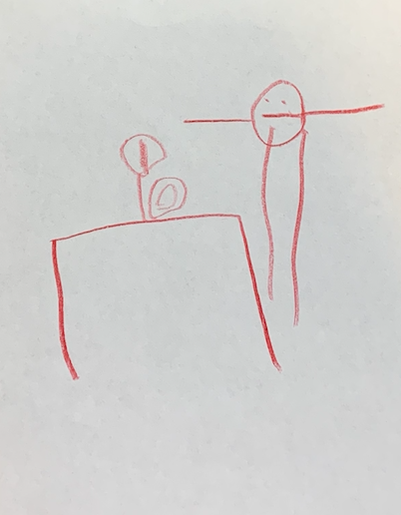
Below are two examples of the type of things children can draw in the Atrium...and also a distinction being made regarding what they may draw in this space.

Picture
When you think about the gestures that Father prays at Mass, what do you picture in your mind? Would you like to draw what you are thinking about?
Picture
You may draw this when you are at home. The drawings we do in this space start with our materials. Do you see a work that you know? You could draw what you picture in your mind when you work with that material.

    Carolyn Kohlhaas

    CGS Catechist and Formation Leader (Levels I, II, and III)

    Categories

    All
    At Home Review
    Baptism
    Celebrations
    Eucharist
    Good Shepherd
    Incarnation
    Intro To The Atrium
    Kingdom Of God
    Life Of The Church
    Montessori Theory
    Moral Formation
    Paschal Mystery
    Prayer
    Reconciliation
    Salvation History
    Typology
    Work Of The Adult
    Work Of The Child
    WOS Celebrations

    Archives

    January 2026
    December 2025
    November 2025
    October 2025
    September 2025
    August 2025
    July 2025
    June 2025
    May 2025
    April 2025
    March 2025
    February 2025
    January 2025
    December 2024
    November 2024
    October 2024
    September 2024
    August 2024
    July 2024
    June 2024
    May 2024
    April 2024
    March 2024
    February 2024
    January 2024
    December 2023
    November 2023
    October 2023
    September 2023
    August 2023
    July 2023
    June 2023
    May 2023
    April 2023
    March 2023
    February 2023
    January 2023
    December 2022
    November 2022
    October 2022
    September 2022
    August 2022
    July 2022
    June 2022
    May 2022
    April 2022
    March 2022
    February 2022
    January 2022
    December 2021
    November 2021
    October 2021
    September 2021
    August 2021
    July 2021
    June 2021
    May 2021
    April 2021
    March 2021
    February 2021
    January 2021
    December 2020
    November 2020
    October 2020
    September 2020
    August 2020
    July 2020
    June 2020
    May 2020
    April 2020
    March 2020
    February 2020
    January 2020
    December 2019
    November 2019
    October 2019
    September 2019
    August 2019
    July 2019
    June 2019
    May 2019
    April 2019
    March 2019
    February 2019
    January 2019
    December 2018
    November 2018
    October 2018
    September 2018
    May 2018
    April 2018
    March 2018
    February 2018
    January 2018
    December 2017
    November 2017
    October 2017
    September 2017
    June 2017
    May 2017
    April 2017
    March 2017
    February 2017
    January 2017
    December 2016
    November 2016
    October 2016
    September 2016
    August 2016
    May 2016
    April 2016
    March 2016
    February 2016
    January 2016
    December 2015
    November 2015

    RSS Feed

Powered by Create your own unique website with customizable templates.