The Wonderings of Sheep in the Atrium
  • Home
  • Atrium Updates
  • Table of Contents
  • Prayer in the Home
  • Observations
  • Resources
  • Trainings

L2 Children Not Yet Reading and Writing

1/31/2024

 
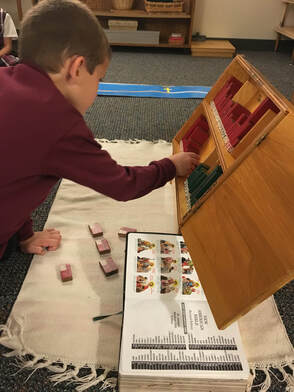
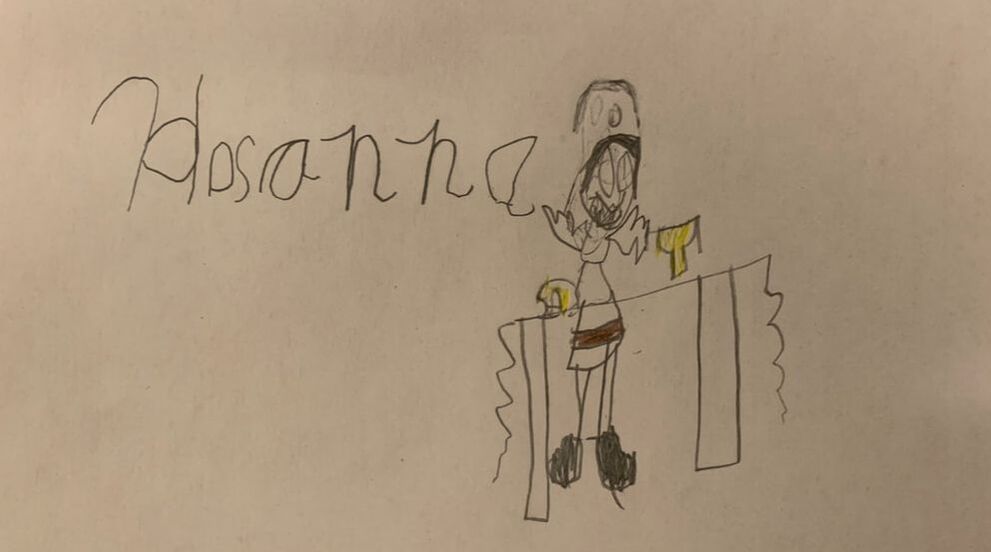
Dr. Montessori’s approach to the elementary child relies heavily on her presumption that young children have the ability to explode into reading and writing before entering the second plane of development. As I’m sure you have noticed in several of the prior posts, I start with a similar expectation because Sofia and Gianna have developed the Atrium materials from this mindset. However, the reality is that we often encounter children for whom reading and writing is a struggle or even an impossibility. While the expectation of reading and/or writing is an essential way of elevating the work of the L2 child, it is not intended to be an obstacle to the engagement of any child in the L2 Atrium. From the beginning of the year, the catechist has the responsibility to work closely with the children, learning how much to ask of each individual while also providing scaffolding for those who need it in order for each child to succeed in this way in the Atrium.
Picture
Picture
A few principles to keep in mind:
  • Instead of using the phrase “reading and writing” consider speaking about “work with words.” This eliminates the reaction of “I can’t read” or “I don’t like to write.”
  • Set a high expectation (“In this space we do work with words.”) but also provide scaffolding as is needed for each child. 
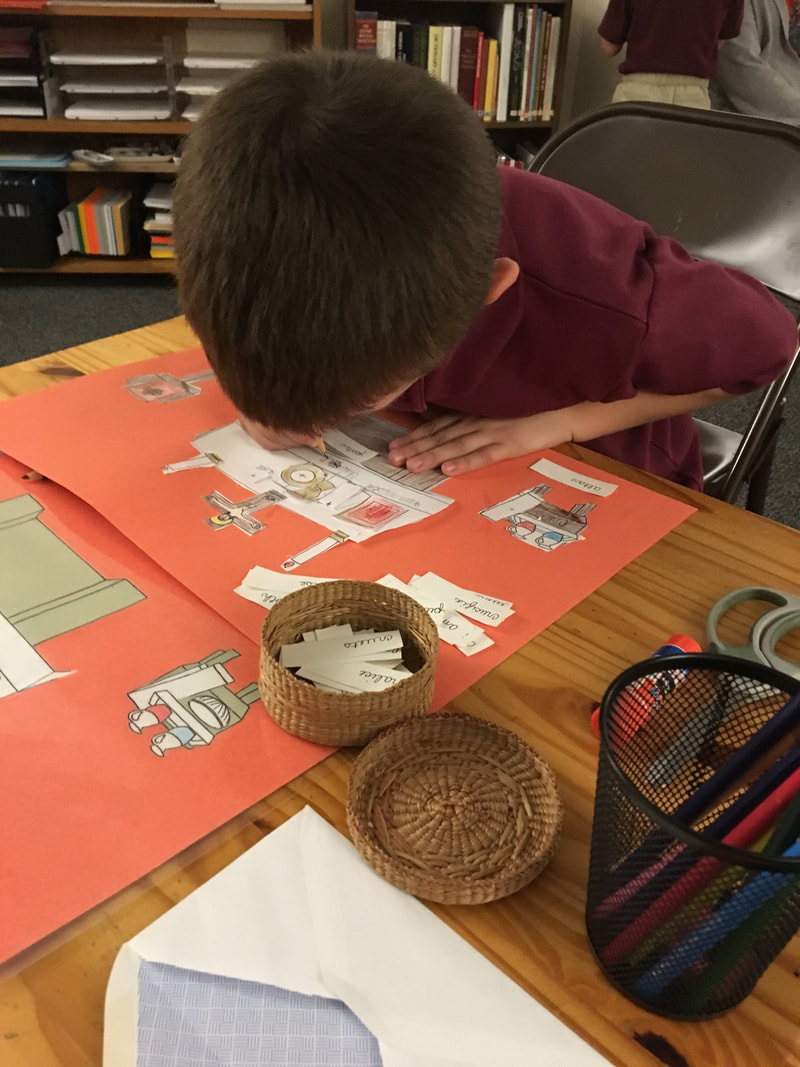
    • Some children may need to be shown how to use the controls to help them match the labels/etc for their work and then ask them to have an adult read those labels for them when their work is completed.
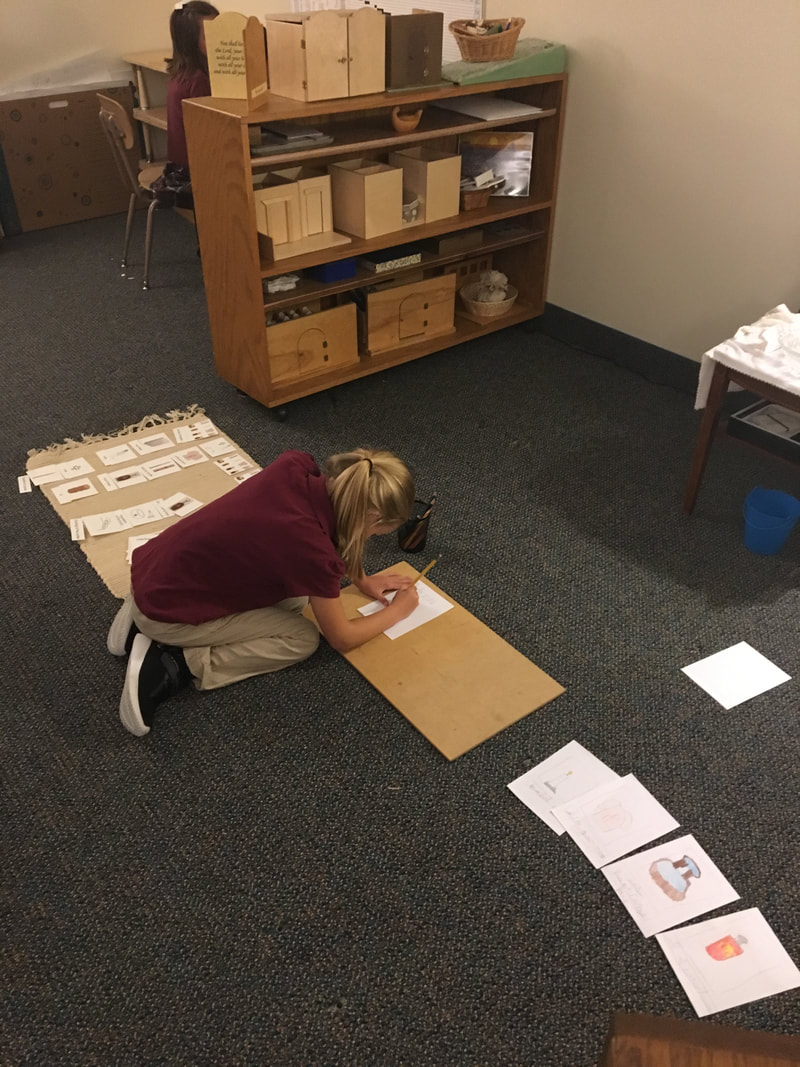
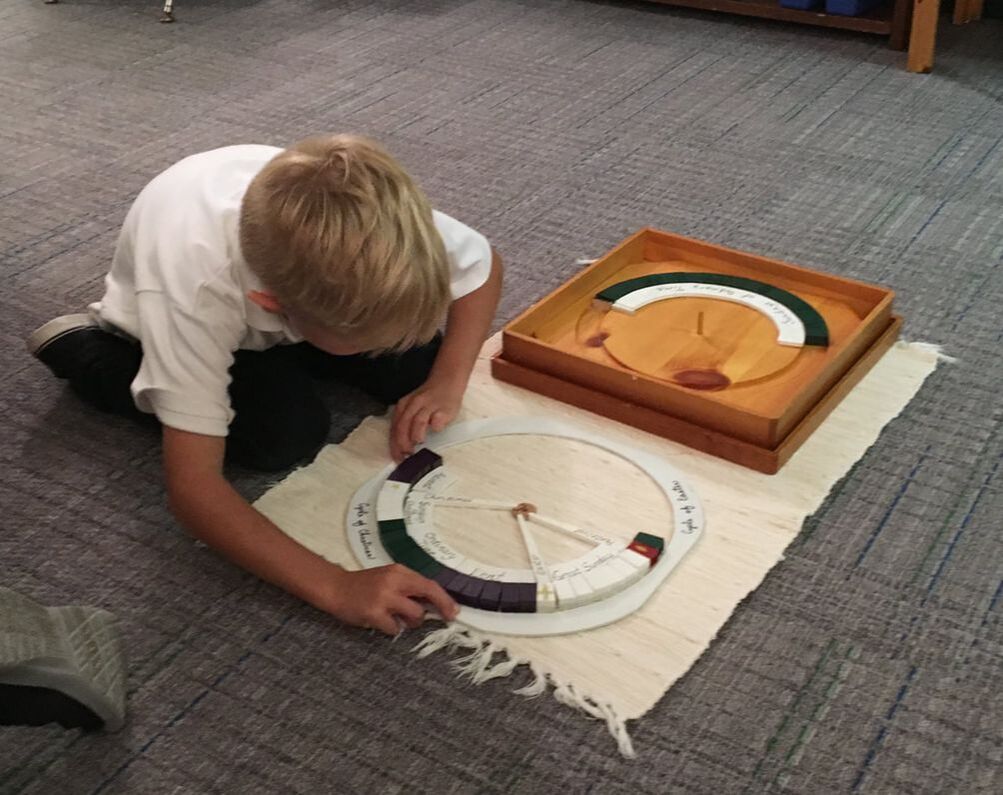
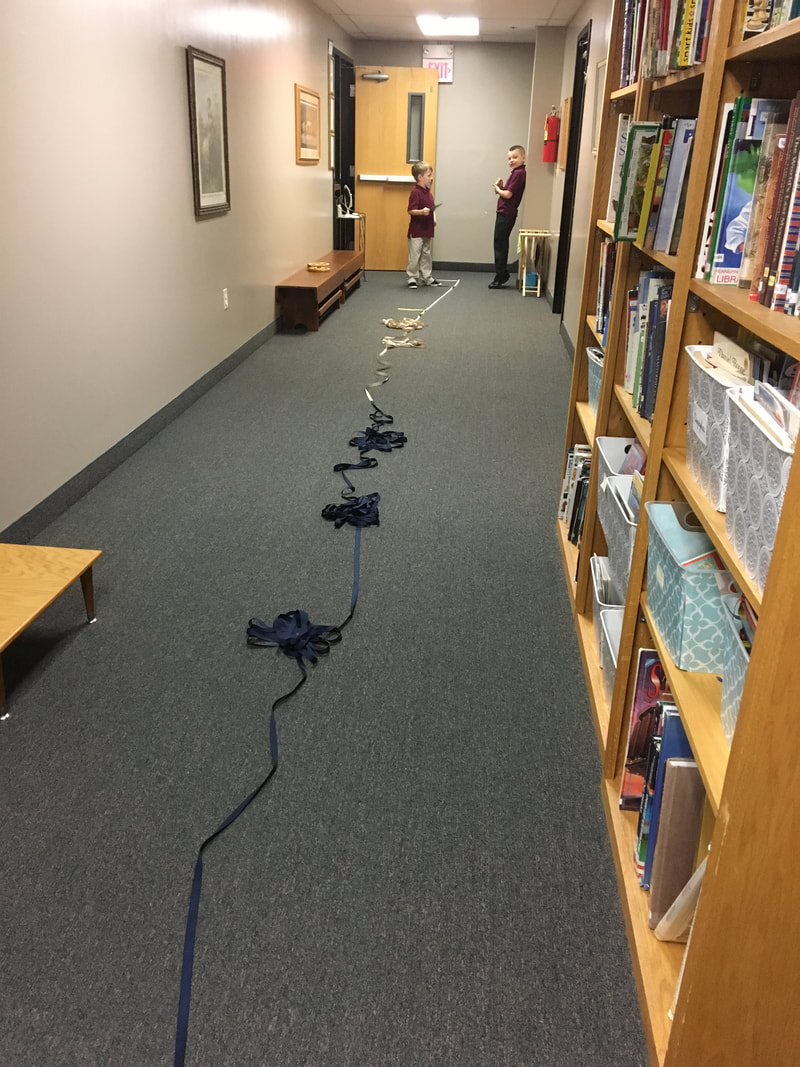
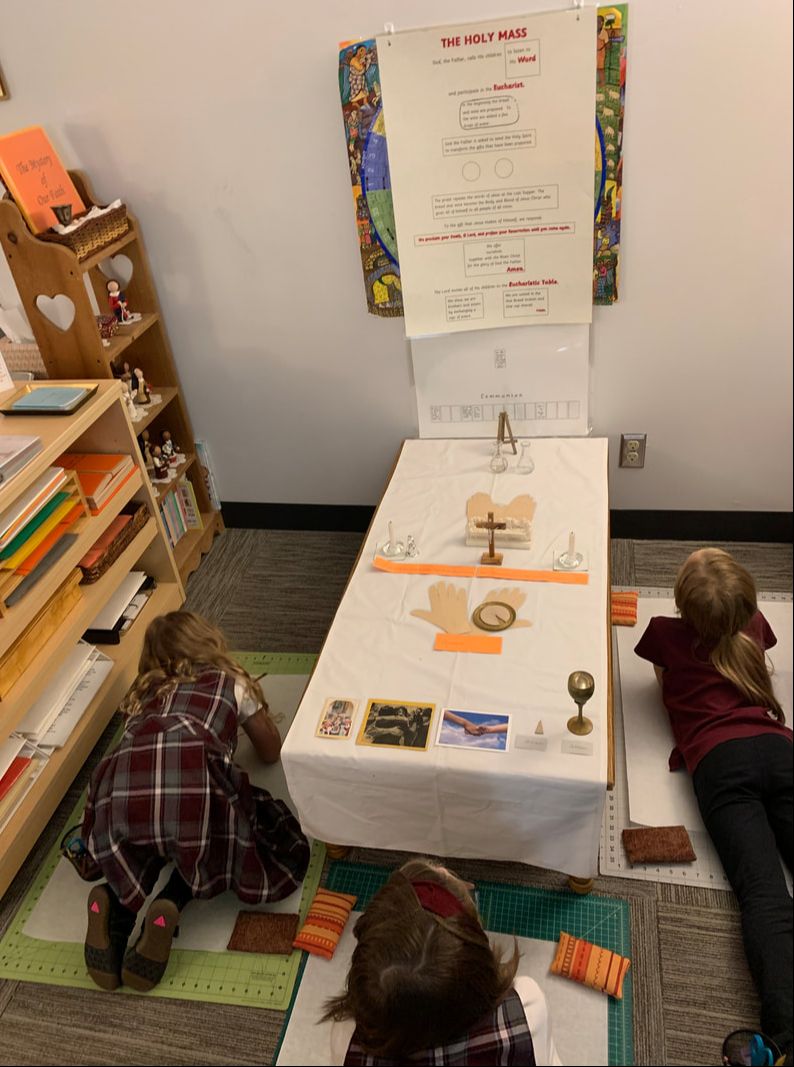
    • Start with materials that have short words to read or copy: Baptism / Altar labels or card materials, L1 prayer cards, the Liturgical Calendar (which in L2 relies heavily on numbers which may be easier for some children), a booklet of the “3 Moments” of the Fettuccia (Creation, Redemption, Parousia), or writing the titles to the gestures booklets and drawing the gesture.
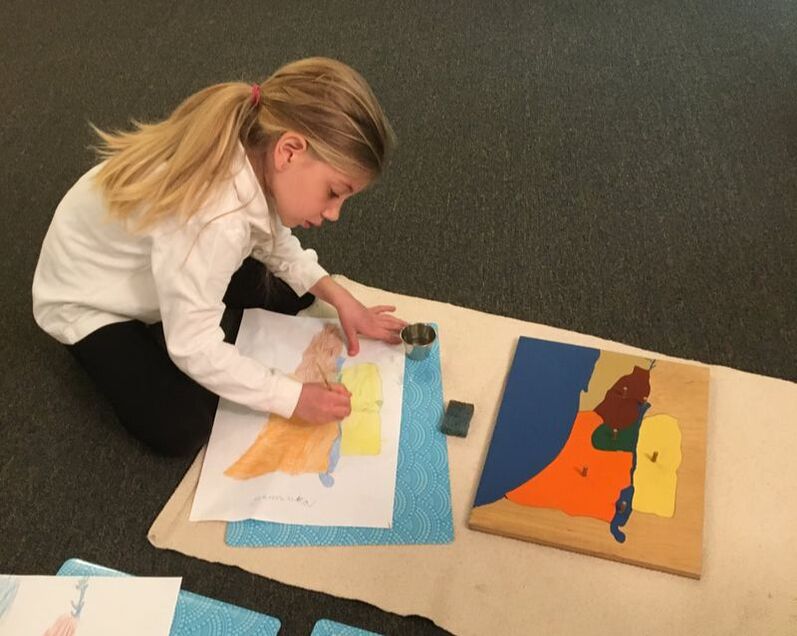
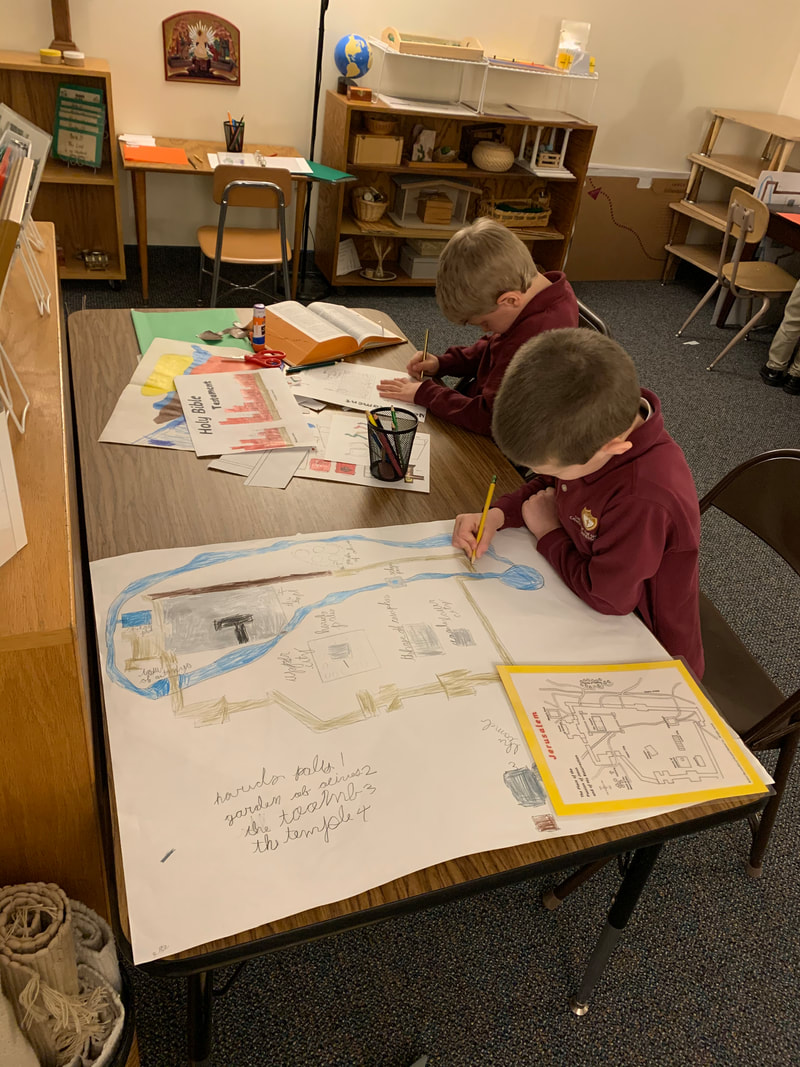
    • Help struggling children to choose materials in which the coloring or drawing comes first and then space out the writing, asking for just a few words to be added each week: the altar collage, map making, a personal Fettuccia or blue strip with the three arrows, a City of Jerusalem map that is then labeled.
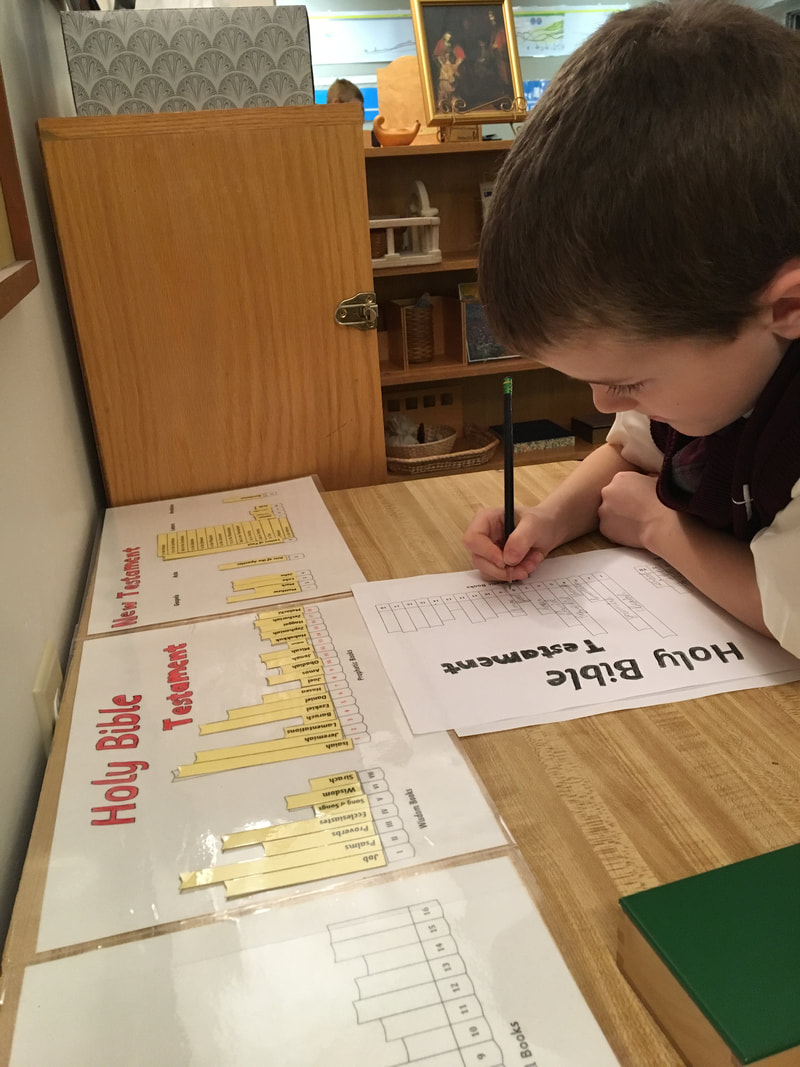
    • Some children may prefer reading over writing. Early materials (which could even be matched instead of read) might include: labeling the model altar or Baptism area or working with their card materials, working with the pin maps, taking out and replacing the Books of the Bible materials in order by using a Bible’s table of contents, labeling the City of Jerusalem by using the control.
    • While children who are reading may be able to read the Scripture booklets for the Infancy Narratives and Parables others might only be asked to find the correct booklet and have it with their work. Assist them in knowing the name of the material as well as the color of the booklet: “That’s the Found Coin and it’s a blue booklet because it’s a parable.”
    • Consider having Scripture cards and Scripture booklets which match the Bible translation in your Atrium so that the children are hearing, matching, and reading consistent words. This means you will not be able to use “The Little Gospels” as they are the English translation of the Italian Bible used in Sofia’s Atrium.”
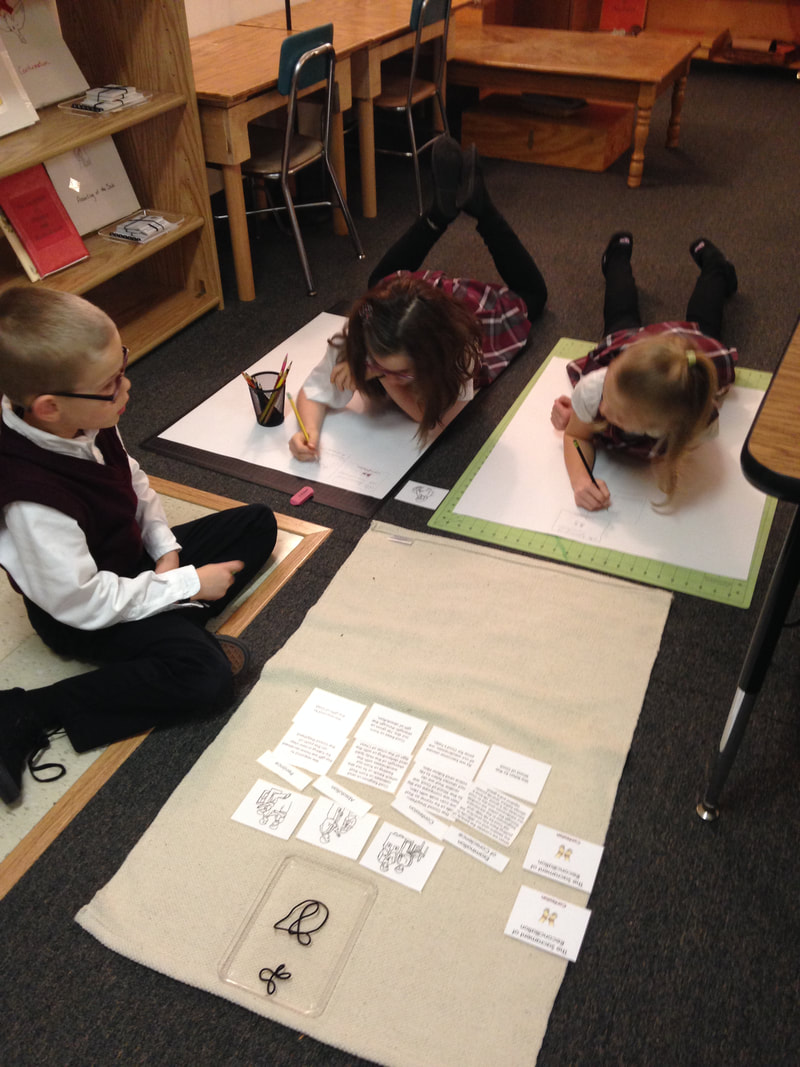
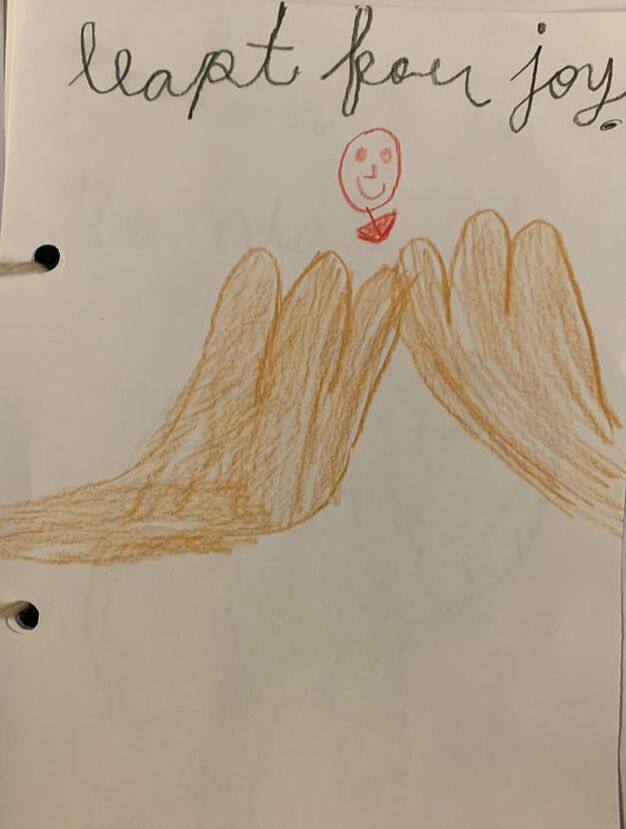
    • Finally, don't forget that children in the second plane of development tend to work together. Try pairing up a non-reader with a reader!
Picture
Picture
Picture

L2 Children with No L1 Experience

1/24/2024

 
When Sofia Cavalletti was asked about how to work with a child who begins in the L2 Atrium without L1 experience, she answered, “There is no such thing as remedial catechesis.”
 
As we have been discussing, L2 children are very different from L1 children, especially in how their minds work. We cannot place a 6yo or a 9yo with no Atrium experience into a L1 Atrium and give a 3yo presentation, expecting that child to respond and work as a 3yo child would. This seems so obvious…and yet I often see L2 catechists trying to give new Atrium children all of the L1 materials before moving into the L2 content or trying to “fill in the rest of the L1 presentations” for children who only had one or two years in the L1 Atrium. One of the biggest problems with this approach is that it does not honor the child in front of us, a child whose mind is asking different questions and taking in information in new ways, who needs to see the big picture and to synthesize, compare, contrast, and discuss. A L2 child does not do well being asked to sit silently as a presentation is given. They need to engage their minds from the start, asking questions, sharing ideas, and being involved intellectually in the presentation from the beginning. Here we also see the second plane child’s need for real work and to see the Atrium as a place of real work from the very beginning of the year.
Picture
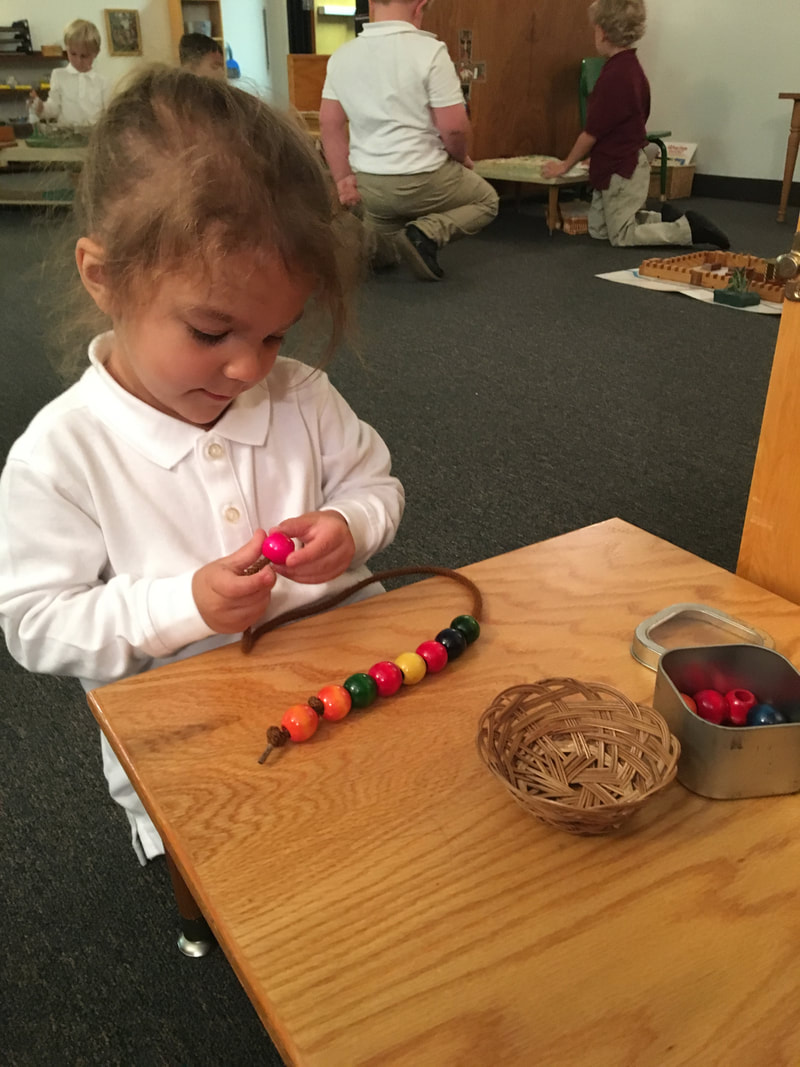
L1 preliminary work - bead stringing
Picture
L1 beginning work - Baptism cards
Because “real work” is so important in the L2 Atrium, it seems better to give new Atrium children a challenge, even if they don’t have the full content foundation, and move backwards to the content, then to give them the foundation but in a way that it is not real work for them. As an example, even in L1 it is often best to show new kindergarteners the liturgical calendar right away and to only introduce the four main liturgical colors as part of the initial conversation about the calendar. This is because even these older L1 children need big work at the beginning of the year and putting together the calendar as a puzzle is real work for them, a work which requires order, focus, and concentration. The same holds true in L2. Instead of trying to give every presentation from L1, start with the L2 presentation, but be sure to lift up the deepest content which was the focus in that theme or subject in L1.
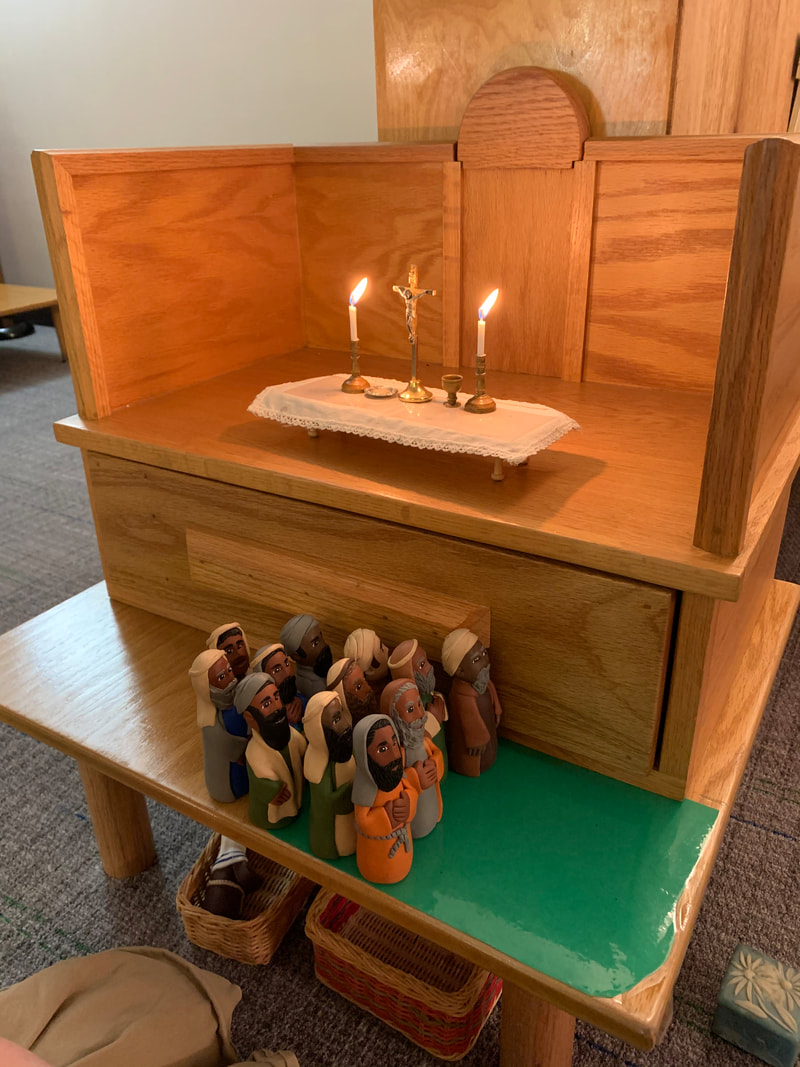
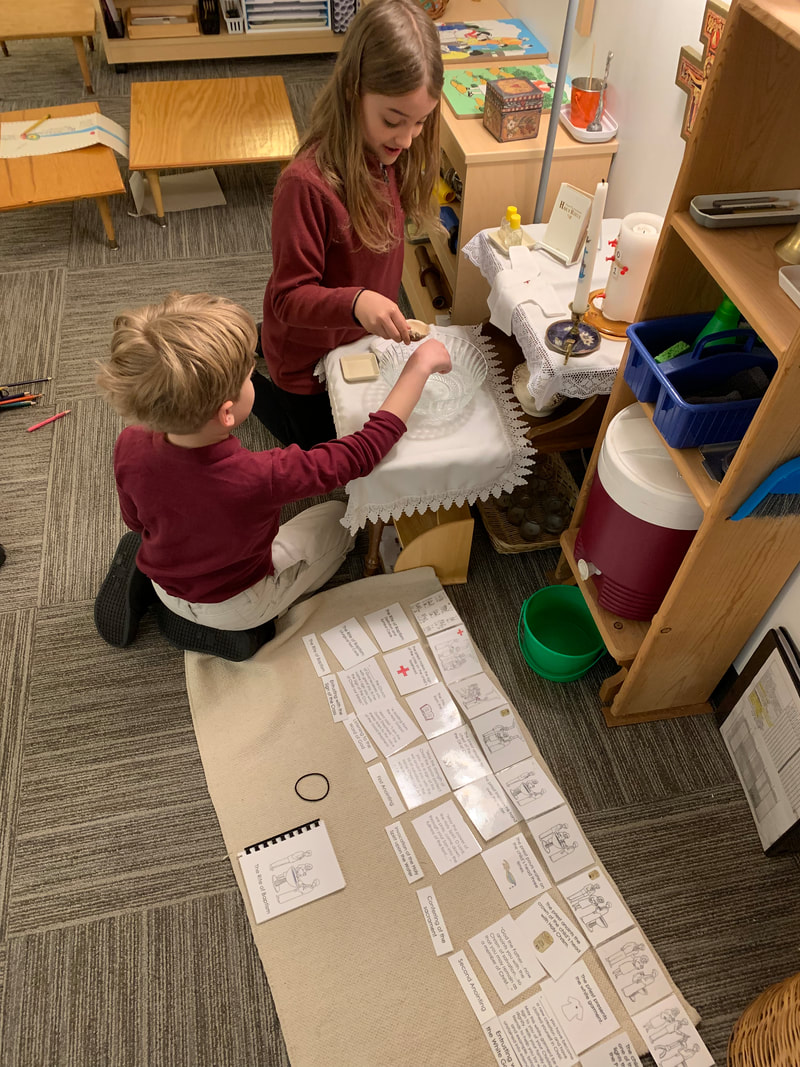
  • Have several new L2 children set the entire model altar, using the large altar collage to help them, then invite them to read (or match!) the labels from the control to the items. When they have finished their work, an adult can sit and read the labels with the children and then speak about being invited to the feast by Jesus who prepares it for us. After this, the adult can light the candles (with a proclamation of the Paschal Mystery) for a moment of prayer.
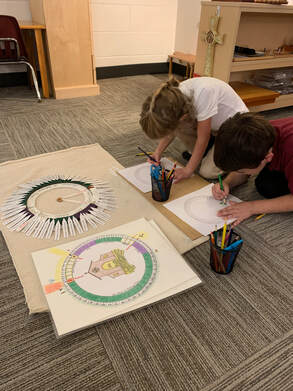
  • Start with the liturgical calendar, not the liturgical colors, and, after the child has built the entire calendar, show him how to color it in the L1 way, labeling each cycle, season, and feast.
  • Consider beginning with the regions puzzle map instead of the raised surface map because this is a map they can then trace, color, and label. When their map has been completed help them add symbols for the three cities and discuss their significance.​
Picture
Picture
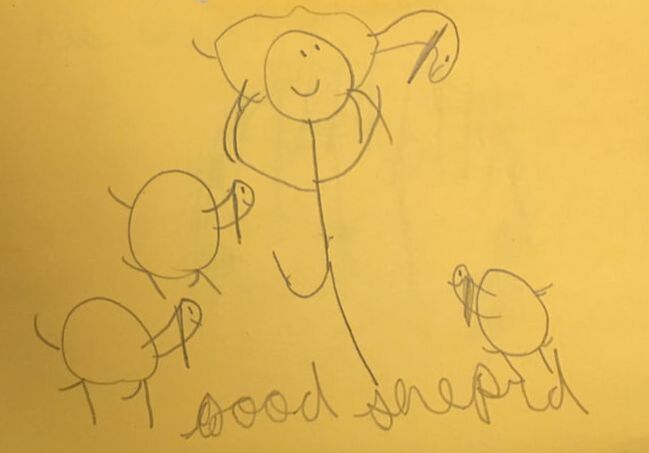
While new L2 children still need the essential content of the L1 Atrium, they need to receive it in a way that fits with their second plane characteristics. These new L2 children need to know that Jesus really existed on the earth (Map of Israel) and be firmly rooted in the love of the Good Shepherd (Parable of the Good Shepherd) who lays down His life for His sheep, who died and is risen and remains with them even today (Last Supper / Cenacle), a gift received through Baptism and the Eucharist (Baptism 1 and Model Altar). 
 
Please do not forget that while offering these essential materials and content the new L2 children also need to be receiving presentations which include returning members of the community in order to not isolate these “new” children from those with Atrium experience. All of the children need to be introduced to the History of the Kingdom of God in a timely manner in order to orient them to time and to set the stage for cosmic education. As they are in an age of moral development, all of the L2 children will also need to be introduced to the Maxims and Moral Parables. By starting with our knowledge of the second plane child and of the L1 and L2 materials in our space, we will be able to discern (with the help of the Holy Spirit upon Whom we must rely) which materials will best suit the needs of these new children as they enter the Atrium and are introduced to this place of listening for God’s voice and speaking with Him.
Picture
Picture

L2 Children and the Reasoning Mind

1/17/2024

 
One of the first areas of work presented in the L1 Atrium is the Exercises of Practical Life (EPL). These materials provide short, precise presentations which allow the adult and child to grow in relationship and also offer work for the young child to do almost immediately upon entering the Atrium space. EPL materials also help these young children gain the skills needed for later presentations including building puzzles, pouring water, folding, gluing, cutting, etc. Children are also shown how to care for the environment by cleaning up spills, dusting, washing tables, polishing items, and caring for plants. From the beginning, these materials offer real work which helps the child grow in focus and in concentration.
 
So why don't we start new L2 children with EPL? As was mentioned previously, the child in the second plane of development is a different child than that in the L1 Atrium. While the L1 child has an absorbent mind and primarily works with the hand, the L2 child has a reasoning mind which must be engaged in order for learning to take place. While the L2 child may initially show interest in EPL or express a desire for it, they rarely use these materials (excepting those needed to care for the environment) for true work but rather as a way to hide from purposeful work appropriate to their age and mental capacity. However, the child who is new to the L2 Atrium has similar needs as the L1 child had. They need to be oriented to this new space, grow in relationship with their catechist, and be offered purposeful work which helps them grow in skills which will be needed for later materials as well as growth in focus and concentration. As was stated in last week’s post, this means that the L2 child needs to be offered real work from the beginning, work with words, work which engages their minds and hearts, work which is worthy of their intelligence.

Picture
Picture
Some examples of work given in the first few weeks of the L2 Atrium might include:
  • Using L1 Atrium materials (previously presented) in a L2 way, with reading and/or writing.
  • Writing “Taste and see that the Lord is good,” and illustrating it with examples of gifts which show forth God’s goodness. This could be expanded to any L1 or L2 Scripture card.
  • Copying a prayer card (beginning with the single word or short phrase prayer cards from L1) and illustrating that word or phrase.
  • Making a booklet of Altar or Baptism Cards by copying each word and picture together.
  • Making a booklet of prayer cards or Scripture cards consisting of at least 5 pages and a cover.
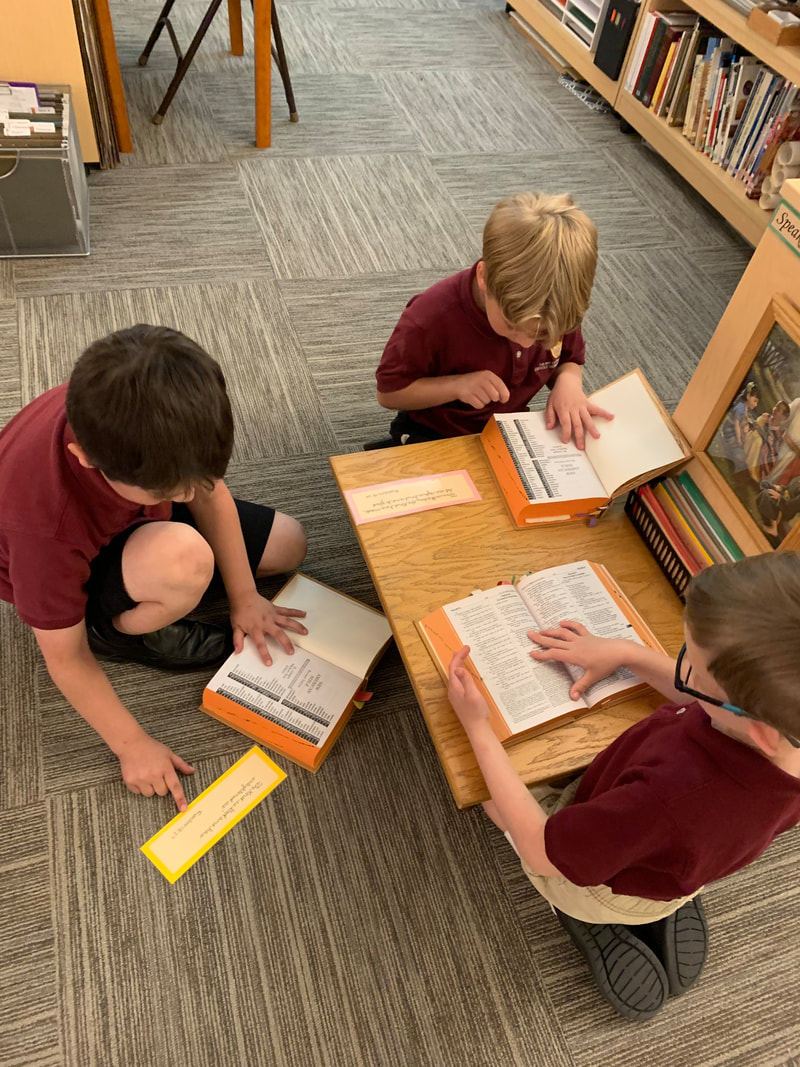
  • Looking up Scripture in the Bible by using the Scripture Cards.
  • Helping to lead Communal Prayer after practicing how to proclaim something to the group.
  • Doing a big work like the Altar Collage by breaking it down into a number of small steps which must be accomplished in a particular order.
  • Helping to care for the environment, especially during the time before gathering at prayer table at the end of the session.

L2 Children and Work

1/10/2024

 
Throughout my Elementary Montessori Training a continual refrain was, “We cannot allow them to waste this time. Their minds are working in a way they will never work again.” In reviewing notes from my training, I found the following which expands on this idea of the importance of work for the L2 child: “There is an enormous potential for work at the second plane which is wasted if the children are not asked to engage in it. Children must stretch the capabilities they possess, and they must use them to actualize their intellect. This is the most intellectual period of life. These children are capable of an enormous amount of work and this fact must be recognized. If the children are just given small amounts of information or a limited amount of expectation, the adult is putting an obstacle in their way and, thus, he is impeding their development. The adult must expect that the children work, and he must put before them the possibility of exploring and investigating all kinds of things. In primary [or L1], the cure for psychic deviations is real work. This is true at all of the planes of development. It is real work that allows the child to arrive at normal human behavior, at normalization. If the child is not expected to work the adult may be contributing to the deviation. The adult must also be very careful to not limit the child’s capacity by asking for small achievements, small pieces of work. Therefore, through recognizing this capacity, and through feeding it by stories and lessons which strike the child’s imagination he will be left free to pursue his interests and continue his construction.”
 
While children can learn and memorize vast amounts of facts at this age, Dr. Montessori recognized that it was even more important to stir their powerful imaginations and inspire them to wonder and ask questions. She focused on telling tales which would set the imagination on fire and lead to research, study, and the quest for new ideas and connections. Once truly engaged, the child of this age has an incredible capacity for work in which they manifest deep focus and endurance. They have much less interest in simple repetition than when they were in the first plane of development, but they still need repetition in order to immerse themselves in important concepts ideas. “Repetition with variety” or allowing for a wide range of follow-up work on particular topics alongside a variety of presentations being given within the community allows interest to be maintained and strengthened for children of this age. Thus, the role of the adult is to spark the imagination while also preparing for and expecting great work that will come from the one who has been inspired. Reading and writing, exploring and synthesizing, making connections across subjects/themes and between faith and life all fit the needs and capacities of the elementary child’s developmental plane.
Picture
Picture
Creating a space of work for the L2 child:
  • Prepare a beautiful environment in which the essential is offered by way of materials as well as a variety of supplies for follow-up to those materials.
  • Advocate for sufficient time for the children to work. Sofia and Gianna had two hours each week with the children. As the adult, keep in mind that 2/3 to 3/4 of that time should be the child’s work time. In other words, an adult-led presentation with a particular group of children should not take up more than 1/4 to 1/3 of their time.
  • Offer a variety of presentations. Rarely should all children receive the same presentation on the same day. If you are working with a single-aged group such as is often the case in a school setting, it is still important to find a way to offer a variety of presentations. In the early weeks of the year you could present labeling the Model Altar to some, the Altar Cards to others, the Liturgical Calendar to a few, and the Signs and Gestures of Baptism to another group. Over the course of four to six weeks all could experience each of these presentations or perhaps just having these materials “in the air” of the Atrium will be enough. Asking a child who was shown the Altar Cards to present them to a few children who have not yet been shown that material would be a great way of expanding variety and interdependence among the community.
  • Encourage effort! A pattern of good work habits must be set from the beginning and reminders may be needed throughout the year. “Choose a work that is good for your mind and heart.” “Find a work that is worthy of your intelligence.” “How can we give glory to God in our work tonight?” Often this expectation includes choosing “work with words” or work that includes either reading or writing or both. This expectation might be as simple as finding the Scripture booklet that accompanies a parable and having it out on one’s working mat or it might include copying a word from a prayer card or a Scripture verse before drawing.
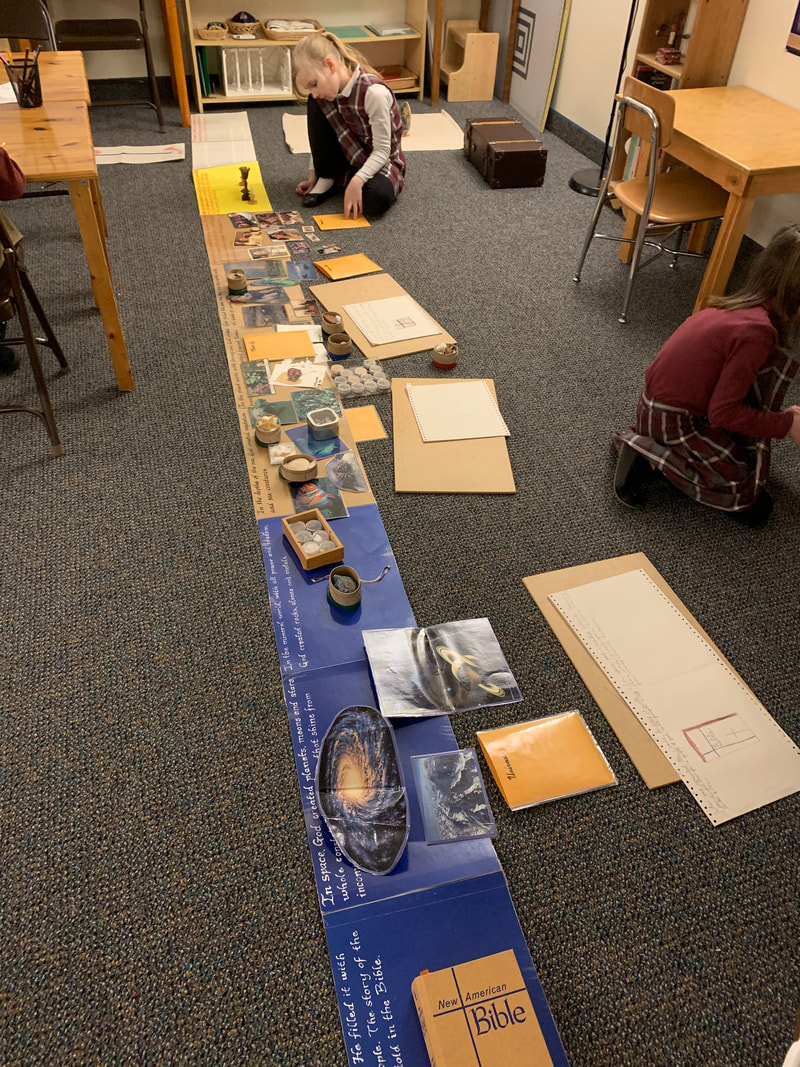
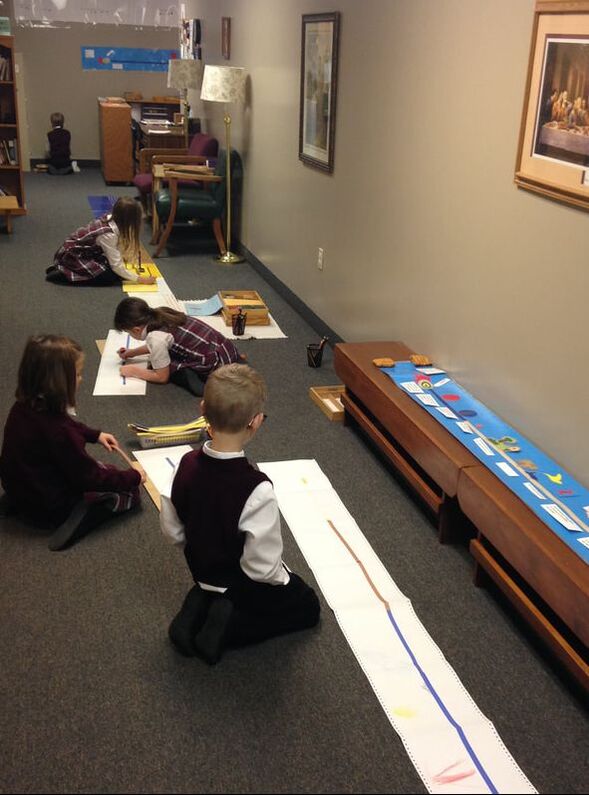
  • Expect follow-up and ask for a child’s commitment to a particular follow-up when needed. Early in the year the expectation needs to be set that the Atrium is a place of work. Thus, the catechist might need to suggest or even require ways of continuing particular materials in order to give lessons on how to work in this space. This might include showing how to make a booklet after showing the Altar Cards, how to make an Altar Collage after labeling the Model Altar, and how to make a timeline after presenting the Fettuccia. As the year progresses, keep in mind that every presentation does not need to include required follow-up, but questions like “What could you do to think about this even more?” or “I wonder how you might want to pray with this work?” can assist the children in continuing to make appropriate choices.
  • If a child in the second plane is unable to find appropriate work, work which engages the reasoning mind and requires effort, the adult may need to assist the child in finding a work or even assign one. The child of this age does not learn by wandering about because the absorbent mind is no longer operating.
  • For another perspective, you might appreciate the CGSUSA podcast episode 124: "The Work of the Second Plane Child" with Cathy Johanni and Anna Hurdle.
Picture
Picture

L2 Children

1/3/2024

 
Because the Catechesis of the Good Shepherd training begins with Level 1, for 3-6yo children, catechists often are immersed in and come to deeply know the needs and capacities of children in what Maria Montessori calls the first plane of development (ages 0-6). When moving on to Level 2, I have noticed that even after hearing in training about the needs of children in the second plane of development (ages 6-12), catechists often expect their elementary Atrium to look and function much like their Level 1 experience. However, children in the second plane of development are entirely different children and their Atrium environment needs to serve them as such. While there are new materials in the L2 Atrium to meet the second plane needs of these children, it is primarily the way the catechist establishes expectations for the space and supports the children in reaching these expectations that will determine the efficacy of the children’s transition into and engagement in the Atrium during this new plane of development. In my notes from my Elementary Montessori Training, it is said in the following way: “The second plane has its own set of psychological characteristics which differ vastly from the characteristics of the first plane child. For that reason, the second plane child cannot be reached in the same manner as the first plane child was. Instead, there must be a new approach to meet the needs of the second plane child. Moving from primary to elementary age, then, requires a change of mindset for the adult.” Thus, over the next few weeks our focus will be on the L2 child, the L2 Atrium, and how to create and sustain a space of work, study, and prayer for these children.
Picture
Picture
Elementary children are social beings. They are interested in other people, other cultures, and ways of living in community. Dr. Montessori said that they have a “herd instinct” and seek out peer acceptance and friendship. They also have an expanded capacity for compassion, empathy, and service to their own community. Right relationship among persons becomes a focus, and they are interested in the underlying principles behind the rules they are asked to follow which contribute to these relationships. Dr. Montessori also called this the “age of rudeness” as the children often question the decisions and directions of adults in their lives in their quest to discover the deeper reasons behind guidelines and actions of the community. At times this growth in the social realm will manifest through aggressive or rebellious behavior and at other times the same child will appear hesitant. indecisive, and worry excessively. The orderly first plane child seems to have disappeared when, in reality, their sense of order has shifted from an external order to an internal order. Instead of being concerned about “everything in its place” on the Atrium shelves, they are focused on placing new ideas and concepts into their proper spot within the great amount of information building up in their minds. Their minds themselves are changing. The “absorbent mind” of the L1 child which takes in information from the environment simply by existing in it has shifted to a “reasoning mind” more capable of abstract thought which must be engaged for learning to take place. Where this child was previously content to hear the name of an item from the altar area, he now desires to know where its name came from, why it is used in the way it is, the history of its development and its relation to other items or its use in other areas of the faith or in life in general. This desire to look at the broader or “whole” picture led Dr. Montessori to speak about the elementary child’s need for “cosmic” education, an education which takes into account the interconnectedness of information and the development of a framework into which new knowledge can be placed and ordered. They are exploring the mystery of time, asking “Who is God? What is His Plan? Where was I at the beginning? Where do I fit into His Plan? They are also beginning to recognize and appreciate the vastness of God’s gifts and the gifts of other people throughout history, responding with gratitude towards God and also through finding people worth emulating, seeing them as heroes worthy of following.
Picture
Picture
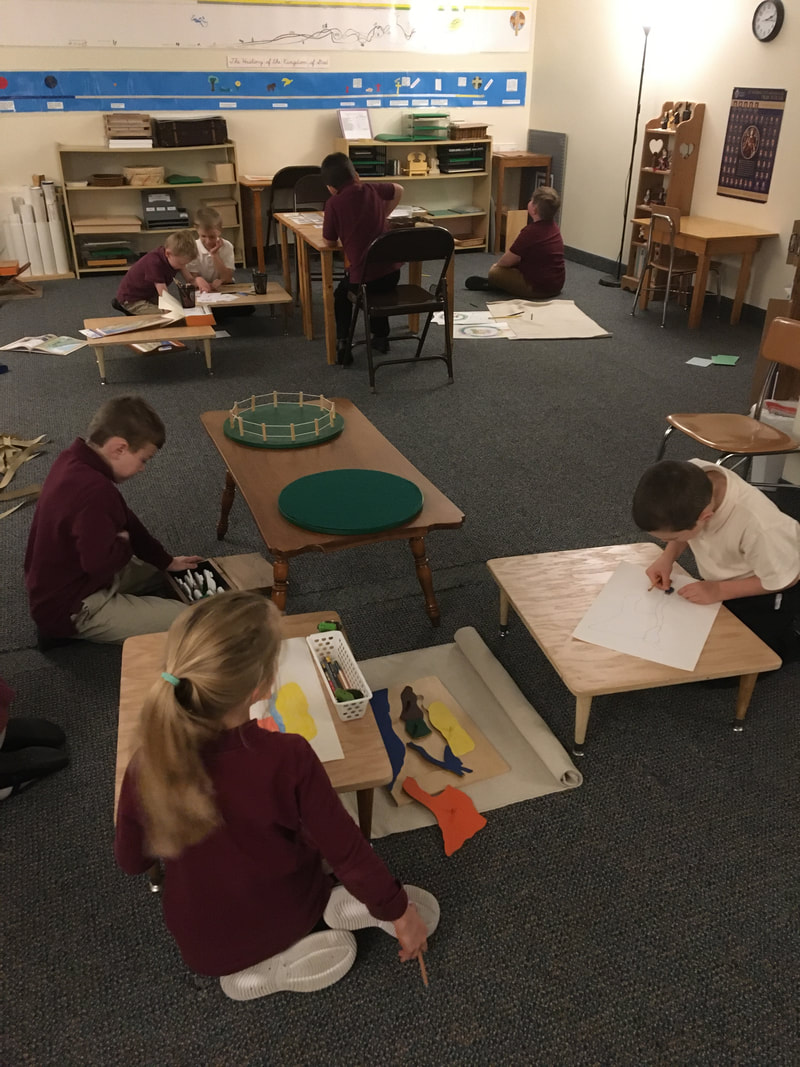
All of this can be summarized by saying that the L2 child needs a different type of Atrium environment both in its physical arrangement and layout (as these children need larger and more communal work spaces) and in its expectation and facilitation. It will be a louder, busier, messier space with small groups of children discussing Scripture, Liturgy, and their work (which will likely be spilling off of their tables or chowkis!). Rarely will a child be working alone for very long and it would be unusual to see a child going back to a material and working with it in exactly the way in which it was presented. The soft, slow, careful style of speaking and moving in L1 changes to an excited, engaging, and yet controlled conversation which may pull in opinions and thoughts of nearby children while not interrupting those deeply focused on other work. Instead of the silence of a library, the L2 Atrium should have the busy but focused hum of a laboratory. “The Atrium is a place of prayer in which work and study spontaneously become meditation, contemplation and prayer.” The work and study of the second plane child is not the same as that of the first. But it is only through work and study appropriate to their age that the children will truly be led into meditation, contemplation, and prayer. Next week we will continue this conversation by focusing on the work which best serves the characteristics of the L2 child.

    Carolyn Kohlhaas

    CGS Catechist and Formation Leader (Levels I, II, and III)

    Categories

    All
    At Home Review
    Baptism
    Celebrations
    Eucharist
    Good Shepherd
    Incarnation
    Intro To The Atrium
    Kingdom Of God
    Life Of The Church
    Montessori Theory
    Moral Formation
    Paschal Mystery
    Prayer
    Reconciliation
    Salvation History
    Typology
    Work Of The Adult
    Work Of The Child
    WOS Celebrations

    Archives

    March 2026
    February 2026
    January 2026
    December 2025
    November 2025
    October 2025
    September 2025
    August 2025
    July 2025
    June 2025
    May 2025
    April 2025
    March 2025
    February 2025
    January 2025
    December 2024
    November 2024
    October 2024
    September 2024
    August 2024
    July 2024
    June 2024
    May 2024
    April 2024
    March 2024
    February 2024
    January 2024
    December 2023
    November 2023
    October 2023
    September 2023
    August 2023
    July 2023
    June 2023
    May 2023
    April 2023
    March 2023
    February 2023
    January 2023
    December 2022
    November 2022
    October 2022
    September 2022
    August 2022
    July 2022
    June 2022
    May 2022
    April 2022
    March 2022
    February 2022
    January 2022
    December 2021
    November 2021
    October 2021
    September 2021
    August 2021
    July 2021
    June 2021
    May 2021
    April 2021
    March 2021
    February 2021
    January 2021
    December 2020
    November 2020
    October 2020
    September 2020
    August 2020
    July 2020
    June 2020
    May 2020
    April 2020
    March 2020
    February 2020
    January 2020
    December 2019
    November 2019
    October 2019
    September 2019
    August 2019
    July 2019
    June 2019
    May 2019
    April 2019
    March 2019
    February 2019
    January 2019
    December 2018
    November 2018
    October 2018
    September 2018
    May 2018
    April 2018
    March 2018
    February 2018
    January 2018
    December 2017
    November 2017
    October 2017
    September 2017
    June 2017
    May 2017
    April 2017
    March 2017
    February 2017
    January 2017
    December 2016
    November 2016
    October 2016
    September 2016
    August 2016
    May 2016
    April 2016
    March 2016
    February 2016
    January 2016
    December 2015
    November 2015

    RSS Feed

Powered by Create your own unique website with customizable templates.