The Wonderings of Sheep in the Atrium
  • Home
  • Atrium Updates
  • Table of Contents
  • Prayer in the Home
  • Observations
  • Resources
  • Trainings

Montessori’s Vision of the Child: The Process of Normalization

2/11/2026

 
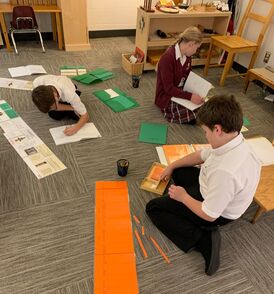
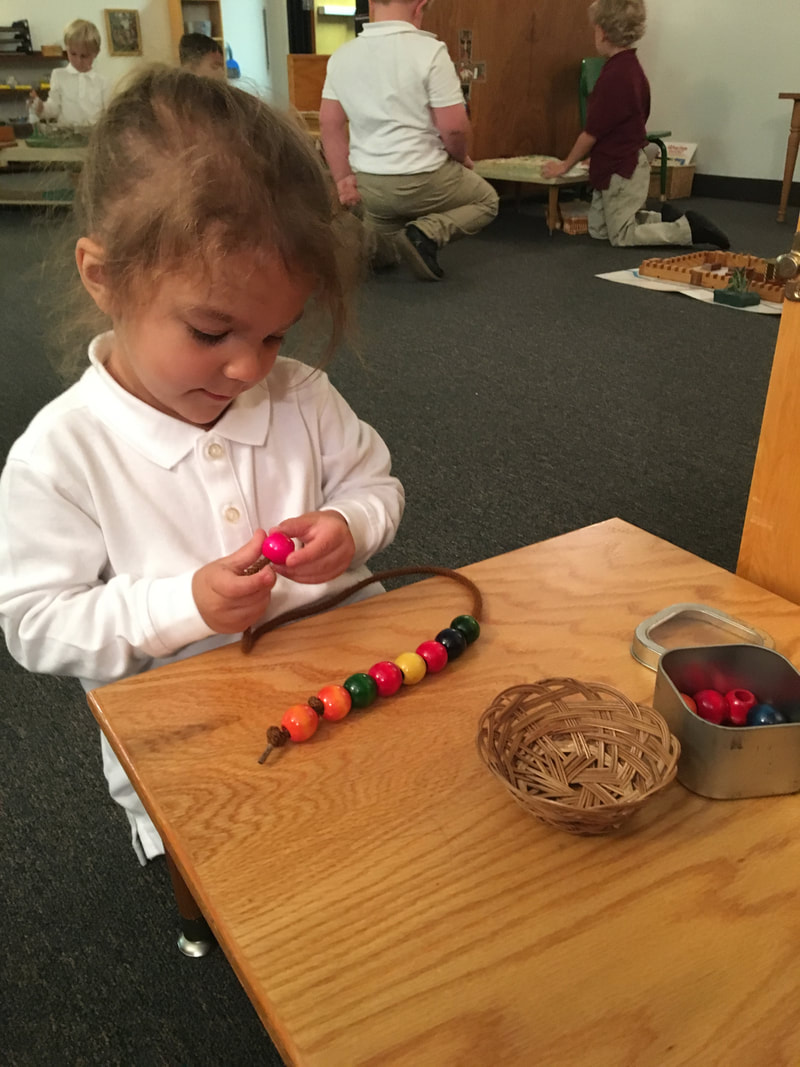
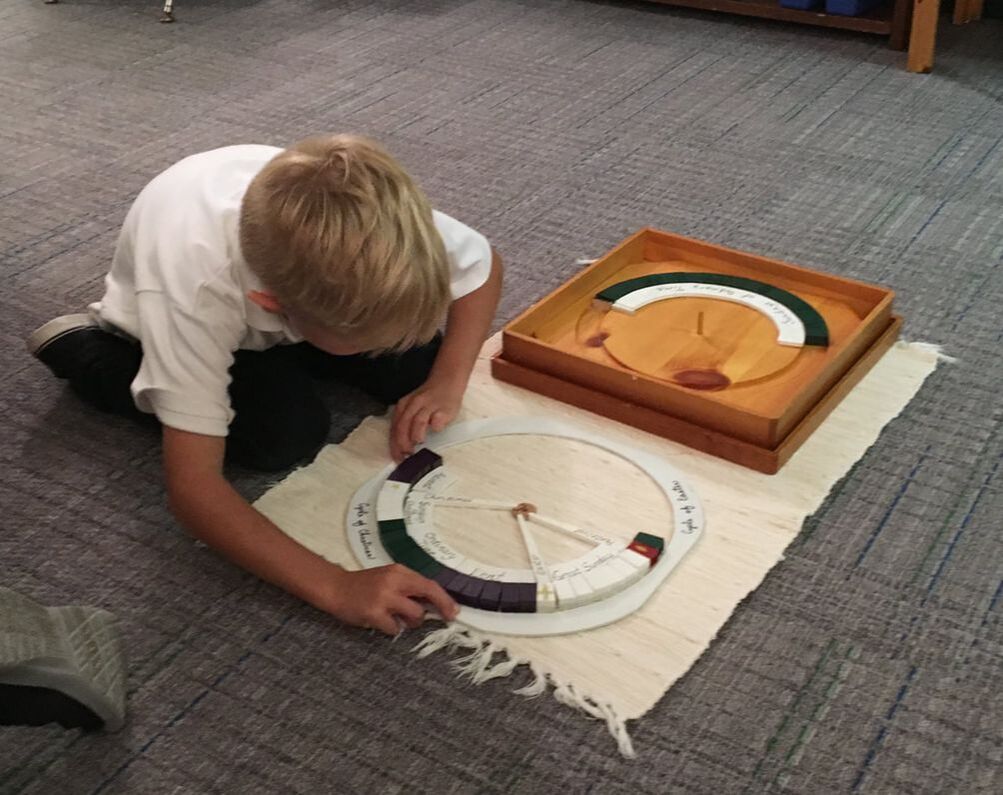
Normalization is an active process. It is the process of change from the characteristics of deviations which have occurred along the way to the normal path of development. Dr. Montessori says, in fact, that "at three, when they come to us, almost all of them are suffering from some kind of abnormality which is nevertheless correctable" (The Absorbent Mind). In a prepared environment such temporary deviations can and will often disappear. The “cure,” according to Dr. Montessori, primarily resulted through purposeful work, freely chosen, done by the hands, with real objects, accompanied by mental concentration. The result is a peaceful, joyful child. “When the children had completed an absorbing bit of work, they appeared rested and deeply pleased. It almost seemed as if a road had opened up within their souls that led to all their latent powers, revealing the better part of themselves. They exhibited a great affability to everyone, put themselves out to help others and seemed full of good will." (The Child in the Family).
  • “Purposeful work…” The child’s whole being is focused on constructing themselves, seeking out opportunities to develop their minds and bodies. It is through work, purposeful work, that this construction occurs. I often wonder if this is one of our greatest issues; we don’t understand “purposeful work” and don’t know how to help them reach this.
  • “…freely chosen…” “Freely chosen” can be easily misunderstood. “If freedom is understood as letting the children do as they like, using or more likely misusing, the things that are available, it is clear that only their ‘deviations’ are free to develop” (The Absorbent Mind). What we mean by “freely chosen” is that the children have the knowledge, capacity, and opportunity to choose an activity that will best support their personal development. Limits to this freedom include choosing only what has been shown and using it in the way it has been shown.
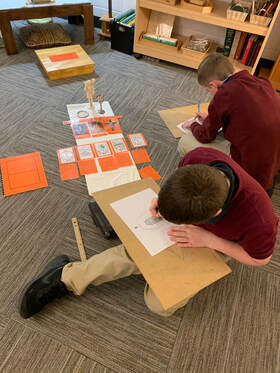
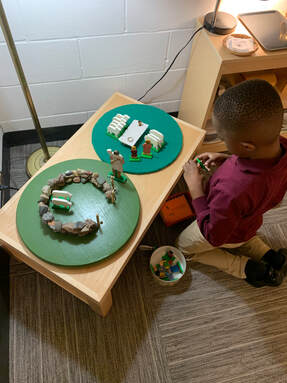
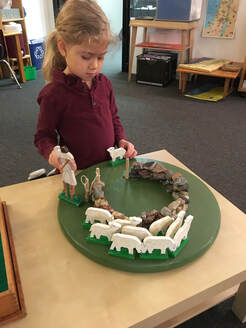
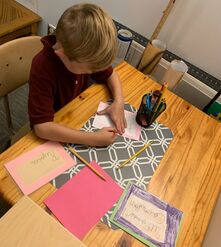
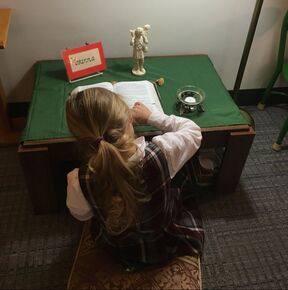
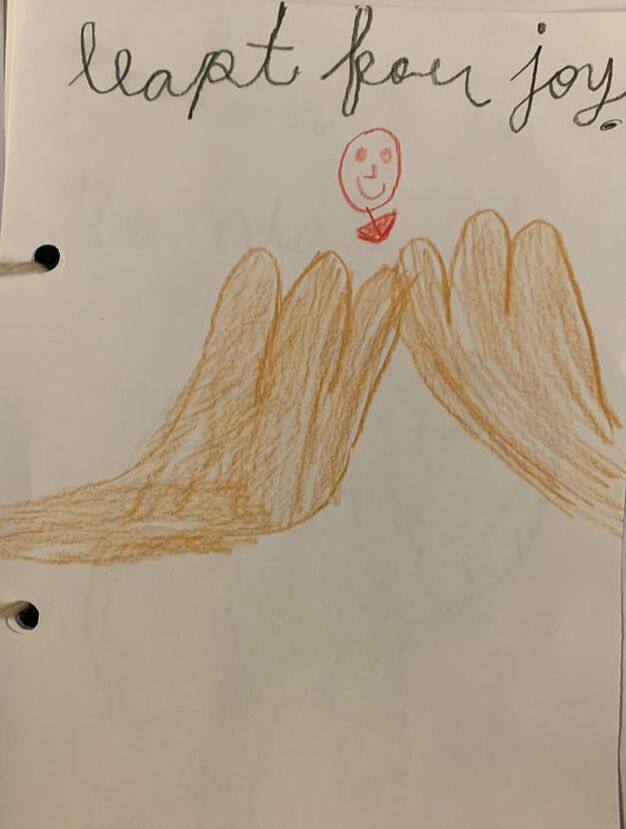
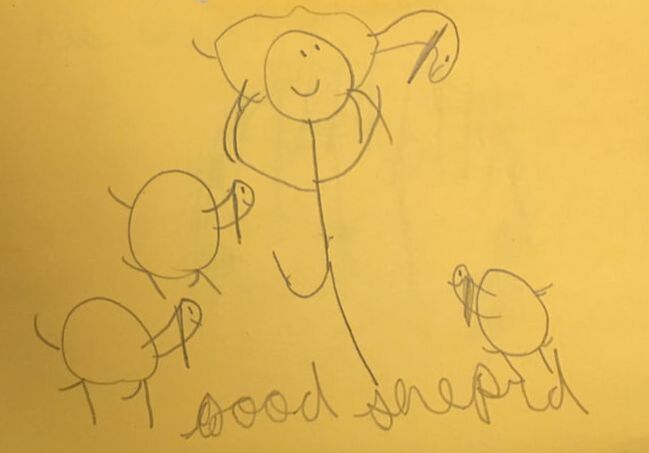
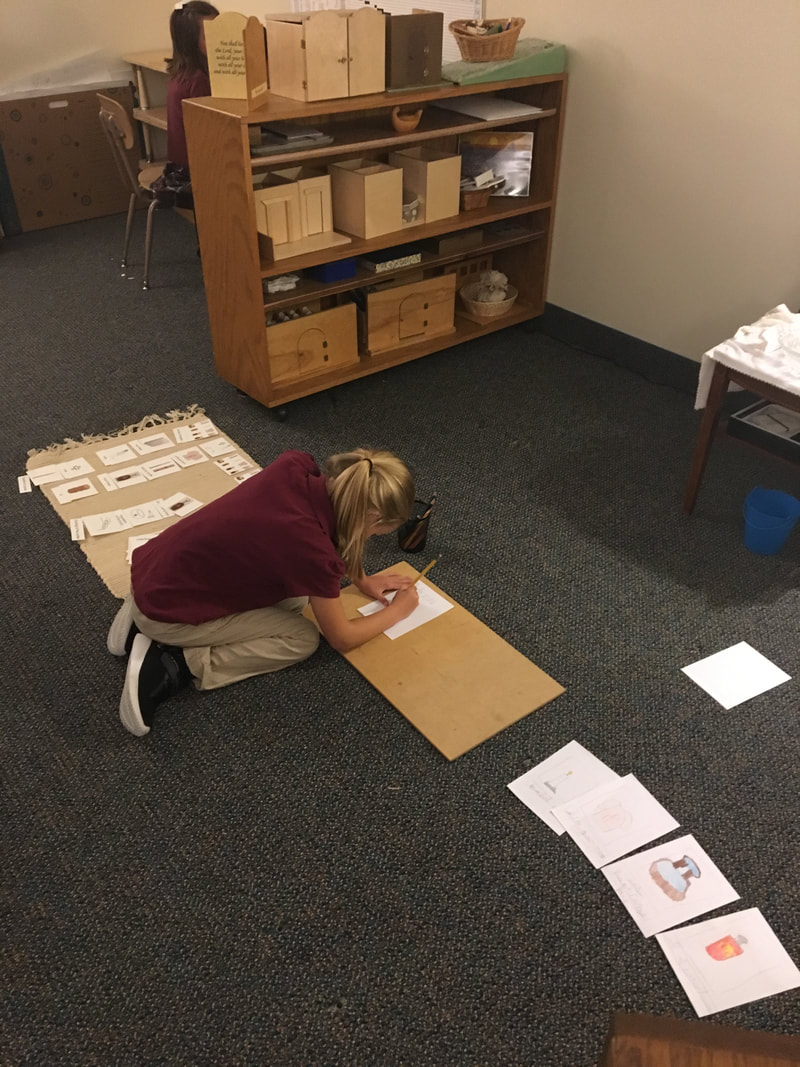
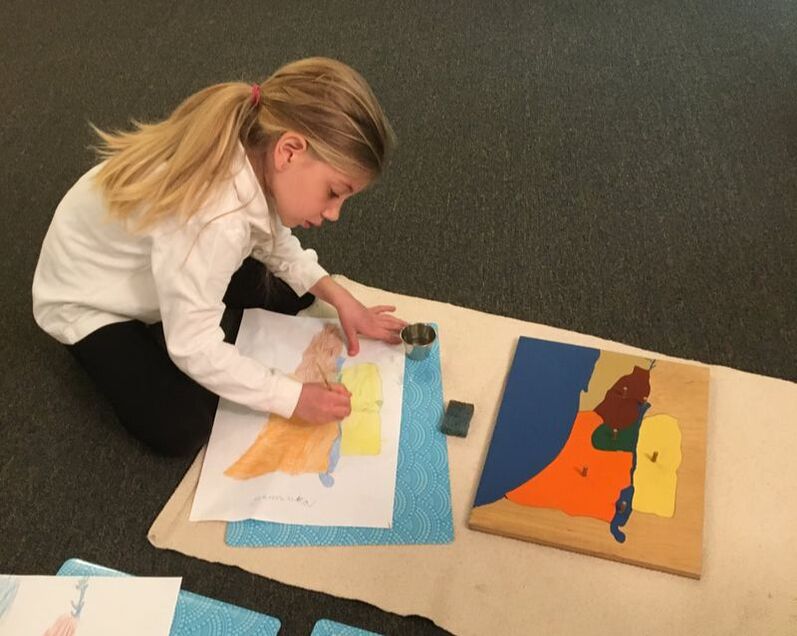
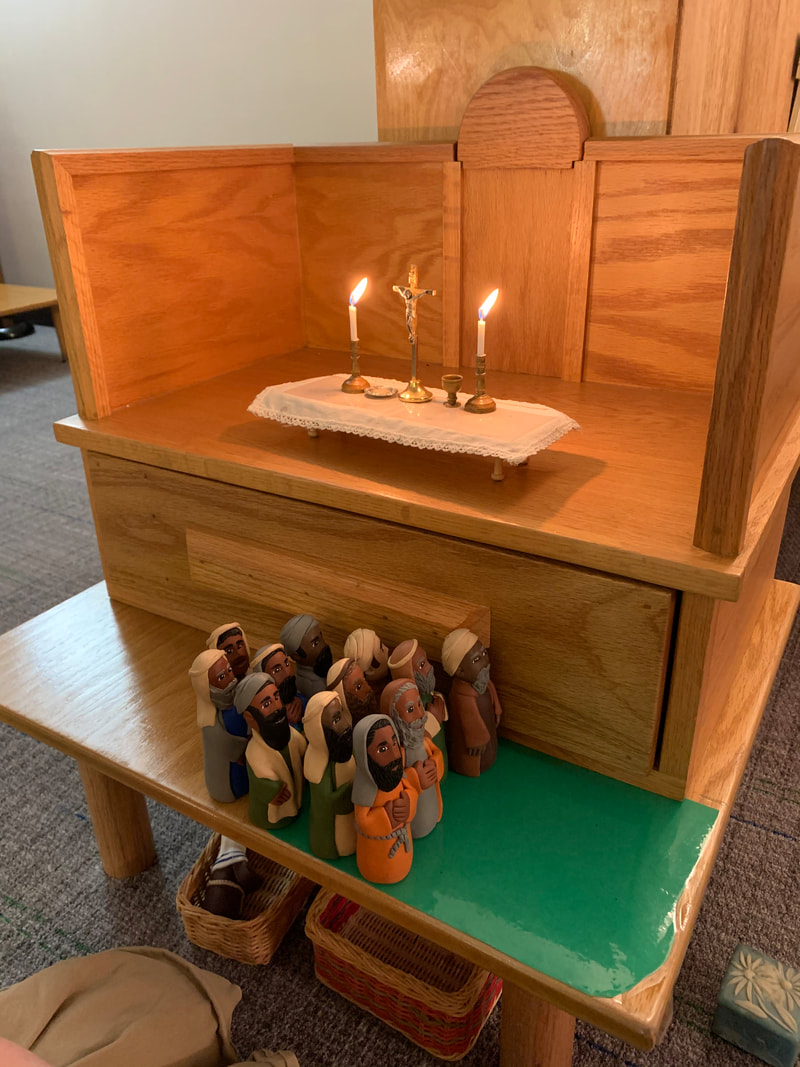
  • “…done by the hands…” Particularly in L1, it is the child’s hands that are the instrument of the mind. This is why the L1 child must have the opportunity and even the limit of working primarily with sensorial, physical materials, not with paper and pencil until around kindergarten. Setting an Altar or moving sheep around the sheepfold behind the Good Shepherd connects pathways in the brain that coloring a picture will not accomplish. Moving into L2, the use of the reasoning mind necessitates bridging into using the hand as a writing instrument in connection with the sensorial materials.
  • “…with real objects…” Real objects focus the attention and necessitate control of movement. Carrying a glass pitcher filled with water is accompanied by the risk  of spilling and breaking, something impossible when carrying an empty plastic pitcher with "pretend" water. The "reality" calls the child to concentration and care! The use of real objects lead to concentration, which is the key to it all.
  • “…accompanied by mental concentration.” It is not busyness or “occupation” but concentration. “The essential thing is for the task to arouse such an interest that it engages the child’s whole personality” (The Absorbent Mind). This includes the hand guided by intelligence, the uniting of physical and mental energy. For concentration to be reached, there must be interest, challenge, but also the potential for success. The right amount of interest and challenge leads to repetition and it is repetition that leads to mental concentration and focus.
 
Self-Reflection Questions:
  • When have you, personally, experienced this “cure” in your own life?
  • What work of the hand brought you to this type of mental concentration and focus?
  • Where have you seen this happen in the Atrium? With which children? Through which materials?
Picture
Picture

Montessori’s Vision of the Child: Hope!

2/4/2026

 
The behaviors which come as a result of these “deviations” are often so commonplace in children that we think of them as normal characteristics of childhood: overactive imagination, inattentive, messy, lazy, whiney, clingy, destructive, bored, selfish, aggressive, untruthful. While they may be commonplace, it is important that we recognize that these behaviors are not normal! Dr. Montessori herself described some of the first children she worked with as follows: “[They were] timid and clumsy, apparently stupid and unresponsive. They could not walk together and the mistress had to make each child take the pinafore of the one in front…they wept and seemed to be afraid of everything…they did not answer when spoken to. They were really like a set of wild children… (wild) in a forest of people, lost and beyond the bounds of civilized society” (The Discovery of the Child).
 
However, Dr. Montessori also, almost immediately, began to see a change. The personalities of the children began to be transformed. The negative behaviors and characteristics began to disappear and, in their place, the children began to show orderliness and care in their movements, focused, concentrated work, loving actions offered to one another with peaceful joy. This didn’t happen just in one environment, but, over time, it began to happen consistently across numerous Montessori environments over a great variety of cultures and socio-economic levels.
  • Dr. Montessori wrote, “The disorderly became orderly, the passive became active, and the troublesome disturbing child became a help in the classroom. This result made us understand their former defects had been acquired and were not innate. But all these disturbances came from a single cause, which was insufficient nourishment for the life of the mind” (The Absorbent Mind).
  • Led by the children, Dr. Montessori felt she had discovered their true nature. Through observing the process of “conversion” of the child, she found that the “normal” child is in no way “average.” We might, instead, say that the “normal” child is “saintly.” In fact, Dr. Montessori herself said, "[Normalization] is the most important single result of our work" (The Absorbent Mind). Instead of “conversion” to describe this phenomenon, “normalization” was used in order to indicate the child’s return to the normal, healthy course of development. "Normalization," for Dr. Montessori, was "the optimal functioning of the organism at its best" (The Absorbent Mind).
 
So how do we get there?? That’s the big question, right?? As we continue, please keep in mind that, in a Montessori environment, what I am about to describe would have taken place more quickly than we might experience in the Atrium. The children Dr. Montessori was observing were in a prepared environment for a significant amount of time, with consistency. We typically have children for 90 – 120 minutes/week. Montessori had two to four times that amount in a single day, five days a week. Time makes a huge difference in this process. Still, we are here to look at how to help the children we serve, and what Dr. Montessori has to say about the process of Normalization is beautiful.
 
Self-Reflection Questions:
  • How have you grown (personally) in the process of normalization / sanctification?
  • How has CGS Training and your time in the Atrium affected your growth in normalization?
  • Name children whom you have seen move towards this type of "conversion."
  • What was it that influenced their growth?
Picture
Picture

Montessori’s Vision of the Child: Weak Characters or Wills

1/28/2026

 
Weaker children will surrender to obstacles and become passive. They are easily frightened and cling to adults. They may be lazy and bored, wanting others to entertain them. They may even lie or steal, resorting to sneaky behavior or they may be whiney, clingy, and cry to get what they want.
  • “Barriers,” according to Dr. Montessori, "form an inner wall that shuts in the spirit, hiding it to defend it from the world" (The Secret of Childhood).  These walls are erected as a result of discouragement, mistrust, or hurt in certain areas causing the child to withdraw into himself to a point where he becomes unreachable. "A kind of curtain comes down over the child's mind, making him psychologically ever more deaf and blind. It is as though the subconscious mind were to say: 'You speak, but I am not listening; you repeat things, but I do not hear you. I cannot build up my world because I am building up a wall of defense so that you cannot come in!'" (The Secret of Childhood). This child may at first appear stubborn or unwilling to try, but eventually he may even become unable to do so, having convinced himself that he cannot learn. These barriers can continue into adulthood; just think of the adults who say, “Oh, I am terrible at math,” or, “I could never draw.” The intelligence and creativity once existed, but were derailed at an early age.
  • Attachment or dependence results in a child who is unable to resist separation from the adult and solves his problem by becoming dependent upon them instead. This is also called "adult substitution" as the adult substitutes his desires for those of the child, likely unknowingly. These children, in a very real sense, make the adult their servant. They ask questions continuously, not seeking answers, but using this process to bind the adult to themselves. The adult commonly sees this deviation as a virtue saying, "My child loves me so much he can't bear to be without me."
  • Inferiority is another deviation, according to Dr. Montessori. The child begins to dislike himself and compares himself to others, feeling inadequate and fearing rejection. "If the adult convinces the child that the incapacity lies in himself, then a kind of cloud covers his mind, bringing timidity, and a kind of apathy and a fear, which become constitutional. All these feelings together form the inner obstacle that psychoanalysis describes as an 'inferiority complex'" (The Secret of Childhood). If this child was yelled at for making mistakes, quite possible for the children Dr. Montessori was working with, he will constantly be wary of the adult, expecting a reprimand. In other cases, these children are "approval seekers" but cannot accept compliments as they feel unworthy.
  • Another category is that of lying. This vice often develops as a form of self-defense. When an adult is harsh or overreacts to a child, lying is a defense mechanism which kicks in to protect the child from the danger he senses. Sometimes, we encourage this behavior through our own example. It is important not to set up a child for a lie. Instead of saying, "Did you..." say, "I noticed..." so as to give them the opportunity to tell the truth.

Self-Reflection Questions:
  • Where do we see these weak-willed deviations in our own physical and spiritual lives?
  • How does such a self-examination help us to have new eyes and hearts when encountering children who are wrestling with similar deviations?
  • Where do we see these weak-willed deviations arising in the Atrium?

Picture
Picture

Montessori’s Vision of the Child: Strong Characters or Wills

1/21/2026

 
While there are a multitude of ways each individual child could manifest such struggles in relation to the obstacles in their environment and interactions, Montessori summarized them in two basic categories of children’s behavior: strong (those who resist obstacles) and weak (those who surrender to obstacles).
 
The strong children will fight and defend themselves against the obstacles they meet which are in opposition to their development. They are prone to aggression, disobedience, uncooperativeness, and often scream or have tantrums. They struggle to focus their attention or concentrate. Flights into unreality or fantasy are also common. Dr. Montessori speaks about several types of strong-willed deviations.
  • Fugue: In Latin the word "fugua" refers to the act of running away or hiding. "A fugue…represents a subconscious defense of the ego, which flies from discomfort or danger and hides itself behind a mask" (The Secret of Childhood). A fugue, in other words, causes a child to become a “fugitive.” In such a case, "the mind that should have built itself up through experiences of movement, flees into fantasy" (The Secret of Childhood). Adults tend to see this behavior as positive because they view it as a sign of creativity and a good imagination.
    • For example, a little girl might be so caught up in her fantasy world that she is unable to connect with any of the real materials in the environment. Everything becomes something else: a dollhouse, an animal, a “meal.
    • In another case, a little boy might refuse to answer or acknowledge his real name but only “Horse Boy.”
  • Possessiveness is a second type of “strong” characteristic seen especially in a child who will fight to defend any and all possessions without regard to their worth. "If it is rendered impossible for the child to find the motives of activity that would develop him, he sees only 'things,' and wants to possess them" (The Secret of Childhood).
  • Power or the desire for control may occur because the child feels no power within his life. He therefore begins to look to the adult to obtain power. "The child understands that his own power would be great indeed if he could act through the adult. Thus, he begins to exploit the adult to obtain from him what he could never obtain in his own sphere." (The Secret of Childhood). The child begins to manipulate. His simple commands lead to more and more unreasonable demands.
 
Self-Reflection Questions:
  • Where do we see these strong-willed deviations in our own physical and spiritual lives?
  • How does such a self-examination help us to have new eyes and hearts when encountering children who are wrestling with similar deviations?
  • Where do we see these strong-willed deviations arising in the Atrium?
Picture
Picture

Montessori’s Vision of the Child: Deviations

1/14/2026

 
Dr. Montessori, in her observations, began to recognize “deviations” or “defections from the norm” in the children that she served. (This is Dr. Montessori’s language.) She found that often these qualities were not actually natural to the child, but that they occurred as a result of an unprepared environment and unfitting expectations of the adult.

In The Child in the Family she says, "Of all the necessities the child requires, the one most often neglected is that which defines his humanity: his spiritual needs. The human being who lives in the child remains hidden. Only the forces and energy necessary for the child to defend himself from us are revealed: sobs, screams, misbehavior, shyness, disobedience, lying, egoism, and destructiveness. We commit the gravest of errors if we consider these means of defense the essential elements of the child's character” (The Child in the Family).

I often need to be reminded to look not so much at the child when challenges arise, but moreso at the environment and at the way that we, ourselves, offer CGS to them.
 
Self-Reflection Questions:
  • In what way might we, ourselves, be running into obstacles which keep our own spiritual needs from being met?
  • How could we remove these obstacles, or ask the Lord to do so, for our own growth in encountering Him?
  • What obstacles are our Atrium children running up against that are under our control?
  • How might we remove these obstacles so that each child has the opportunity to encounter the Lord in a new and deeper way?
Picture
Picture

Montessori’s Vision of the Child: The Problem

1/7/2026

 
This past November more than 125 area catechists gathered for an enrichment day focused on serving children with varied needs in the Atrium. We began the day by pondering Dr. Montessori’s vision of the child and over the next few months I would like to share those thoughts with you here.

In discussing “typical” challenges Atrium children and catechists face in our current society, a group of experienced CGS catechists recently brainstormed the following list:
  • Lack of interest / attention / desire to repeat which is influenced by sugar / foods, technology’s influence on brain development, the effects of ADHD, a culture that says “new” is synonymous with “good.” (So often we hear: “Can you show me something new?” or “I’ve already done that / heard that.”)
  • Constant need for reassurance / validation by children who lack the ability to self-assess and lack independence.
  • Struggles to wonder / ponder (“Just give me the answer!”) as well as a fear / lack of effort and work.
  • Lack of Discipline, disrespect, and even defiance.
  • Delays in Reading/Writing, accompanied by a rise in Dyslexia.
  • Parental pressure to serve their child in their timeframe.

While it may seem that these are modern, 21st century challenges, I recently came across two quotes from Montessori’s time (100 years ago) that might be surprising!
  • From a Montessorian in Paris: “I must confess that my experiences were really discouraging. The children could not concentrate on any work for more than a minute. They had no perseverance and no initiative…Sometimes they rolled on the ground and upset the chairs” (The Secret of Childhood).
  • Regrading “privileged children in America: “The children snatched the [materials] from each other; if I tried to show something to one child, the others dropped what they were doing and noisily, without any purpose, crowded around me…They ran around the room without any end in mind…they took no care to respect things; they ran into the table, upset the chairs, and walked on the [materials]” (The Secret of Childhood).

In reading these quotes I was reminded of the Scripture: “What has been, that will be; what has been done, that will be done. Nothing is new under the sun!” (Ecclesiastes 1:9).
 

​
Self-Reflection Questions:
  • What “problems” did you face early in the year that are no longer struggles for you or for the children in your Atrium?
  • What has helped alleviate those challenges?
  • What difficulties are you and the children still experiencing?
  • Who can you speak with to help you brainstorm ideas for serving these children?
Picture
Picture

EPL: Control of Movement

10/9/2024

 
In the Montessori Environment the Control of Movement section of Practical Life includes two activities: "Walking on the Line" and "The Silence Activity."

While it is possible to have a walking line in the Atrium, I have never offered this myself. However, walking carefully can be modeled and practiced both on the way to the Atrium and also within the Atrium in order to help children focus their attention and settle their bodies. In some ways, walking in a procession is one way in which we honor the child's interest in this type of focused movement.
  • I have observed Atria which employ a "wandering line" through the Atrium as a line on the floor that a child could follow to guide them in slowly walking around the edge of the space.
  • In other Atria I have seen a shorter straight line on which a single child could walk. Often this type of line is located near a basket containing several objects the child could carry while walking. Some options might include a flag, a spoon holding a bead, a cup of water, and/or a bell. If the child drops the bead, spills the water, or rings the bell as they walk on the line the activity might be over for that child until the next Atrium session. 

The Silence Activity is something I have frequently found appropriate for the Atrium, at least on the individual level. The Silence Activity in its fullest communal form requires a good deal of "self-mastery" by all of the children in the space. When presented in the Montessori environment, “The silence lesson may never be given in order to reduce the community to silence when it is rowdy… The silence lesson presupposes a high capacity of concentration and inner discipline and can therefore never serve as a means to remedy the lack of them. Silence is a point of arrival not a point of departure” (‘The Silence Lesson’, AMI Communications, 1967 #4, p. 27).
  • In some ways, we honor this need for stilling one's body every time we gather with the children at the prayer table. However, because we are in the Atrium only once a week, we do not have the consistent opportunity to help the children enter into silence as a group in the way it is done in the Montessori environment. We rarely make silence for an extended period of time when all children are gathered because not all children are ready to participate in such a request.
  • Instead, I have found that a focus on an individual silence activity is a better choice in the Atrium, and I typically store a small tray for this work on the prayer shelf. It consists of a stand, several pictures fitting to the themes of the Atrium, and several sand timers. When used, the child is invited to choose one picture and one sand timer, setting the others aside for use in repeating the activity. After stilling one's body and preparing oneself to focus on the image while listening and speaking with God on the inside, the child is invited to turn over the sand timer and be still for as long as the sand runs. When finished, he is welcome to repeat with the same or another image and/or timer.
Picture
Picture

EPL: Grace and Courtesy

10/2/2024

 
Lessons of grace and courtesy are concerned with helping children develop the social skills needed to live in community. These presentations are given from the moment children enter the Atrium and should continue to be offered throughout the year. Practice and modeling of grace and courtesy by the adults and children lays the foundation for peaceful interactions within the group. Grace concerns the internal portion of this part of practical life while courtesy is the external expression of this inward possession of order. Through the living out of inward grace and respect, social relationships are established and maintained. In addition, the foundation for order in the Atrium is put in place through these respectful interactions. All of this is essential in providing a peaceful place of prayer for the children in the Atrium. 

While there are no distinct materials for Grace and Courtesy presentations, which can lead to a tendency to overlook them and forget their importance, these lessons should be some of the most frequently repeated "works" in the Atrium. They can be given directly by sitting down with a small group of children and carefully walking through the language and actions used in dealing with everyday social encounters. However the more frequent type of Grace and Courtesy presentation consists of those indirect lessons which include every action and interaction of the adult which occurs where the children are able to observe. These unintentional presentations are far more influential than direct lessons on the children. Because of this, all of the adults in the atrium must work to internalize the essential attitudes of respect, dignity, and compassion. As the children learn the language and movements appropriate to the Atrium space they will spontaneously begin to apply the lessons of grace and courtesy to their interactions in the Atrium as well as (we hope!) to their everyday lives.

While there could never be a complete list of Lessons of Grace and Courtesy, some that are often needed in the Atrium are included below in a list format. When and how to present them depends on the needs of the group. For a very young group with few returning children, these would be needed often, especially at the beginning of the year. For a group with many returning children they will not be as essential because the older children will be able to be frequent models of this behavior. 

1. Presented during the Intro to the Atrium presentation:
  • How to Walk in the Atrium
  • How to Speak in the Atrium
  • How to Carry a Tray
  • How to Sit at a Table
  • How to Sit in a Group
  • How to Unroll and Roll a Mat
  • ​How to Walk Around a Mat
  • How to Use a Mat for Work
2. Presented over the first few weeks in the Atrium: 
  • How to Walk in a Procession
  • How to Prepare Your Body Before a Candle Is Lit
  • What to Say or Do when One’s Work is being Disturbed by Another Person
  • How to Draw Attention
  • How to Observe​
Picture
How to Respond to the Chime: "Stop, Look, and Listen."
Picture
How to Unroll a Mat as presented by an older child.
Picture
How to Hold a Bible.
Picture
How to Observe.

EPL: Care of the Environment, Part 2

9/25/2024

 
While I have not often had Handwashing and Flower Arranging available in the Atrium, that is because I have most frequently had one room for all three levels and thus have not had the space to give to these stations. If possible, they would be excellent additions to the Atrium. Below are photos of the materials I take to show these works when traveling for trainings. Ideally they would be set at permanent stations utilizing a table not a chowki.
Picture
Picture
Handwashing begins with putting on the apron (see below the station). It also requires a water source where the child would go to fill the pitcher to the base of the handle.
  • Once the basin is filled the pitcher is set to the top right of the basin.
  • There is a bar of soap, a nail brush, and a container for rings/watches/etc.
  • After the cloth is used to dry one's hands the basin is emptied into a bucket.
  • Then the drying cloth is used to dry out the basin, placed in the laundry, replaced with a fresh cloth, and the pitcher is restored to the basin for the next child's use.
Picture
Picture
Flower arranging is typically set with flowers in a large vase (see the empty vase to the left of the chowki) and a tray with small vases and doilies near or on a shelf below the work area. Here, the tray of vases and doilies is behind the station for the purpose of the photograph.
  • The child would put on an apron (see below the table) and take the long metal tray to the vase if at a distance, placing on the tray the flower(s) for arranging and returning it to the station. Often I have limited the child to one flower stem and one piece of greenery in order to allow multiple children to do this work.
  • At the top of the station you see a bowl with a funnel, a sponge, a container for clippings or pieces of stem with a set of tongs for picking that greenery out of the water, and a cloth for drying the basin at the end of one's work. On the lower row there is a sharp scissors for clipping the stem. Dull scissors are dangerous in this work; however, you must use discernment in inviting children to use sharp scissors. When I had a flower arranging station in the Atrium I kept this pair of clippers in my pocket and invited the children to come find me when they wanted to do this work.
  • After putting on the apron and collecting their flowers, the child fills the pitcher to the base of the handle, fills the basin, and places the pitcher to the right.
  • The child then chooses a vase for arranging and sets it below the pitcher. The child stands the chosen stem up to the vase in order to measure height then places the base of the stem in the basin of water, cutting small pieces off with the clippers (under the water). Periodically the child checks his/her stem against the vase as it is cut.
  • Once the flowers/greenery are at the right height and are placed in the vase, the child chooses a doily and finds a location to set the vase in the Atrium environment.
  • The child then returns to the flower arranging station and uses the tongs to pick the pieces of stem out of the basin and put those in the container at the top of the station.
  • The child brings the container with pieces of stem to the garbage, empties the water into the dump bucket, and dries the basin with the cloth. After placing the cloth in the laundry and replacing it with a fresh cloth, the pitcher is restored so the station is ready for the next child.

EPL: Care of the Environment

9/18/2024

 
When beans or flour has been spilled, when there is water on the floor, or when an oilcloth or table is dirty with glue or leaven, it is important to have the tools necessary for the children to care for their space. In general, it is important to limit these materials to just the most essential. However, there is a great gift in adding handwashing and flower arranging when there is space in your Atrium!
Picture
The left side of this shelf hold the trays for napkin folding and pipetting work. While these are not technically Care of the Environment materials, napkin folding is helpful in gaining skills for folding altar linens and pipetting is a prerequisite to polishing as it helps the child learn how to put just one drop into the bowl at a time. To the right of the shelf can be seen metal polishing, replacement cloths and applicators, and wood polishing.

​Here are the preliminary materials (which typically do need to be presented individually) which are placed on this Care of the Environment Shelf. 
  • Typically there are two additional napkins with the lines for a purificator (thirds and half) and for a corporal (thirds and thirds) sewn onto them.
  • Pipetting work has the only colored water in the Atrium because the child is focusing on putting just one drop into each circle of the "soap saver." Consider using food coloring that matches the sponge and oilcloth / table mat. Restoring pipetting work is as simple as placing the sponge on top of the base to draw up the water. The sponge can be squeezed out into the silver container (a "condiment cup") used to hold the sponge. That container can be emptied into the dump bucket at the water source if needed. Refilling the pipetting container can be challenging. I have found that a plastic squeeze bottle for condiments works very well because of its small tip.
Picture
Napkin folding.
Picture
Pipetting.
Picture
Napkin folding.
Picture
Pipetting.
Picture
Restoring pipetting work.
Picture
Extra supplies: pipetting water, applicators, polish, and a second full metal polish container to replace if needed.
Picture
Beside the EPL shelf is an extra space for some additional Care of Environment materials and supplies. On the top of the table you can see pencil sharpening (the small silver bowl with sharpener on the glass tray), cleaning up a wet spill (black bucket with grey cloth inside), cleaning up a dry spill (dustpan and brush hanging on side of shelf), and the water source for the children to use in getting water for the Baptism area and the Lavabo once those have been presented. On the bottom shelf is the material for cleaning a table or oilcloth as well as the container for refilling the pipetting work (adult use only!) and a small laundry basket. On the floor is a tray with extra cloths for cleaning up a wet spill.

Picture
Picture
Polishing work requires items in need of polishing! These items are placed around the environment. When presenting polishing, set up the material at a chowki or table and then walk around the Atrium with the child, pointing out items made of metal (or wood, if applicable) that could be polished. In the above photos there are several polishing items used to decorate the Atrium. Ideally these items are crosses, religious items, or animals/creation themed articles which are simple, smooth, and do not allow polish to get stuck in small crevices! By finding an item to polish, the child is coming to know the environment and also to care for it. There are certainly some Atrium items that I would dissuade a child from polishing, but really anything made of the material for which that polishing work is intended could potentially be polished by the child. Do please keep in mind that this work is far more about process than product, as I posted previously!
Picture
Metal polishing. (I have placed the "refilling" tray here to highlight it: buffing cloths for metal/blue. wood/yellow plus applicators. The child would not carry this to the chowki.)
Picture
Wood polishing.
Picture
Cleaning up a wet spill.
Picture
Metal polishing includes polish, applicator in bowl, buffing cloth in bowl, and sponge in bowl. The item to be polished is collected from the environment and then restored.
Picture
Wood polishing: three drops of polish are placed in the bowl.
Picture
Cleaning up a dry spill.
Picture
Cleaning an oilcloth / table mat or table.
Picture
Items stay in caddy when in use. Child uses three squirts of water on mat/table then scrubs with nailbrush, collects water with sponge, and drys with cloth.
Focus and concentration can certainly be seen when children use EPL in the Atrium! May this truly be a foundation for prayer.
Picture
Picture
<<Previous

    Carolyn Kohlhaas

    CGS Catechist and Formation Leader (Levels I, II, and III)

    Categories

    All
    At Home Review
    Baptism
    Celebrations
    Eucharist
    Good Shepherd
    Incarnation
    Intro To The Atrium
    Kingdom Of God
    Life Of The Church
    Montessori Theory
    Moral Formation
    Paschal Mystery
    Prayer
    Reconciliation
    Salvation History
    Typology
    Work Of The Adult
    Work Of The Child
    WOS Celebrations

    Archives

    January 2026
    December 2025
    November 2025
    October 2025
    September 2025
    August 2025
    July 2025
    June 2025
    May 2025
    April 2025
    March 2025
    February 2025
    January 2025
    December 2024
    November 2024
    October 2024
    September 2024
    August 2024
    July 2024
    June 2024
    May 2024
    April 2024
    March 2024
    February 2024
    January 2024
    December 2023
    November 2023
    October 2023
    September 2023
    August 2023
    July 2023
    June 2023
    May 2023
    April 2023
    March 2023
    February 2023
    January 2023
    December 2022
    November 2022
    October 2022
    September 2022
    August 2022
    July 2022
    June 2022
    May 2022
    April 2022
    March 2022
    February 2022
    January 2022
    December 2021
    November 2021
    October 2021
    September 2021
    August 2021
    July 2021
    June 2021
    May 2021
    April 2021
    March 2021
    February 2021
    January 2021
    December 2020
    November 2020
    October 2020
    September 2020
    August 2020
    July 2020
    June 2020
    May 2020
    April 2020
    March 2020
    February 2020
    January 2020
    December 2019
    November 2019
    October 2019
    September 2019
    August 2019
    July 2019
    June 2019
    May 2019
    April 2019
    March 2019
    February 2019
    January 2019
    December 2018
    November 2018
    October 2018
    September 2018
    May 2018
    April 2018
    March 2018
    February 2018
    January 2018
    December 2017
    November 2017
    October 2017
    September 2017
    June 2017
    May 2017
    April 2017
    March 2017
    February 2017
    January 2017
    December 2016
    November 2016
    October 2016
    September 2016
    August 2016
    May 2016
    April 2016
    March 2016
    February 2016
    January 2016
    December 2015
    November 2015

    RSS Feed

Powered by Create your own unique website with customizable templates.