The Wonderings of Sheep in the Atrium
  • Home
  • Atrium Updates
  • Table of Contents
  • Prayer in the Home
  • Observations
  • Resources
  • Trainings

The Prepared Environment

11/30/2022

 
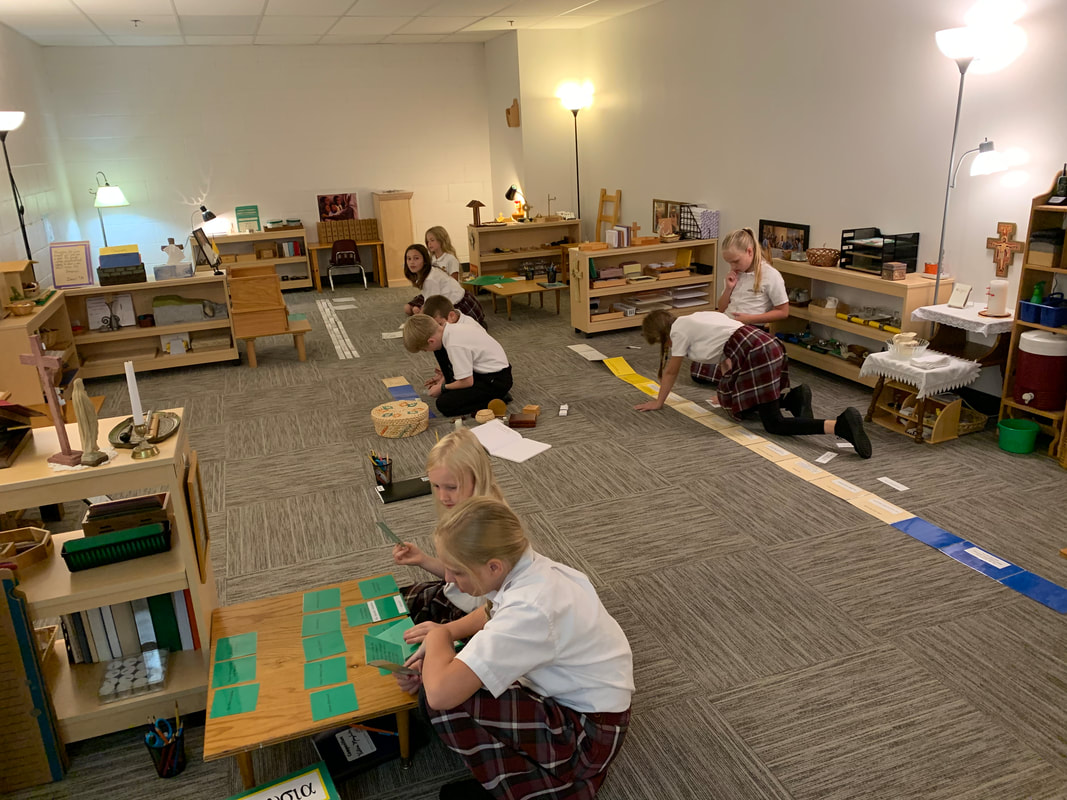
In September I listed some of the general principles of setting up an Atrium environment. While there is no standard Atrium blueprint or set-up, photos of one L1-L3 Atrium (along with a pdf blueprint of the space) can be found at the bottom of the home page of this blog. In addition to the information provided in these places, I am frequently asked about sizes and heights of shelving, chowkis, tables, and materials, particularly for the Level 1 Atrium space. The general principle is that everything should be at the child's height, providing easy accessibility and use. But what does that look like in numerical terms?

Here are some thoughts on sizing that has worked well in L1:
  • L1 shelving would ideally be around 12"x24"x44.5" (+2" casters). ​In L2 you could have higher shelving (29" + 2" casters). However, clear sight lines are always important and shelving higher than this creates spaces that are difficult to see and challenging for the youngest children to use easily. Consider using shelving without backs to help with sight lines as well. With shelves the size I have listed here, the L1 space requires 6-7 shelves. If you are planning to have L1 and L2 in the same space (at different times of the day or week) you will need about 3 additional shelves with a total of 9-10. If your L2 is in a separate space you will need a total of 7-8 shelves in L2.​
Picture
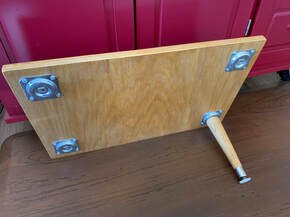
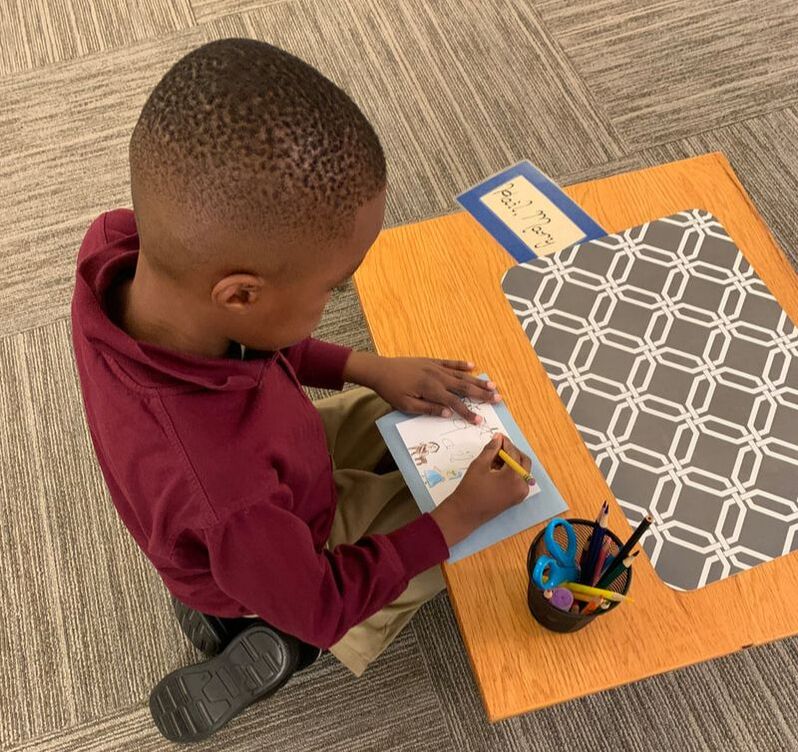
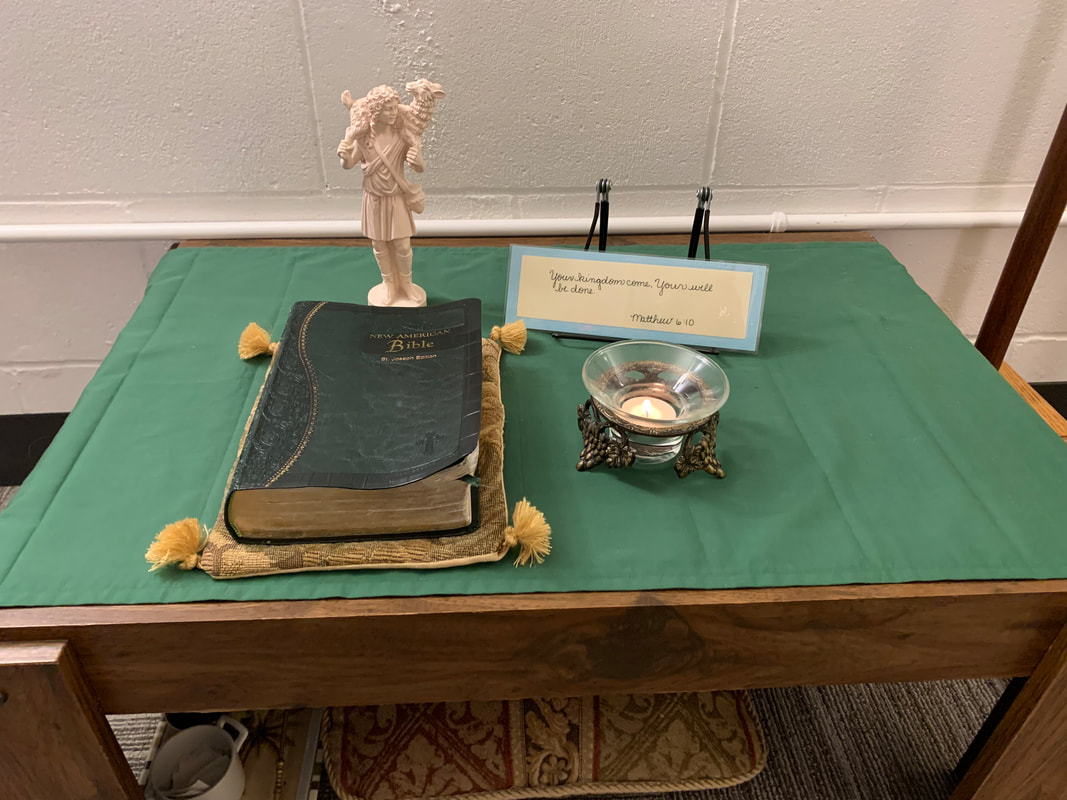
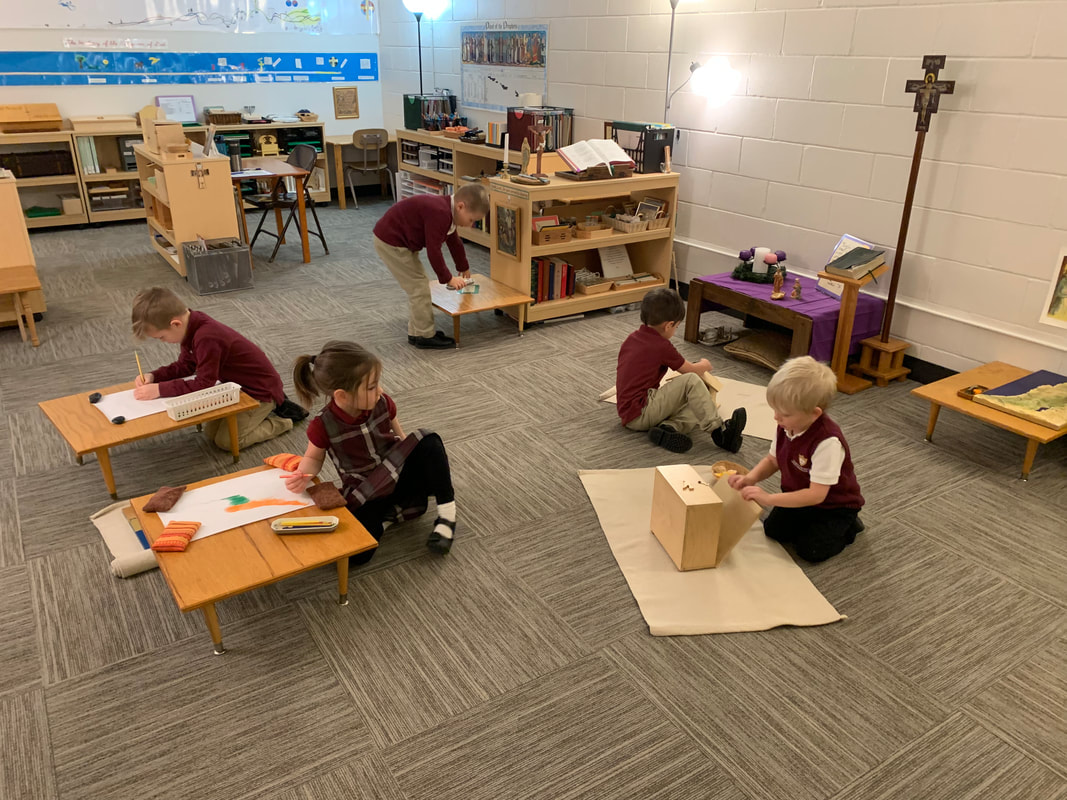
  • Chowkis are tables that are low to the floor, do not require chairs, and can be easily moved by the children. While they can have a surface area as small as 12"x18" they are ideally closer to 20"x24" with 8.5"/9.5" "legs" making them 9-10" tall. Chowkis, the Prayer Table, the Good Shepherd table, the Cenacle material and any other station where the child will sit on the floor should be no higher than 10"-12". At this height even the youngest child, seated on the floor, can easily reach, work with, and enjoy the materials and space.​

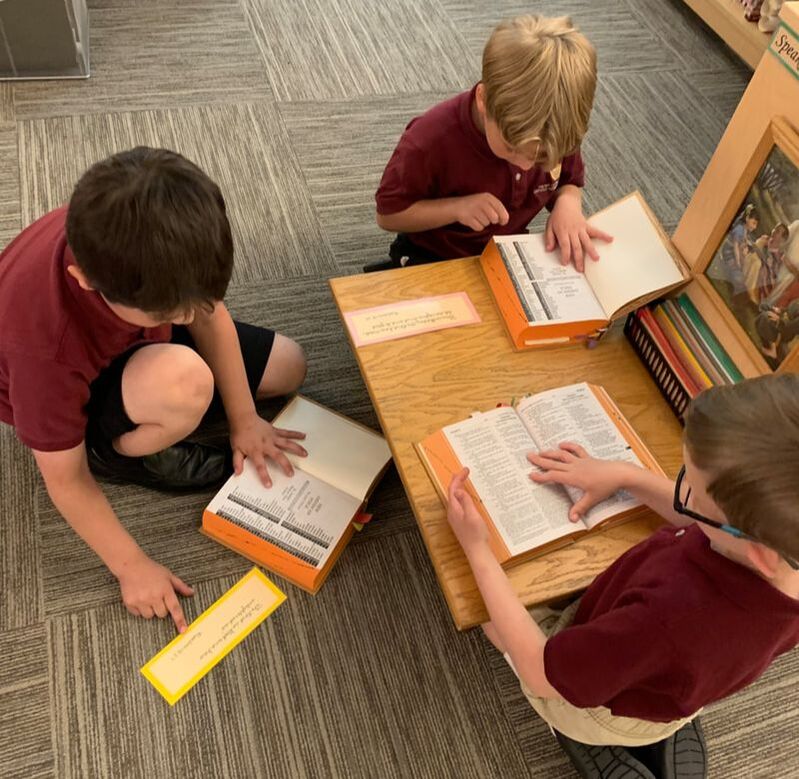
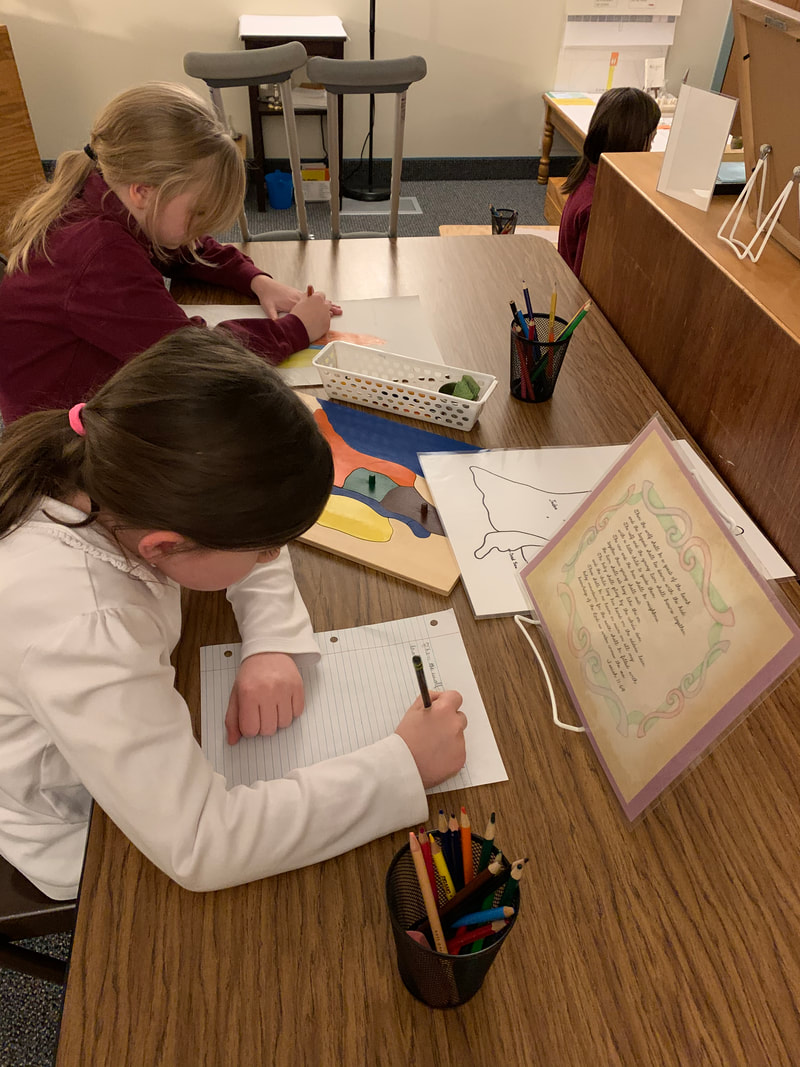
  • Children's tables come in many sizes and heights. Be careful to ensure that the chairs you use leave space for the child's knees at each table. The surface area for L1 tables can be around 18"x30". L2/3 tables will need to be larger, 22-24"x30-33", fitting a juvenile or adult sized chair. In a L2/L3 Atrium you might consider having a few 2-person tables which are even larger and possibly even one large table where a group of L3 children can gather for a Bible study. If you are using one space for L1-L3 consider sticking primarily to chowkis as children (and adults) of all ages can use them with ease.

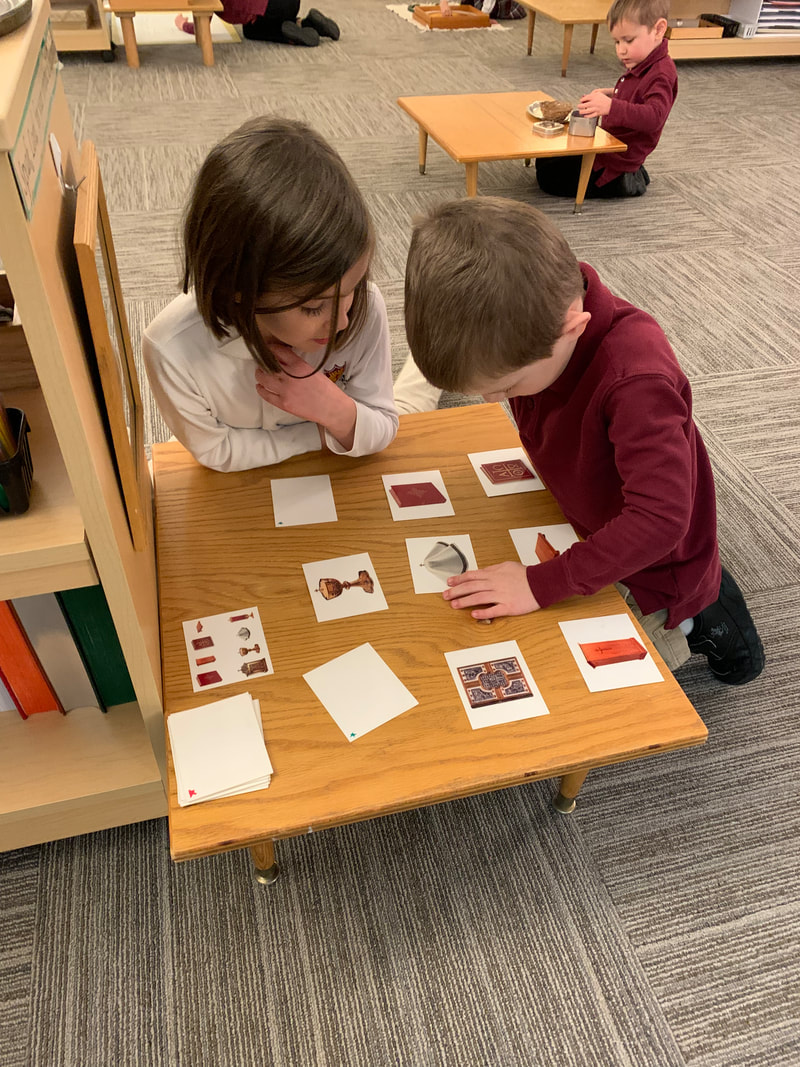
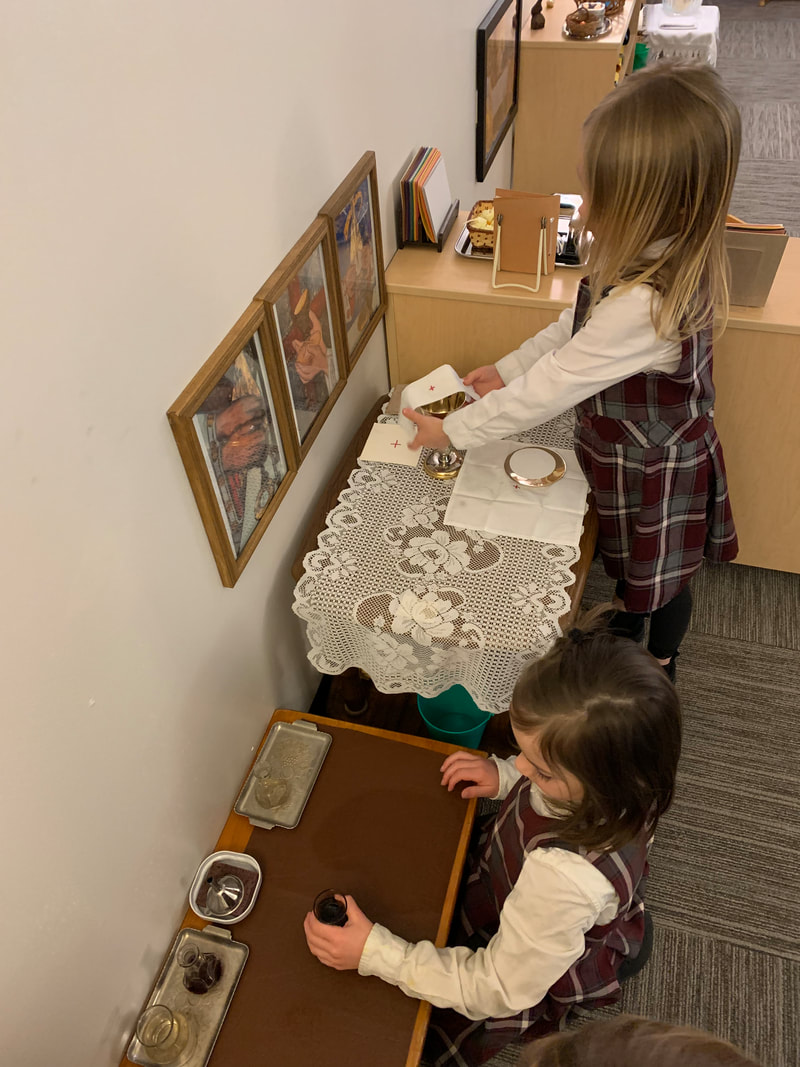
  • The "Gestures altar" in L1 is "child sized" and thus should be proportionate (for the 3yo child to height of the real altar for the priest. In practice this works out to about 20-22" in height with a surface area of about 20"x24". For the L2 child the height of this material could be closer to 28" in height. The credence table is typically smaller with a 9"/10" height and a surface area of 12"x18". 
​
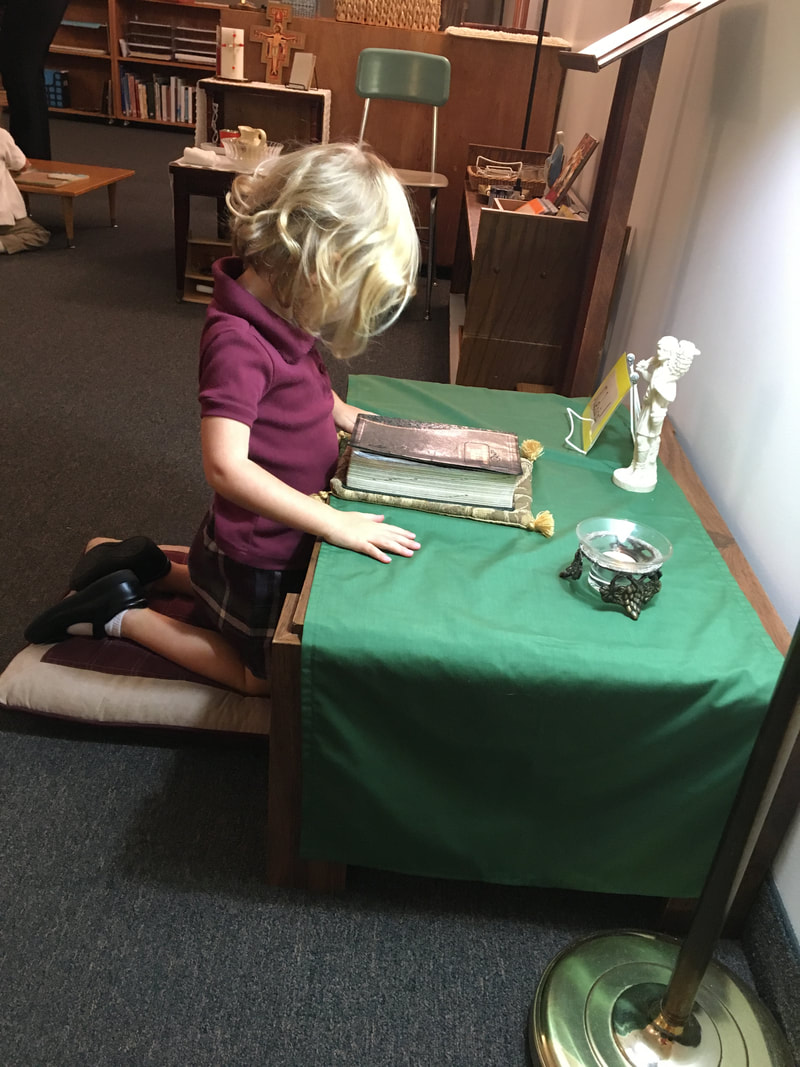
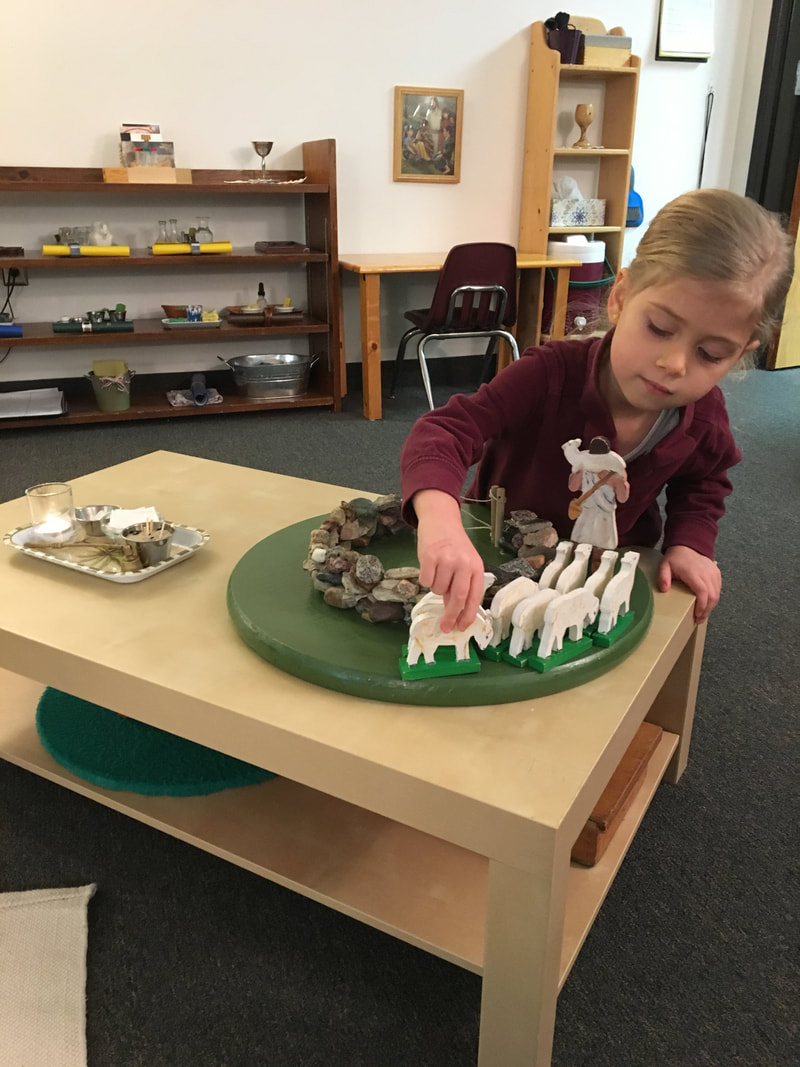
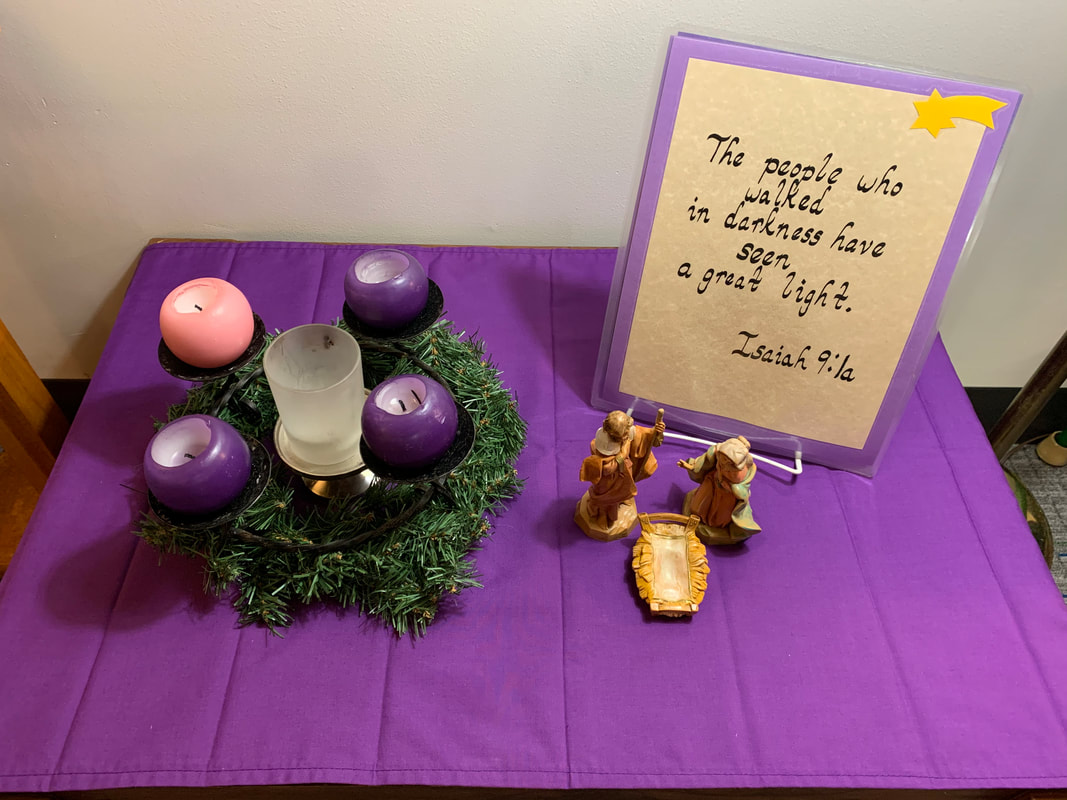
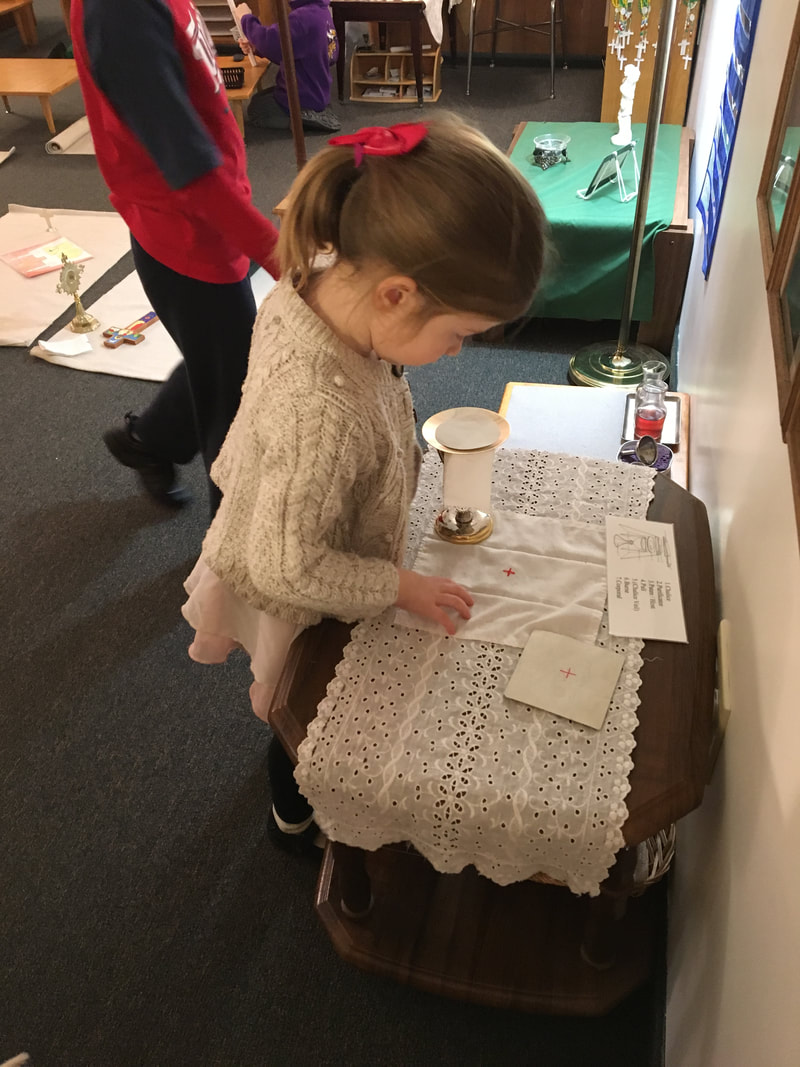
  • The Prayer Table and the Good Shepherd table should parallel the height of chowkis (10"-12"), but both need a larger surface area to accommodate the items they hold. The Good Shepherd table needs to hold both "circles" or pastures and the Prayer Table, particularly during the Advent season, needs to hold a number of items. Consider 20"x35" as the surface area for these tables. In addition, a lower shelf could of value especially for the Good Shepherd work as the "Church" materials can be stored there. While it is ideal to have a circular table for the Good Shepherd work it is difficult to find one that will fit both circles, side by side, and still be accessible for the young child's limited arm reach. A rectangular table seems to be a more practical solution and fits the children well.
Picture
L1 children in the Atrium. Note the height of shelving and chowkis for 3-6 year olds.
Picture
L3 children in the same Atrium environment utilizing floor space for timelines and chowkis for work.
Picture
A L1 child working at the Prayer Table.
Picture
A L1 child setting up the Gestures Altar.
Picture
L1 children working comfortably at a chowki.
Picture
A L1 child enjoying the Good Shepherd space.
Picture
The credence table and Gestures Altar side by side.
Picture
L2 children working at a larger, two person table.

Thanks Be to God!

11/23/2022

 
Catechist: "What could we thank God for today?"
- "That He is inside us." (4yo)
- "That He is the Light of the World." (4yo)
- "For His Body and His Blood." (5yo)
- "For life." (4yo)
- "That He is in our hearts." (4yo)

Genuflection

11/16/2022

 
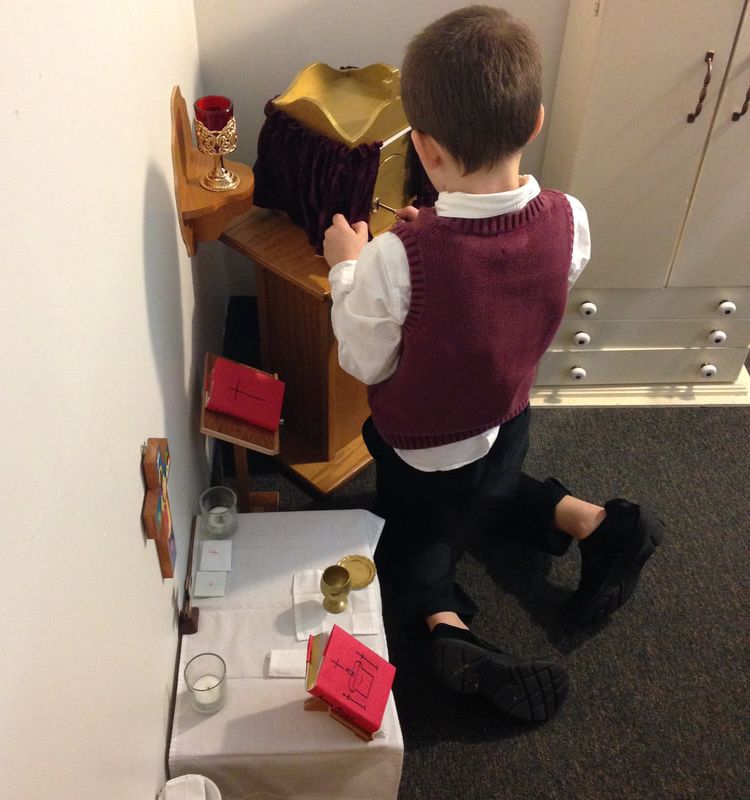
Another “personal gesture” which is lifted up in the Atrium is the genuflection. When entering the Church and seeing the Sanctuary Lamp lit near the tabernacle we pray with our bodies, making ourselves small before the one, truly present among us in the Eucharist, who is so very great. We are part of a long tradition of praying in this way, as we see when pondering the Adoration of the Magi, who “prostrated themselves and did [Jesus] homage.”
Picture
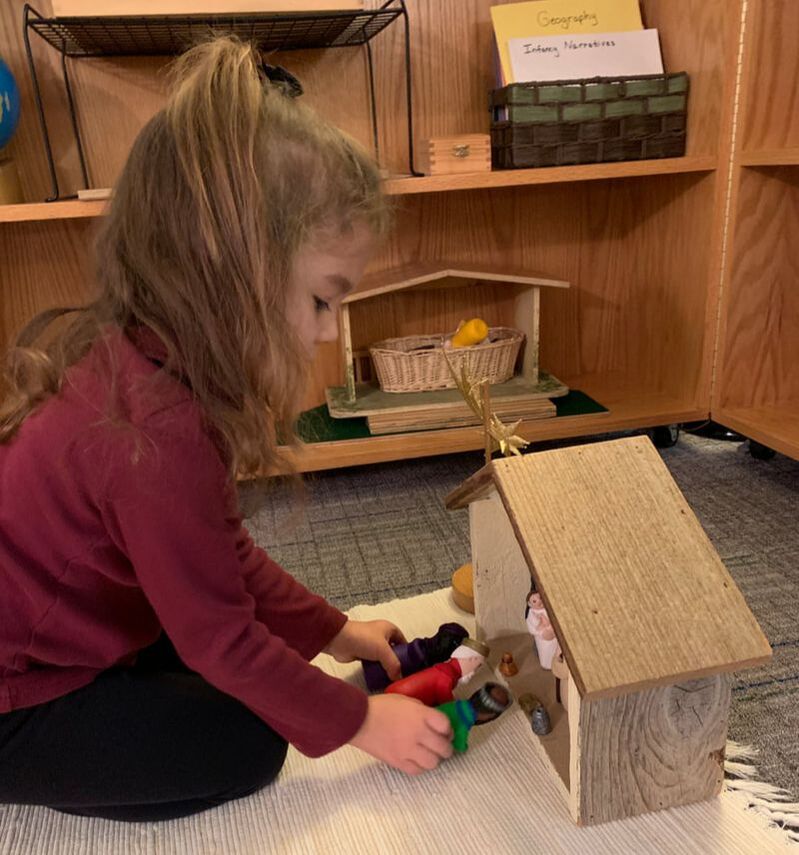
The Magi prostrate themselves before Jesus.
Picture
The Model Tabernacle points to the real Tabernacle at Church.
What other gestures do we pray? In these moments, what are we praying with our bodies? By being more intentional with our gestures of prayer we hope that the prayer of our heart will be of greater intention as well!

The Sign of the Cross

11/9/2022

 
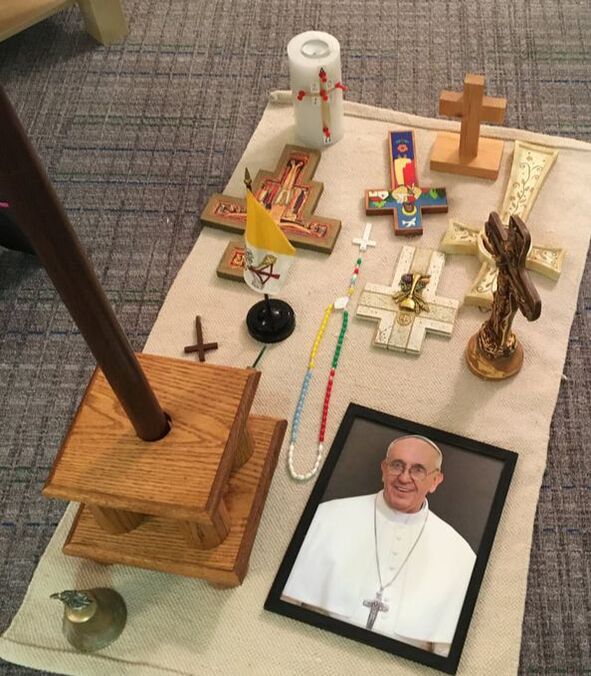
A gesture is a movement of the body that has meaning. In the Sacraments the priest prays both with his words and his gestures. We, too, are invited to pray through the movements of our body both during the liturgy and in our own personal prayer. One of the most common gestures which we pray is the Sign of the Cross. In teaching this gesture to young children, we often focus on which hand we use, the order in which we move that hand, and the words we pray. However, in the Atrium we begin with the sign itself, the sign of the cross. Pointing first to a cross or crucifix near the prayer table (or, if in the Church, the crucifix in the sanctuary area) we speak about the cross as Jesus’ sign, the sign of His death and resurrection. Then we speak about what a gesture is, giving a few examples like “come here” or “shhhh.” Next, we invite the children to watch and we slowly, carefully, in a solemn but exaggerated way, trace a cross on our body. Inviting the children to notice the gesture we ponder with them why we might make Jesus’ sign on our body. After inviting the children to pray this gesture with us so that we might think more about what we are praying, we invite them to continue enjoying this gesture and to look for His sign in the Atrium, at home, and at Church. In each moment of praying the Sign of the Cross with the little ones I am renewed in my desire to always pray this beautiful gesture with great reverence and intentionality. What a gift that His sign is our sign, too.
Picture
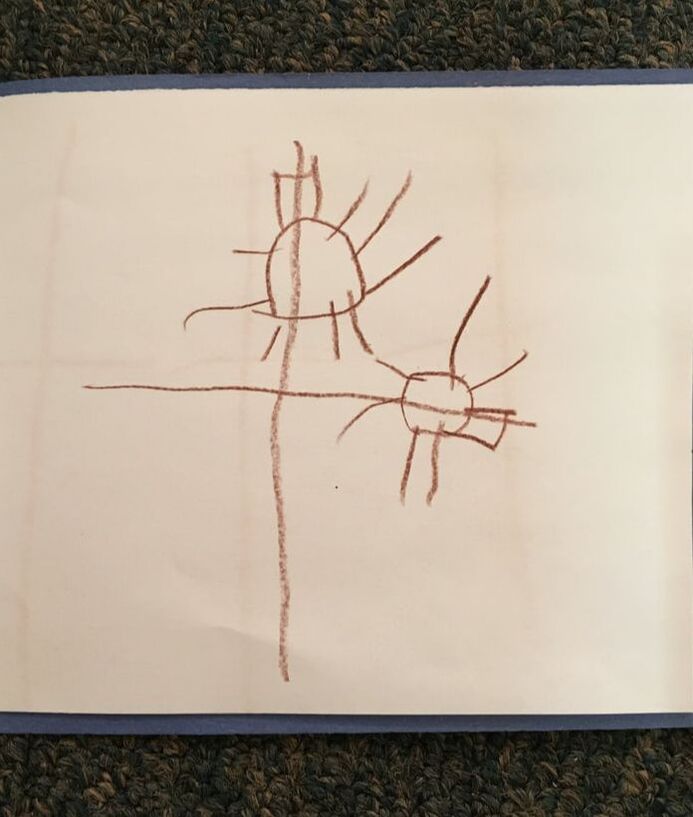
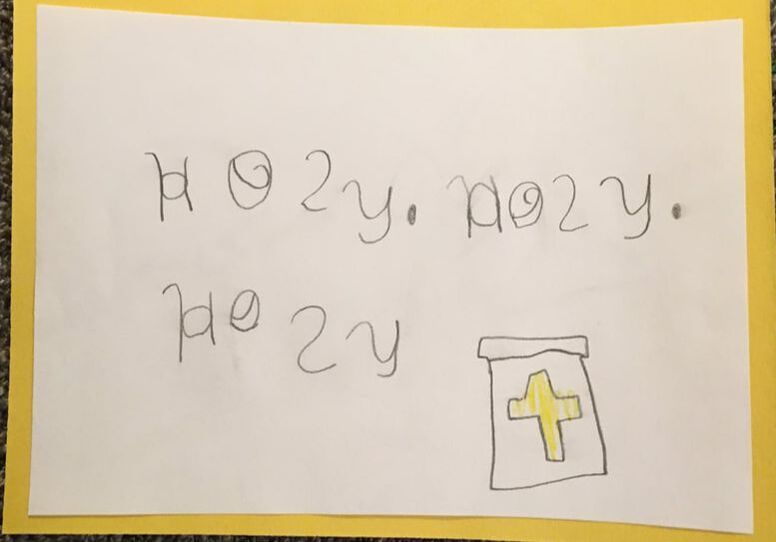
A child’s drawing of the Sign of the Cross.
Picture
Children gather crosses and crucifixes from around the Atrium.
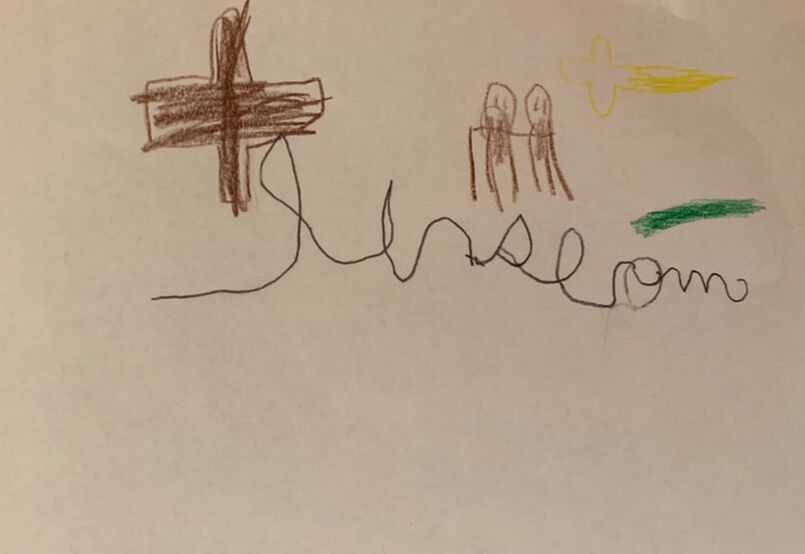
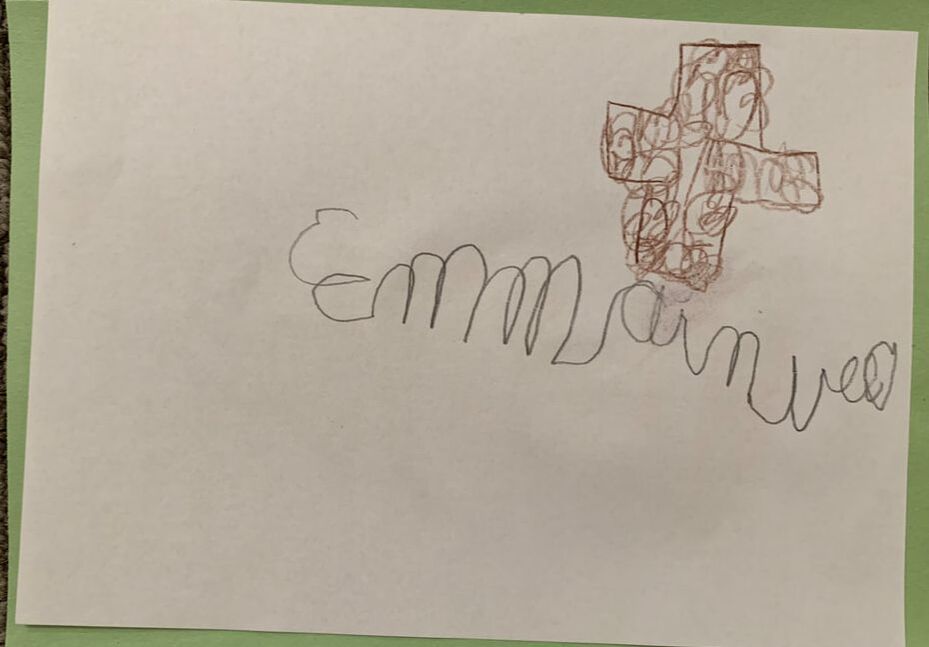
The cross makes its way into many of the children’s drawings, showing their attunement to the deep connection of Jesus’ sign with our faith.
Picture
Picture
Picture

Prayer Cards, Scripture Cards, and more!

11/2/2022

 
I have recently had some questions regarding the making of Prayer Cards, Scripture Cards, Prophecy Cards, and Psalm 23 Cards for the Atrium. While there are many different collections and styles, I would like to share what I have found to be of gift to the children.

L1 and L2 Prayer Cards: 4.5"x6.5"
  • The prayer cards offer prayer language to the youngest child in single words or short phrases. They can be beautifully illustrated, but I have found that by keeping them very simple the children are more inclined to draw the prayer of their heart. The colors of the backings correspond to themes of the Atrium (white for Infancy Narratives, red for the Paschal Mystery, orange for the Eucharistic Prayer, etc.). These cards can be used in both the Level 1 and 2 atria.
Picture
Picture
L1, L2, and L3 Scripture Cards: 2.75"x8.5"
  • The Scripture cards highlight passages from Psalms and from the Gospels which, again, provide language for prayer. The Psalm passages chosen in L1 are those of praise and thanks, fitting the prayer of this age child.​ When the Scripture passages are taken from the Gospels they frequently come from the Infancy Narratives and focus on the prayers of Mary, Elizabeth, Simeon, and others.
  • The L2 Scripture cards include all of those used in L1 but there are additional cards which meet the expanding prayer of the L2 child. Prayers of Petition, Intercession, and Contrition are all fitting to this older child. The Scripture cards are also an excellent tool for helping L2 children begin to look up Scripture citations in the Bible.
  • These Scripture cards are also appropriate for the L3 child.
Picture
Picture
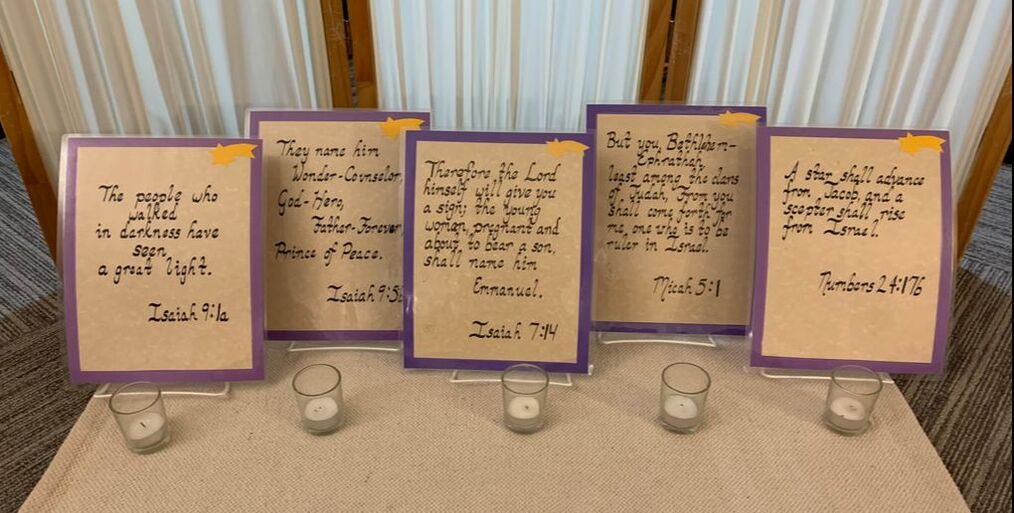
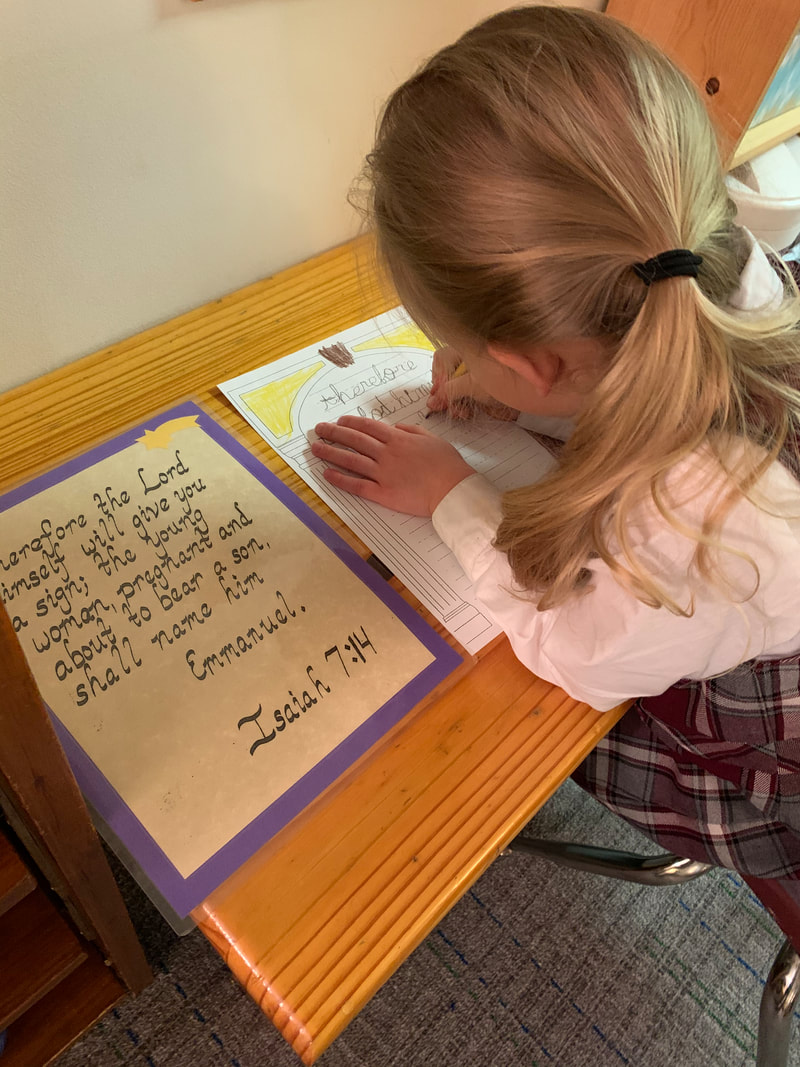
L1, L2, and L3 Prophecy Cards: 8.5"x11"
  • The Scripture Cards, Prophecies, and Psalm 23 Cards should all parallel the translation of the Bible that the children hear in the Atrium. Ideally, this is the same translation that they hear at liturgy. The Lectionary of the Catholic Church uses the New American Bible (NAB) translation. The New American Bible, Revised Edition (NABRE) is the current version of this translation and the Scripture cards linked previously align with the NABRE. The Prophecy cards should thus be NABRE as well.
  • L1: Isaiah 9:1a; Isaiah 9:5b; Isaiah 7:14; Micah 5:1; Numbers 24:17b.​
  • L2 and L3: Isaiah 9:1; Isaiah 9:5; Isaiah 7:14; Micah 5:1; Numbers 24:17ab; Isaiah 40:3-5; Isaiah 11:1-3a; Isaiah 11:6-9.
Picture
Picture
Picture
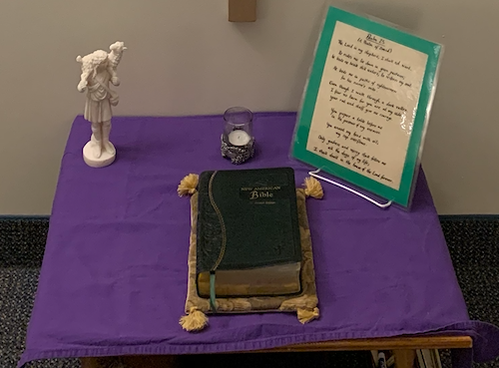
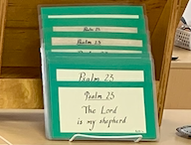
L1, L2, and L3 Psalm 23 Cards: 8.5"x4" to 8.5"x11"
  • While there are a variety of recommendations for how Psalm 23 is presented to the children, my preference is to offer the following cards in graded size:
    • ​L1: Psalm 23:1a; Psalm 23:1; Psalm 23:1-2a; Psalm 23:1-2; Psalm 23:1-3a.
    • L2 and L3: Psalm 23:1-3; Psalm 23:1-4; Psalm 23:1-6.​
Picture
Picture
Picture
L2 and L3 Hebrew Prayer Cards: 2.75"x8.5"
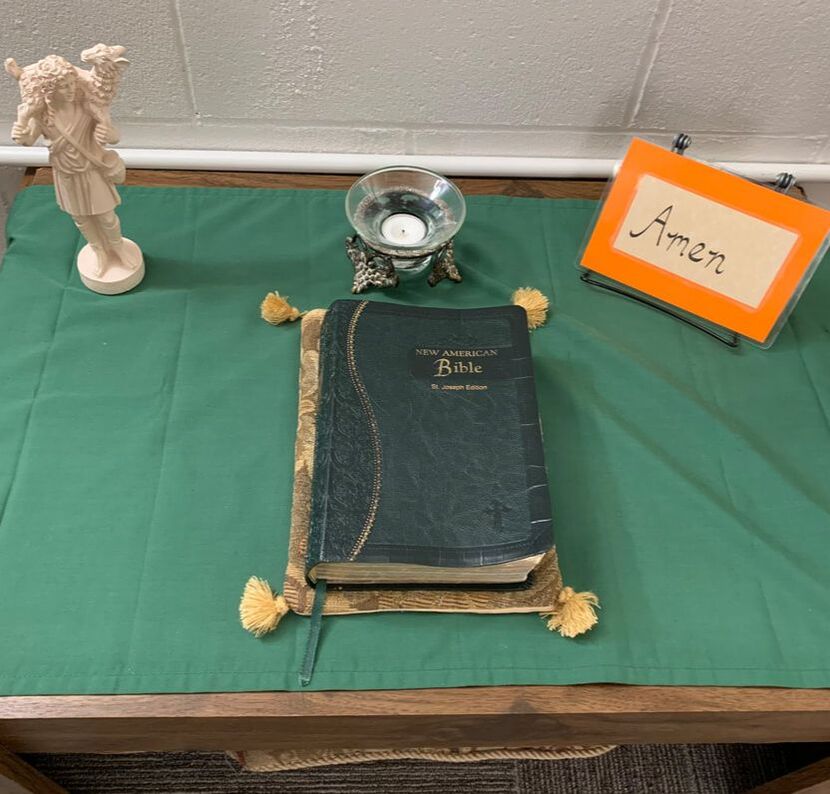
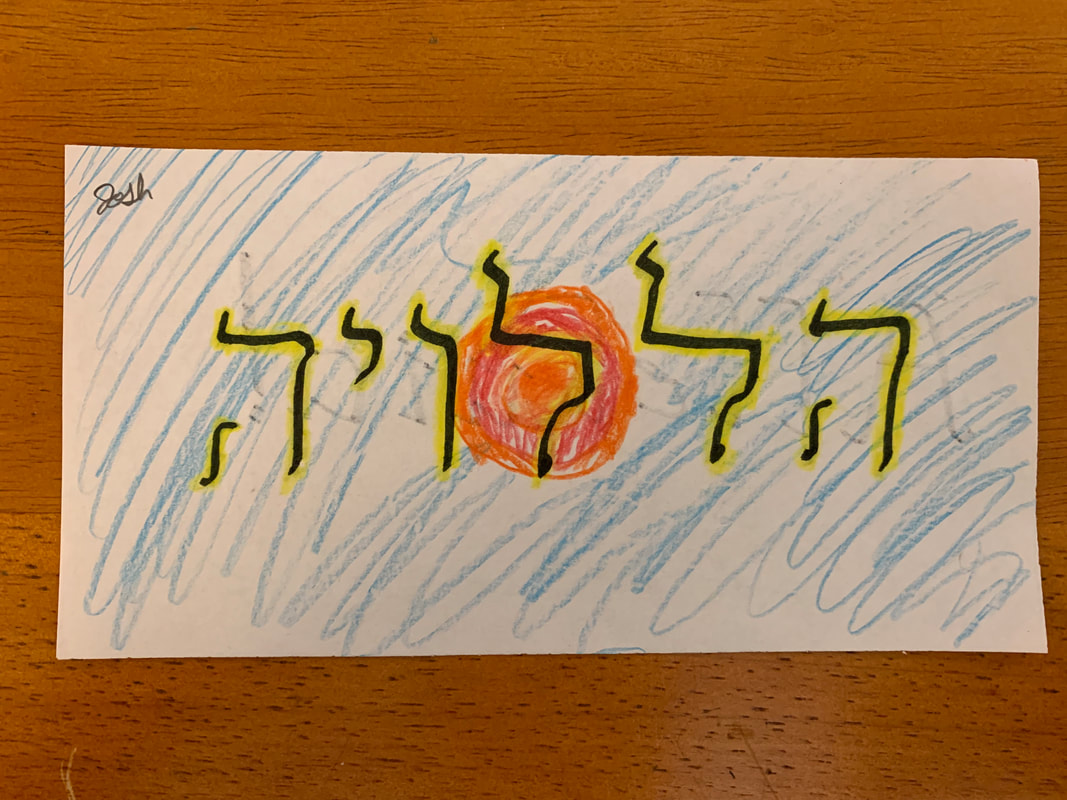
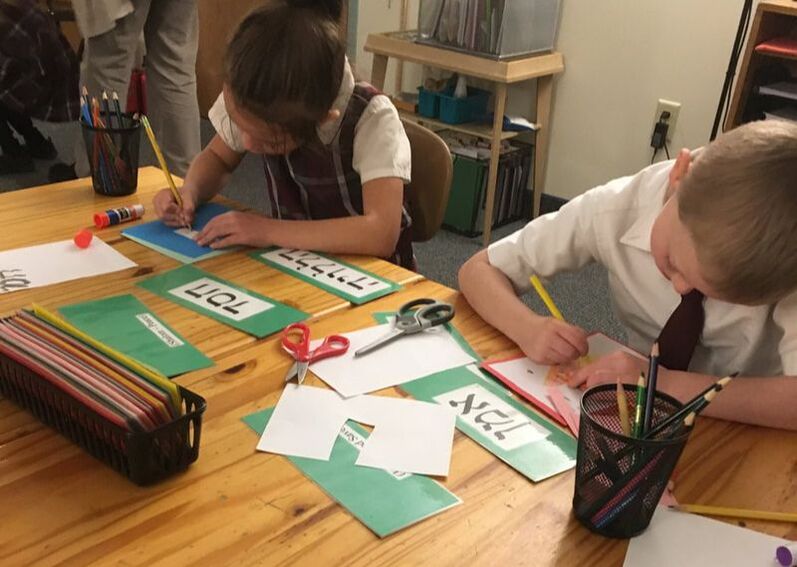
  • Several of our liturgical words of prayer are Hebrew words: "Amen," "Alleluia," Hosanna." The L2 and L3 children delight in knowing the origin of these (and other) words and also find great joy in copying them.
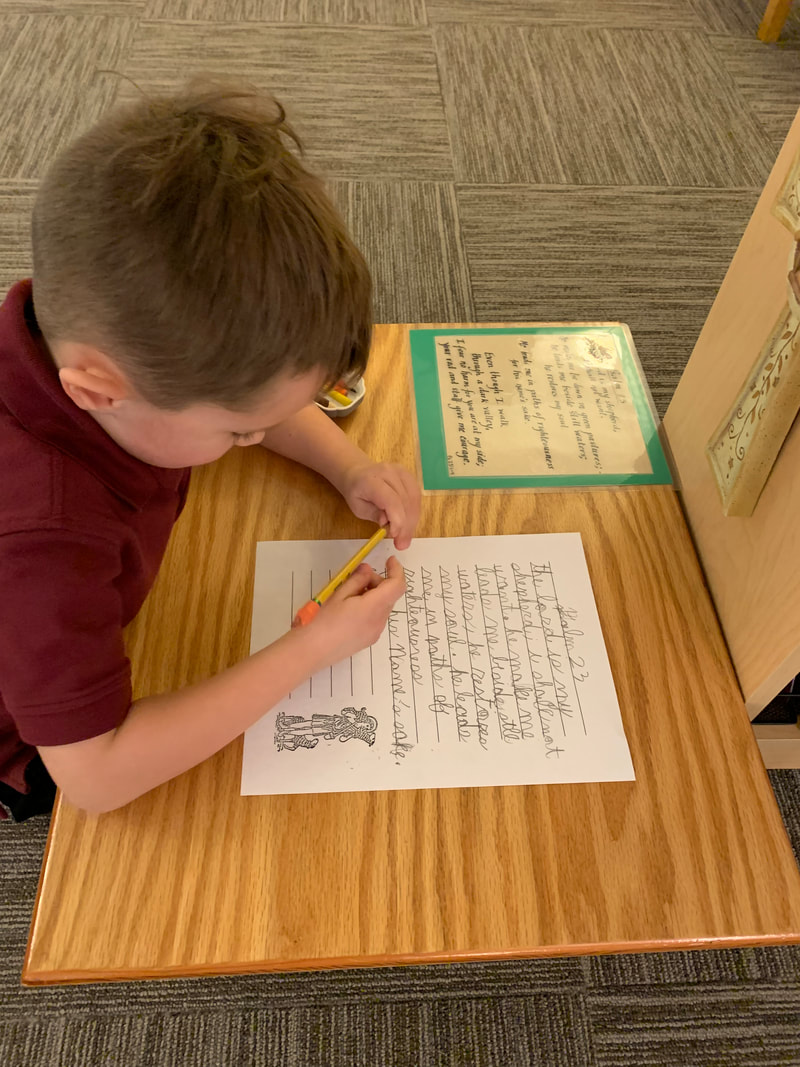
  • You might also consider, for the L3 children, having a copy of Psalm 23 written in Hebrew for them to enjoy and even copy (8.5"x11").
Picture
Picture

    Carolyn Kohlhaas

    CGS Catechist and Formation Leader (Levels I, II, and III)

    Categories

    All
    At Home Review
    Baptism
    Celebrations
    Eucharist
    Good Shepherd
    Incarnation
    Intro To The Atrium
    Kingdom Of God
    Life Of The Church
    Montessori Theory
    Moral Formation
    Paschal Mystery
    Prayer
    Reconciliation
    Salvation History
    Typology
    Work Of The Adult
    Work Of The Child
    WOS Celebrations

    Archives

    March 2026
    February 2026
    January 2026
    December 2025
    November 2025
    October 2025
    September 2025
    August 2025
    July 2025
    June 2025
    May 2025
    April 2025
    March 2025
    February 2025
    January 2025
    December 2024
    November 2024
    October 2024
    September 2024
    August 2024
    July 2024
    June 2024
    May 2024
    April 2024
    March 2024
    February 2024
    January 2024
    December 2023
    November 2023
    October 2023
    September 2023
    August 2023
    July 2023
    June 2023
    May 2023
    April 2023
    March 2023
    February 2023
    January 2023
    December 2022
    November 2022
    October 2022
    September 2022
    August 2022
    July 2022
    June 2022
    May 2022
    April 2022
    March 2022
    February 2022
    January 2022
    December 2021
    November 2021
    October 2021
    September 2021
    August 2021
    July 2021
    June 2021
    May 2021
    April 2021
    March 2021
    February 2021
    January 2021
    December 2020
    November 2020
    October 2020
    September 2020
    August 2020
    July 2020
    June 2020
    May 2020
    April 2020
    March 2020
    February 2020
    January 2020
    December 2019
    November 2019
    October 2019
    September 2019
    August 2019
    July 2019
    June 2019
    May 2019
    April 2019
    March 2019
    February 2019
    January 2019
    December 2018
    November 2018
    October 2018
    September 2018
    May 2018
    April 2018
    March 2018
    February 2018
    January 2018
    December 2017
    November 2017
    October 2017
    September 2017
    June 2017
    May 2017
    April 2017
    March 2017
    February 2017
    January 2017
    December 2016
    November 2016
    October 2016
    September 2016
    August 2016
    May 2016
    April 2016
    March 2016
    February 2016
    January 2016
    December 2015
    November 2015

    RSS Feed

Powered by Create your own unique website with customizable templates.